
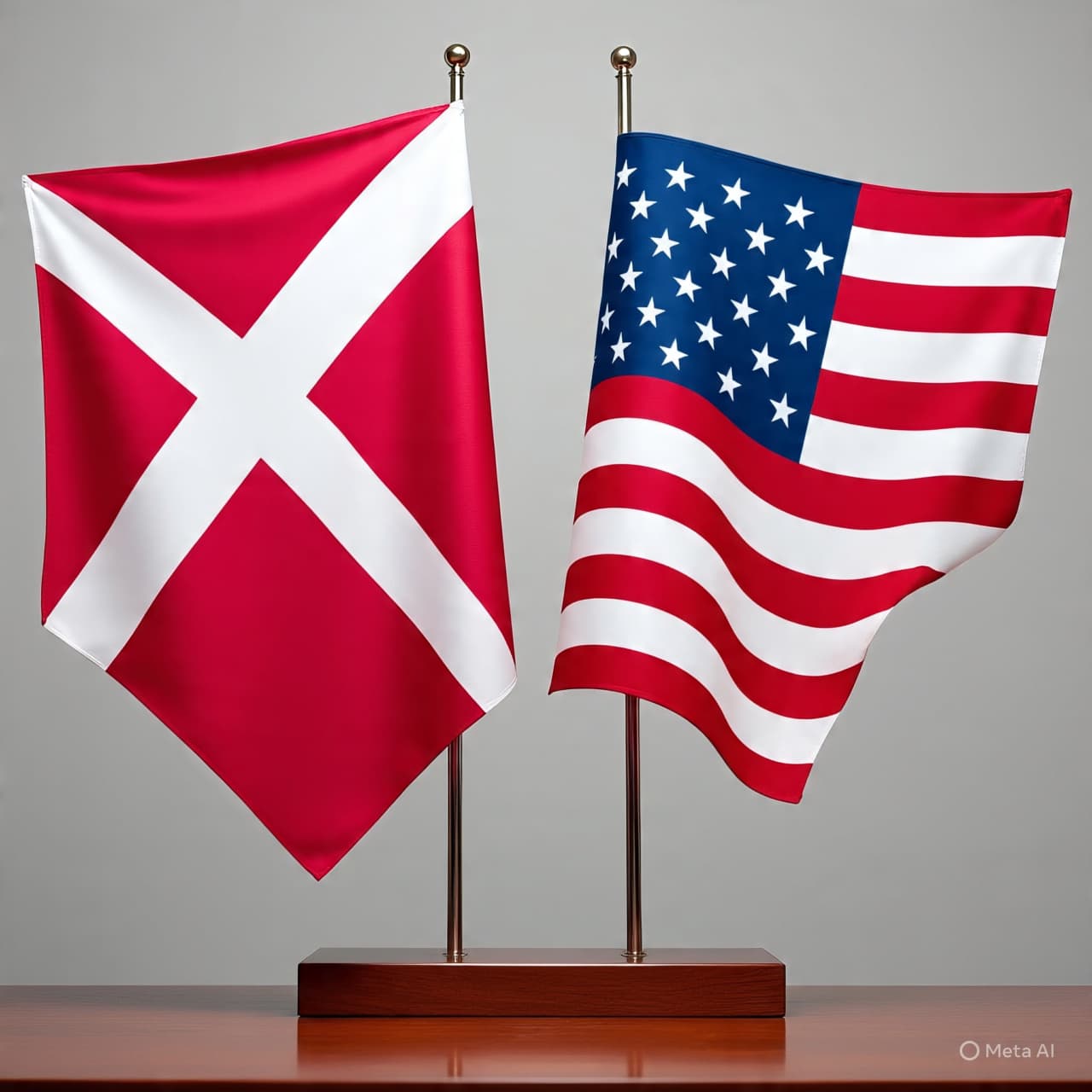
Greenland often appears on maps as a vast quiet space, more white than ink, its scale dwarfing the conversations held about it. Yet in recent weeks, the island has again become a point of gravity, pulling global attention not through movement on the ice, but through words spoken far away.
A proposal endorsed by Donald Trump concerning Greenland, according to people familiar with the matter, is designed to respect Denmark’s sovereignty over the territory. The framework, discussed among U.S. and allied officials, does not involve any transfer of political control, despite the sharper rhetoric that has surrounded Greenland in the past.
The distinction matters. Greenland is part of the Kingdom of Denmark, with its own government and increasing autonomy, but foreign and defense policy remain anchored in Copenhagen. Any suggestion that sovereignty could shift has historically met firm resistance, not only from Denmark but from European allies wary of precedent.
Sources say the proposal instead centers on security cooperation and strategic coordination in the Arctic, an area growing more exposed as ice retreats and geopolitical competition intensifies. The emphasis is said to be on expanding existing arrangements rather than rewriting them, building on long-standing defense agreements between the United States and Denmark.
Trump’s endorsement arrives after years in which Greenland became shorthand for a more confrontational view of territory and power. Earlier remarks about acquiring the island linger in diplomatic memory, shaping how new proposals are received. Against that backdrop, assurances of respect for sovereignty carry weight precisely because they contrast with past tone.
For Denmark, the framing offers a measure of reassurance. Cooperation in the Arctic has long been accepted, even welcomed, but always under the condition that political authority remains unchanged. The language surrounding the proposal appears crafted to acknowledge that line explicitly.
The moment also reflects broader shifts. The Arctic is no longer peripheral to global strategy. Shipping routes, mineral access, and military positioning have turned the region into a shared concern for NATO members and a point of interest for rival powers. In that context, partnerships deepen not through ownership, but through alignment.
Still, caution persists. Diplomatic sources suggest that while the proposal respects formal sovereignty, its reception will depend on how closely words are matched by restraint. Greenland’s own leaders, increasingly vocal about their future, are attentive to any initiative that speaks about the island without centering its people.
What emerges, then, is a quieter recalibration. Not a dramatic claim, but an effort to redraw emphasis—from possession to presence, from acquisition to cooperation. Whether that shift holds will depend less on endorsements than on conduct.
Greenland remains where it has always been, physically unchanged. What moves instead are interpretations, intentions, and the careful language of power. In diplomacy, that is often where the real negotiations begin.
AI Image Disclaimer Visuals are AI-generated and serve as conceptual representations.
Sources (names only) Reuters Bloomberg Financial Times Associated Press Politico
Published by Banx Network. This article is part of the Banx decentralized media programme, powered by the BXE token on the XRP Ledger.


