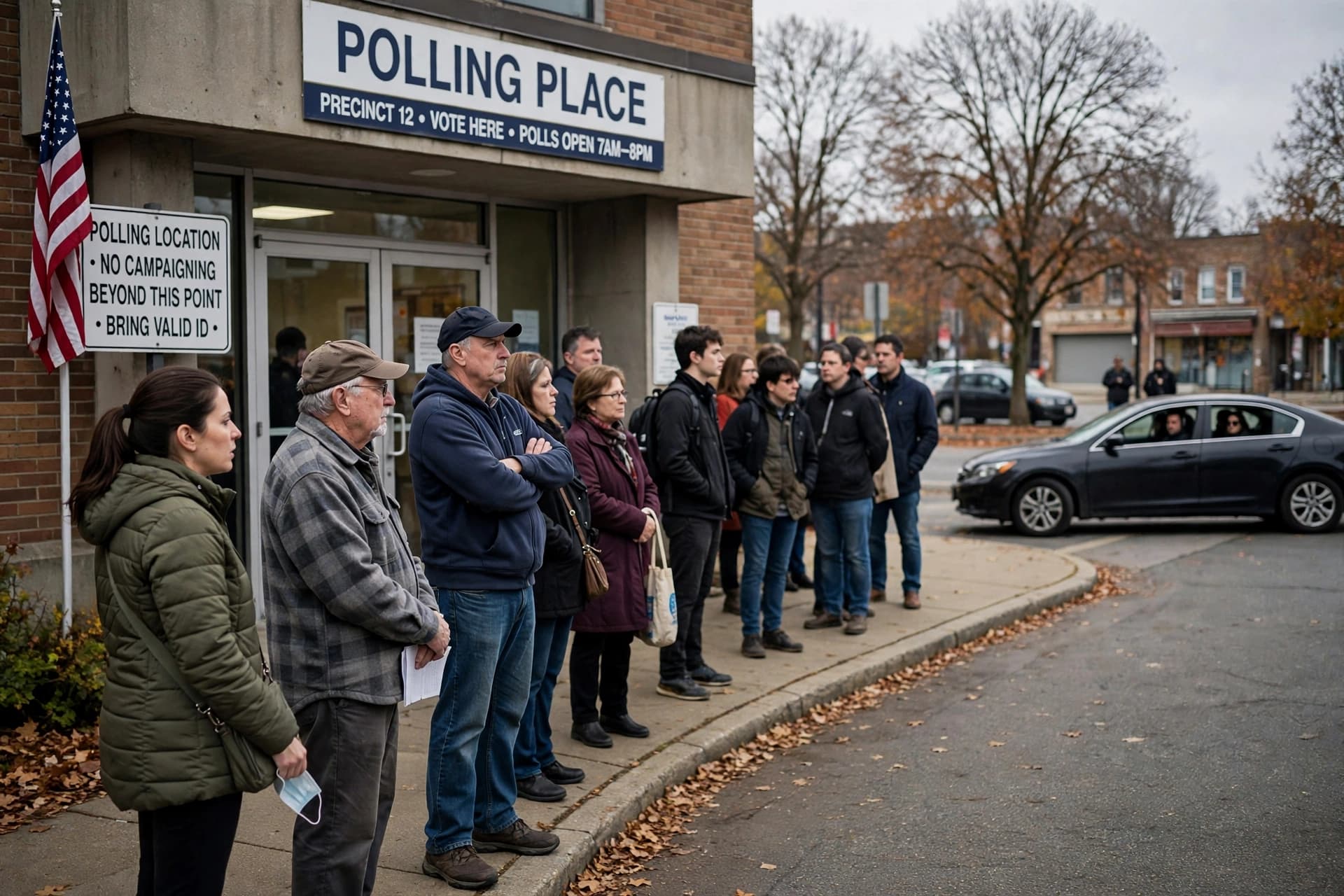
There is a particular fear that attaches to the presence of armed agents near a polling place—a fear that does not require an actual confrontation to be real, that operates through the mere suggestion of intimidation, and that raises questions about whether the machinery of immigration enforcement is being used to shape the electorate rather than to protect it. Across the United States this week, as early voting began in several states, reports have emerged of U.S. Immigration and Customs Enforcement agents appearing near polling sites and voting centers. The sightings have bolstered a lawsuit filed by civil rights groups seeking to bar armed federal agents from polling places, arguing that their presence violates the Voting Rights Act and the Constitution.
The lawsuit, filed by the American Civil Liberties Union and other organizations, alleges that ICE agents have been deployed to polling locations in at least a dozen states, including Texas, Florida, Georgia, and Arizona. In some cases, the agents were seen in marked vehicles or wearing tactical gear. In others, they were observed in unmarked cars parked near voting centers. The plaintiffs argue that the presence of armed agents—regardless of whether they actually approach voters—constitutes a form of intimidation that disproportionately affects voters of color and immigrant communities.
The Department of Homeland Security has said that ICE agents are deployed to polling sites as part of routine enforcement operations and that they are not there to intimidate voters. A spokesperson said the agency "does not target individuals based on their political affiliation or their exercise of the right to vote." But the sightings have alarmed voting rights advocates, who note that the presence of ICE agents near polls has historically been associated with voter suppression, particularly in Latino and immigrant communities.
The lawsuit, filed in federal court in Washington, D.C., seeks a temporary restraining order barring ICE agents from operating within a certain distance of polling places. It also seeks to require the agency to disclose its policies and procedures for deploying agents during elections. The case is being watched closely by both parties, as it could set a precedent for how federal law enforcement operates during future elections.
For voters, the practical advice is to know their rights. Under federal law, voters cannot be intimidated or coerced at the polls. If they encounter armed agents, they should remain calm, ask for identification, and report the encounter to election officials and civil rights organizations. The lawsuit is ongoing. The sightings continue. And the question of whether armed agents have a place near the polls remains unanswered—except by the courts, which will now decide.
AI Image Disclaimer: All images in this article are AI-generated and are intended for illustrative purposes only.
Sources: American Civil Liberties Union, Reuters, Associated Press, The Washington Post
Published by Banx Network. This article is part of the Banx decentralized media programme, powered by the BXE token on the XRP Ledger.