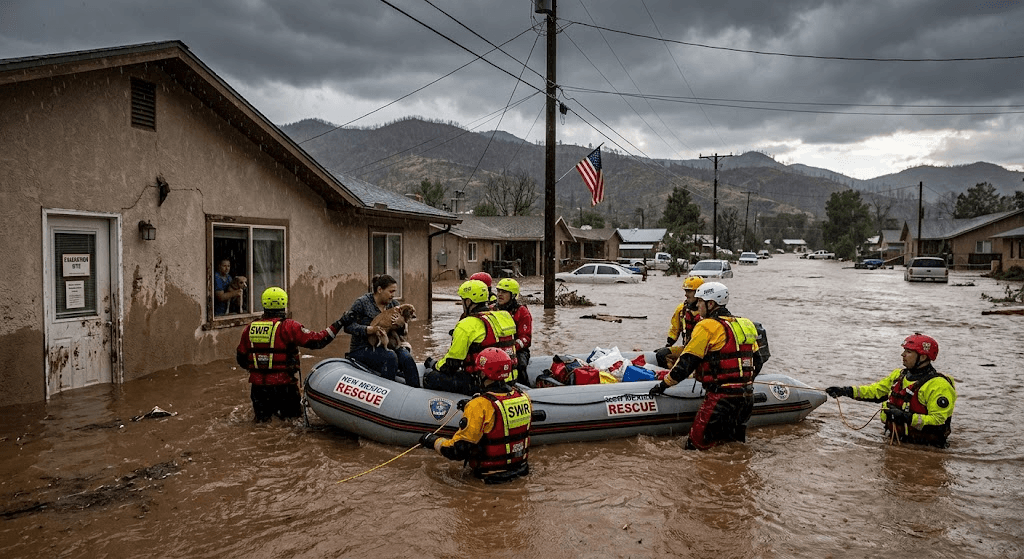
ALBUQUERQUE, NEW MEXICO — Torrential downpours and atmospheric moisture pushed north from Hurricane Polo have triggered severe and widespread flooding across New Mexico, submerging roadways, forcing emergency evacuations, and straining local disaster response teams.
The relentless deluge hit western and central parts of the state hardest, dumping months' worth of rain in a matter of hours. Fast-moving floodwaters surged through city streets, overtopping drainage canals and inundating residential neighborhoods. Emergency crews and specialized swift-water rescue units have been deployed continuously, pulling stranded motorists from submerged vehicles and evacuating residents trapped in low-lying properties.
State officials warned that the deluge poses an immediate risk to burn scar areas, particularly near the Sacramento Mountains, where stripped vegetation has drastically heightened the threat of mudslides and debris flows. Multiple major thoroughfares and rural highways have been closed due to heavy mud accumulation, structural washouts, and standing water. Emergency shelters have opened across affected counties to accommodate displaced families while municipal crews work around the clock to clear clogged drainage systems.
National Weather Service meteorologists report that while the core of the monster storm remains off the Pacific coast, its massive plume of tropical moisture continues to fuel slow-moving downpours across the high desert terrain. With Flood Watches remaining in effect across much of the region, authorities are urging residents to avoid traveling through flooded roadways and to remain on high alert as ground saturation increases the risk of further rapid flash flooding.
Beyond immediate rescue operations, state leaders have requested federal emergency assistance and disaster declarations to mobilize National Guard resources and expedite recovery funds. Environmental officials also warn that runoff carrying agricultural and urban debris into major river basins could create long-term water quality issues, prompting precautionary boiling advisories in several impacted communities as infrastructure repairs get underway.
The federal government has also signaled that FEMA strike teams will be integrated into local response efforts to assist with rapid damage assessments across affected rural communities and tribal lands. Emergency managers continue to emphasize that residents in flood-prone areas should remain vigilant, keep mobile devices charged for real-time emergency alerts, and never attempt to cross flooded roadways or bypass official barriers.
Published by Banx Network. This article is part of the Banx decentralized media programme, powered by the BXE token on the XRP Ledger.