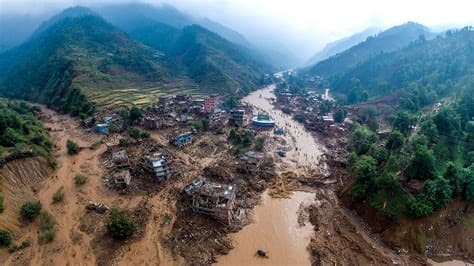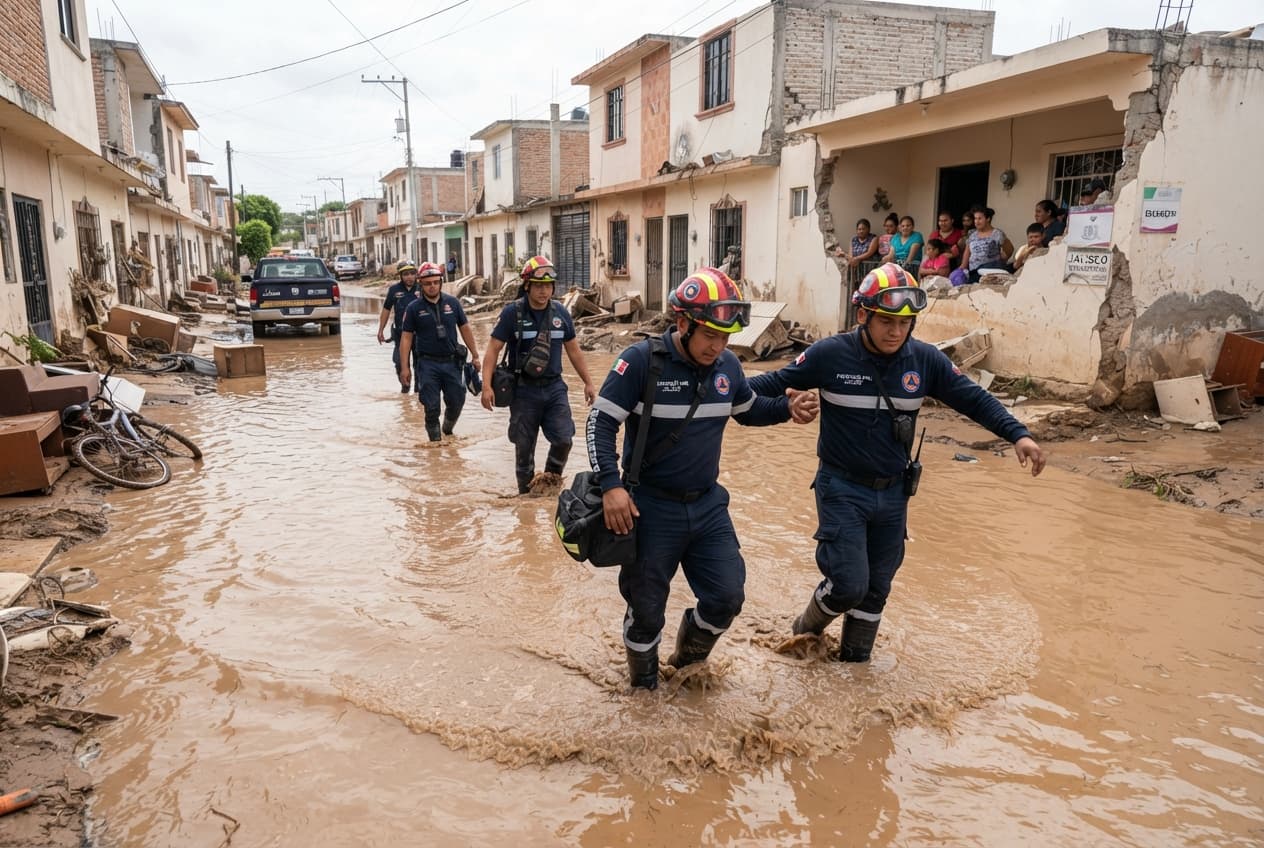
Guadalajara, Mexico—Hurricane Polo made a destructive sweep near the western coastline, unleashing torrential downpours and catastrophic flash floods that devastated rural and urban sectors across Jalisco. Civil protection authorities confirmed that surging river channels overwhelmed local containment walls before dawn, sweeping away residential structures and trapping families in isolated pockets. Emergency response teams deployed amphibious vehicles and high-clearance trucks to navigate mud-slicked roadways while searching for residents reported missing by anxious relatives.
Municipal hospitals in the affected districts activated emergency triage procedures, treating dozens of displaced citizens for hypothermia, lacerations, and shock. Search units utilizing canine teams combed through accumulated silt and structural debris piled high in valley bottoms where swollen streams breached their banks. Official disaster coordinators verified that two individuals succumbed to swift-water currents, while search operations continue for three remaining citizens unaccounted for in remote mountain communities.
"The sheer volume of rainfall dropped within a twelve-hour window overwhelmed municipal drainage channels, leaving zero reaction time for evacuation protocols in low-lying zones," a regional civil protection coordinator stated at the site.
Federal infrastructure squads began clearing heavy rockfalls and mudslides blocking Jalisco State Highway routes to restore vital supply chains into the interior valleys. Electrical utility engineers mobilized mobile generators to restore power to crippled municipal water pumps while assessing damage to high-tension transmission towers. Residents gathered outside designated emergency shelters set up in municipal school gymnasiums, awaiting distributions of bottled water and non-perishable rations.
Agricultural extension agents reported widespread destruction across regional crop fields, with thousands of acres submerged under stagnant, debris-laden floodwaters. Federal agricultural ministries dispatched evaluation teams to document livestock losses and structural damage to rural farming cooperatives. Insurance adjusters established temporary processing tents in regional municipal squares to handle urgent claims from small business owners.
State governors convened an emergency legislative session to request immediate federal disaster relief funds for structural reconstruction and bridge reinforcement. National Guard units assumed perimeter security around evacuated neighborhoods to prevent looting in abandoned residential sectors. Heavy earth-moving equipment continued clearing blocked drainage culverts as meteorological services tracked the remnants of the storm system dissipating inland.
Relief convoys navigated precarious mountain passes under intermittent drizzle, bringing blankets and medical supplies to cutoff hamlets. Community volunteers worked alongside municipal laborers to shovel thick mud from residential entryways and commercial storefronts. Officials warned that saturated hillsides remain acutely vulnerable to secondary slumping should subsequent weather disturbances move into the region.
Published by Banx Network. This article is part of the Banx decentralized media programme, powered by the BXE token on the XRP Ledger.