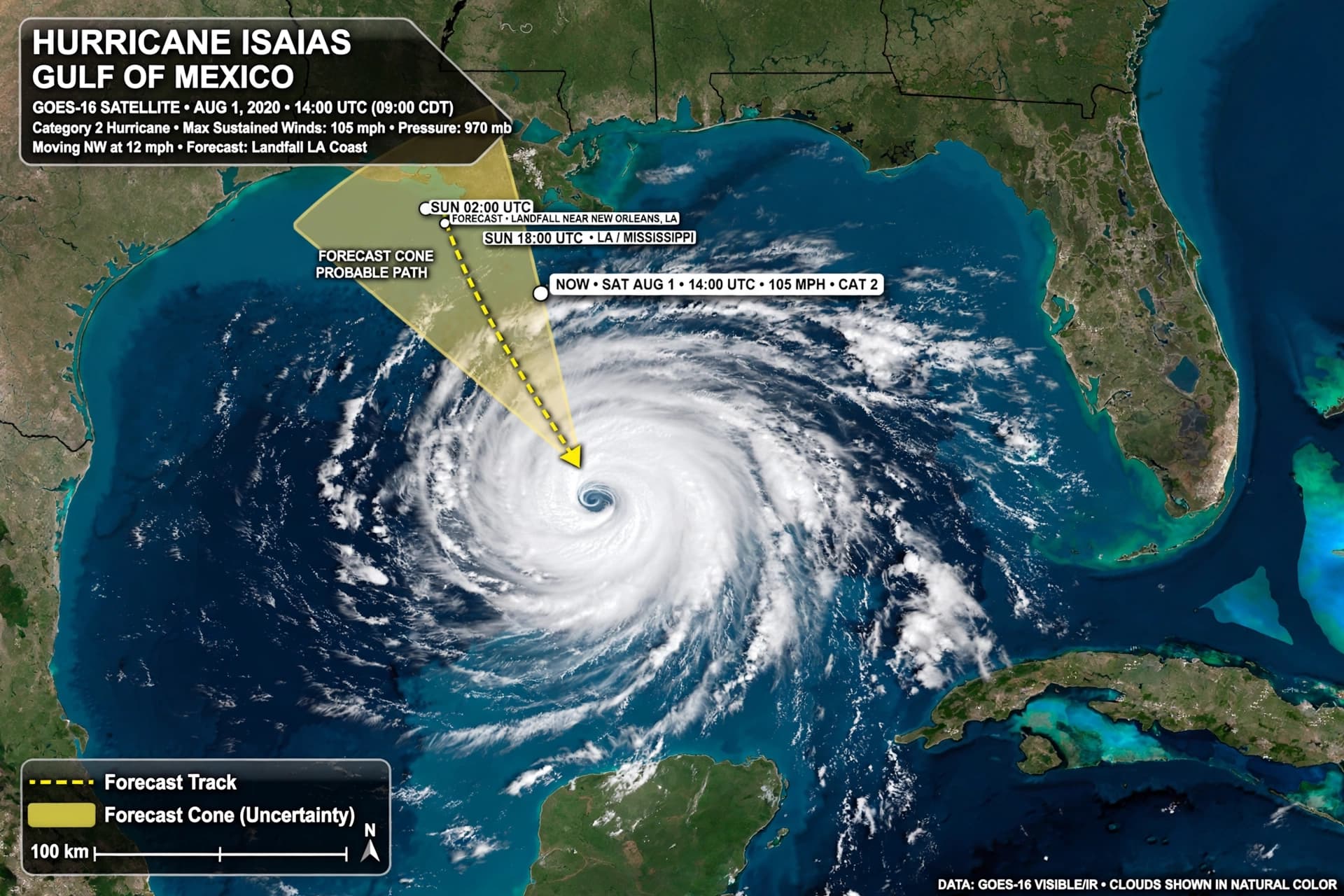
There is a particular rhythm to a hurricane approaching the Gulf Coast—a rhythm measured in the steady escalation of wind speeds, the widening of evacuation zones, the long lines of cars heading inland, and the quiet tension of a region that has learned, through hard experience, to take the warnings seriously. In the Gulf states this week, that rhythm has quickened. Hurricane Isaias has strengthened to a Category 2 storm, and evacuations are underway along the coast from Louisiana to the Florida Panhandle.
The storm, which formed in the Caribbean and tracked through the Gulf of Mexico, has been intensifying as it moves toward landfall. According to the National Hurricane Center, Isaias is expected to make landfall late Wednesday or early Thursday, with sustained winds of up to 110 miles per hour and storm surge of up to 10 feet in some areas. The hurricane is large—tropical-storm-force winds extend more than 200 miles from the center—meaning that the impacts will be felt across a wide region, not just at the point of landfall.
Evacuation orders have been issued for low-lying areas in Louisiana, Mississippi, Alabama, and Florida. In Louisiana, Governor Jeff Landry declared a state of emergency and urged residents in coastal parishes to leave. In Mississippi, officials opened shelters and activated the National Guard. In Florida, Governor Ron DeSantis said the state was prepared to deploy resources and that residents should not wait until the last minute to evacuate. "This is a dangerous storm," he said. "If you are told to leave, leave."
The storm is arriving at a time when the Gulf Coast is still recovering from previous hurricanes. The region has been hit by several major storms in recent years, and the infrastructure—roads, power grids, water systems—is fragile in many places. The storm surge is a particular concern because it can flood areas that are not in the direct path of the hurricane and because it can take days to recede. The National Weather Service has warned of "life-threatening" conditions and has urged people to heed evacuation orders.
For the people in the storm's path, the next few days will be a test of preparation and patience. The storm will pass, the winds will subside, and the water will recede. But the recovery will take longer. The evacuations are underway. The shelters are open. And the Gulf Coast, as it has so many times before, is bracing for what is coming.
AI Image Disclaimer: The images accompanying this article are AI-generated and are intended for illustrative purposes only.
Sources: National Hurricane Center, Associated Press, Reuters, CNN
Published by Banx Network. This article is part of the Banx decentralized media programme, powered by the BXE token on the XRP Ledger.