
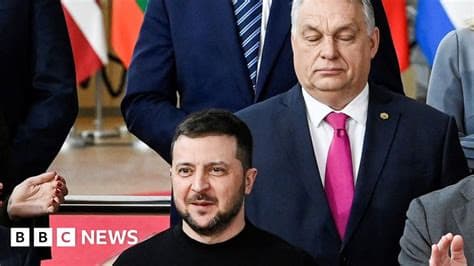
Key Highlights
- Decision:Hungary's Prime Minister Viktor Orbán has ordered the retention of approximately $82 million in cash and gold seized from Ukrainian entities.
- Context:This decision comes amid rising political tensions between Hungary and Ukraine, complicating bilateral relations.
- Implications:Analysts warn that this move could have significant financial and diplomatic ramifications for Hungary and its EU relations.
Hungarian Prime Minister Viktor Orbán has ordered the retention of around $82 million in cash and gold that has been seized from Ukrainian entities. This decision comes amid heightened political tensions between Hungary and Ukraine, as well as ongoing conflicts in the region that have complicated bilateral relations. The assets in question were reportedly confiscated during investigations linked to various allegations of illegal activity.
Orbán’s order to hold onto these funds has raised eyebrows among analysts and observers, who highlight the financial and diplomatic ramifications of the move. “It’s essential to understand the implications of this decision, both in terms of Hungary’s relationship with Ukraine and its standing within the EU,” stated economist Marta Szabo. The retention of such significant assets could be seen as a leverage tactic in negotiations or disputes between the two countries.
Critics of Orbán’s government view this as another instance of leveraging financial power in the face of geopolitical complexities. The decision to retain these assets may be interpreted as a strategic maneuver, potentially aimed at influencing future negotiations with Ukraine or even the European Union. As Hungary continues to navigate its foreign policy, the implications of this order will likely unfold both politically and economically.
Moreover, the move may further complicate Hungary’s relations with its EU partners, as the bloc continues to support Ukraine amid its ongoing struggles. Hungary has previously faced scrutiny for its foreign policy choices, particularly regarding its approach to Russia and Ukraine. The EU's response to this latest decision remains to be seen, but it could lead to increased tensions within the bloc.
As the situation progresses, the decision to hold onto the seized assets may have far-reaching consequences, influencing not only regional dynamics but also the future of Hungary’s diplomatic relations and economic strategies. Stakeholders in Hungary and Europe are closely monitoring developments, as the potential fallout from this decision could reshape the landscape of Eastern European politics.
Published by Banx Network. This article is part of the Banx decentralized media programme, powered by the BXE token on the XRP Ledger.



