
Key Highlights
- Humanoids Summit:Industry leaders express concerns over humanoid robot functionality.
- Investment vs. Reality: High costs and limited capabilities lead to skepticism.
- Future Outlook:Experts suggest a shift towards specialized robots may be necessary.
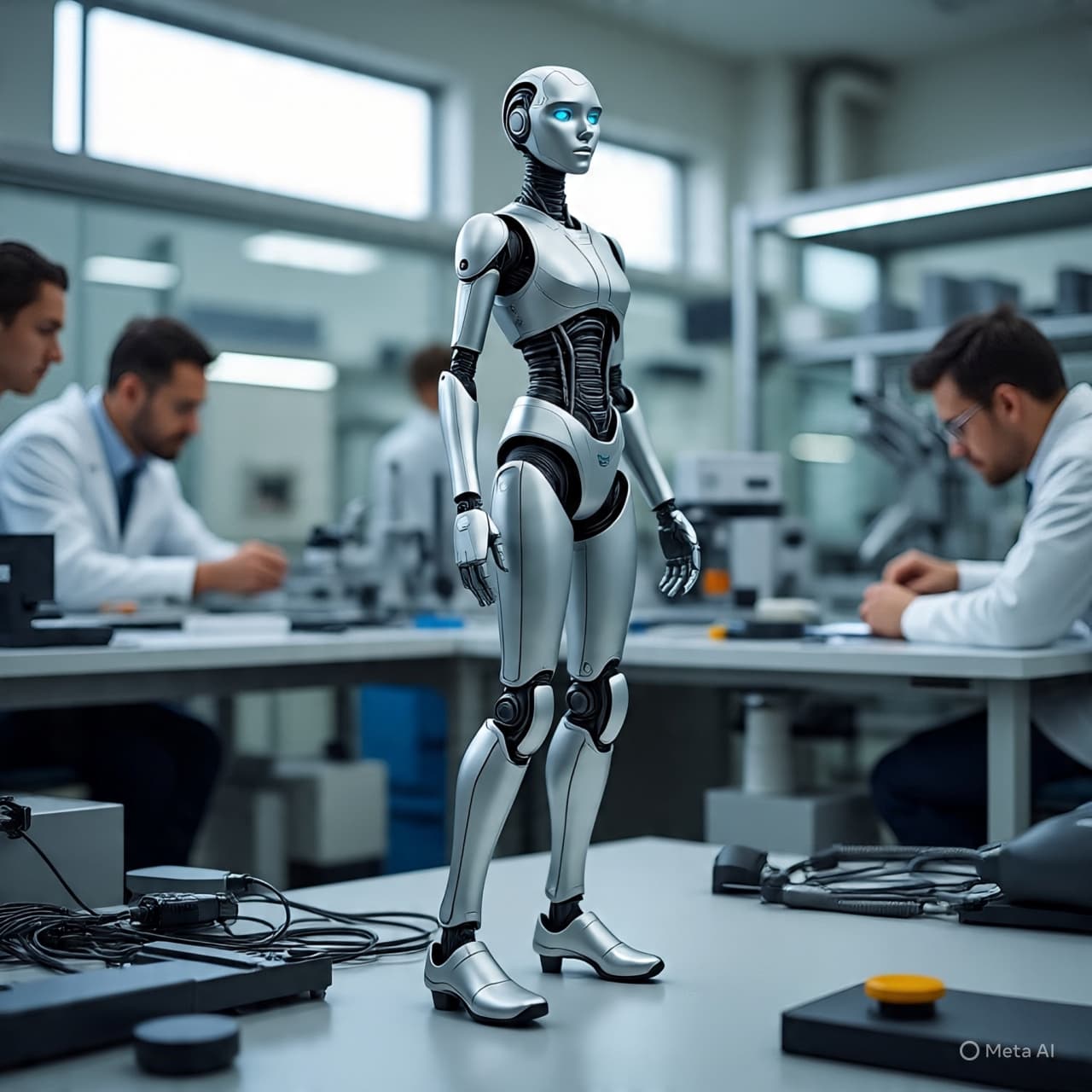
In a sun-splashed conference hall in Mountain View, California, the recent Humanoids Summit brought together engineers, entrepreneurs, and venture capitalists who once brimmed with optimism about the future of humanoid robots. However, the atmosphere shifted to one of caution as many attendees confronted a stark reality: the humanoid robots showcased, designed to mimic human movement and assist in daily tasks, are not living up to the lofty expectations set by their developers.
For years, the vision of a personal robot butler capable of performing household chores, assisting the elderly, or even lifting heavy objects has captivated both the public and investors. Some companies have begun taking preorders for these humanoids, with prices nearing $20,000, banking on the enthusiasm of early adopters. Yet, industry insiders are increasingly voicing concerns that these robots often resemble expensive toys rather than practical solutions for everyday problems.
During the summit, a prominent robotics CEO candidly remarked that the technology lacks a clear definition as a product category. He warned that if humanoid robots are sold widely in their current state, they risk creating a wave of dissatisfied customers. His comparison of full-bipedal humanoid robots to the “Newtons of our times” — flawed devices released prematurely — resonated with many in attendance, echoing the technology flops of the past.
Despite the influx of investment into the field, critics within the industry highlight ongoing challenges. Many humanoid robots struggle to perform basic manual tasks without human intervention, and the safety measures required to prevent accidents consume a significant portion of resources. One executive noted that for every $100 spent on deploying a robot in a workplace, nearly $80 is allocated to ensuring safety rather than enhancing productivity.
The skepticism surrounding humanoid robots extends beyond startups; even established brands in the autonomous vehicle and industrial robotics sectors acknowledge that current designs are not equipped for the ambitious roles initially envisioned. While some humanoids can be remotely operated for simple tasks like cleaning surfaces, achieving true autonomy in complex environments, such as homes, remains elusive.
This disparity between public expectations and engineering realities underscores a broader tension within the robotics industry. Promises from companies like Tesla regarding mass-market humanoids have raised hopes, yet many insiders argue that the fundamental challenge lies in the form factor itself. The attempt to create machines that walk, balance, and manipulate objects like humans may be a significant bottleneck. Alternatives that prioritize specialized industrial tasks or deviate from human-like designs may prove to be more practical and economically viable.
As the robotics industry reflects on its trajectory, even its most ardent supporters are acknowledging that today’s humanoid robots fall short of their intended usefulness. The prospect of widespread deployment, particularly as household helpers, may still be years or even decades away. For now, while these machines may captivate audiences with their graceful demonstrations and ambitious predictions, developers are grappling with the uncomfortable truth that robots still struggle with the very tasks they were designed to revolutionize.
Published by Banx Network. This article is part of the Banx decentralized media programme, powered by the BXE token on the XRP Ledger.



