For centuries, humanity has searched the skies with a mixture of curiosity and wonder, asking whether life exists beyond Earth. Today, that ancient question is increasingly being explored with one of the newest tools ever created: artificial intelligence.
Researchers suggest that artificial intelligence could significantly transform the field of astrobiology by helping scientists analyze vast quantities of data collected from telescopes, spacecraft, and planetary missions. The technology may accelerate the search for signs of life elsewhere in the universe.
Modern astronomical instruments generate enormous datasets, often exceeding the capacity of traditional analytical methods. AI systems are capable of identifying subtle patterns and anomalies that might otherwise remain unnoticed.
Scientists believe machine learning algorithms could assist in recognizing biosignatures—chemical, atmospheric, or geological indicators potentially associated with biological activity. Such tools may become especially valuable as future missions return increasingly complex datasets.
Upcoming missions to Mars, icy moons such as Europa and Enceladus, and distant exoplanets are expected to produce unprecedented volumes of information. Automated systems could help researchers prioritize observations and identify promising targets for further study.
Experts caution that artificial intelligence is intended to complement, rather than replace, human scientific judgment. Interpretation of potential evidence for extraterrestrial life will continue to require rigorous validation and multidisciplinary expertise.
Beyond data analysis, AI may also support autonomous exploration. Future robotic spacecraft operating far from Earth could use intelligent systems to adapt observations in real time without waiting for instructions from mission control.
Researchers emphasize that transparency and reliability remain essential when applying AI to scientific investigations. Ensuring that algorithms produce explainable and reproducible results will be critical for maintaining confidence in future discoveries.
As humanity expands its exploration of the solar system and beyond, artificial intelligence may become an increasingly important companion in one of science's most profound quests: understanding whether life exists elsewhere in the cosmos.
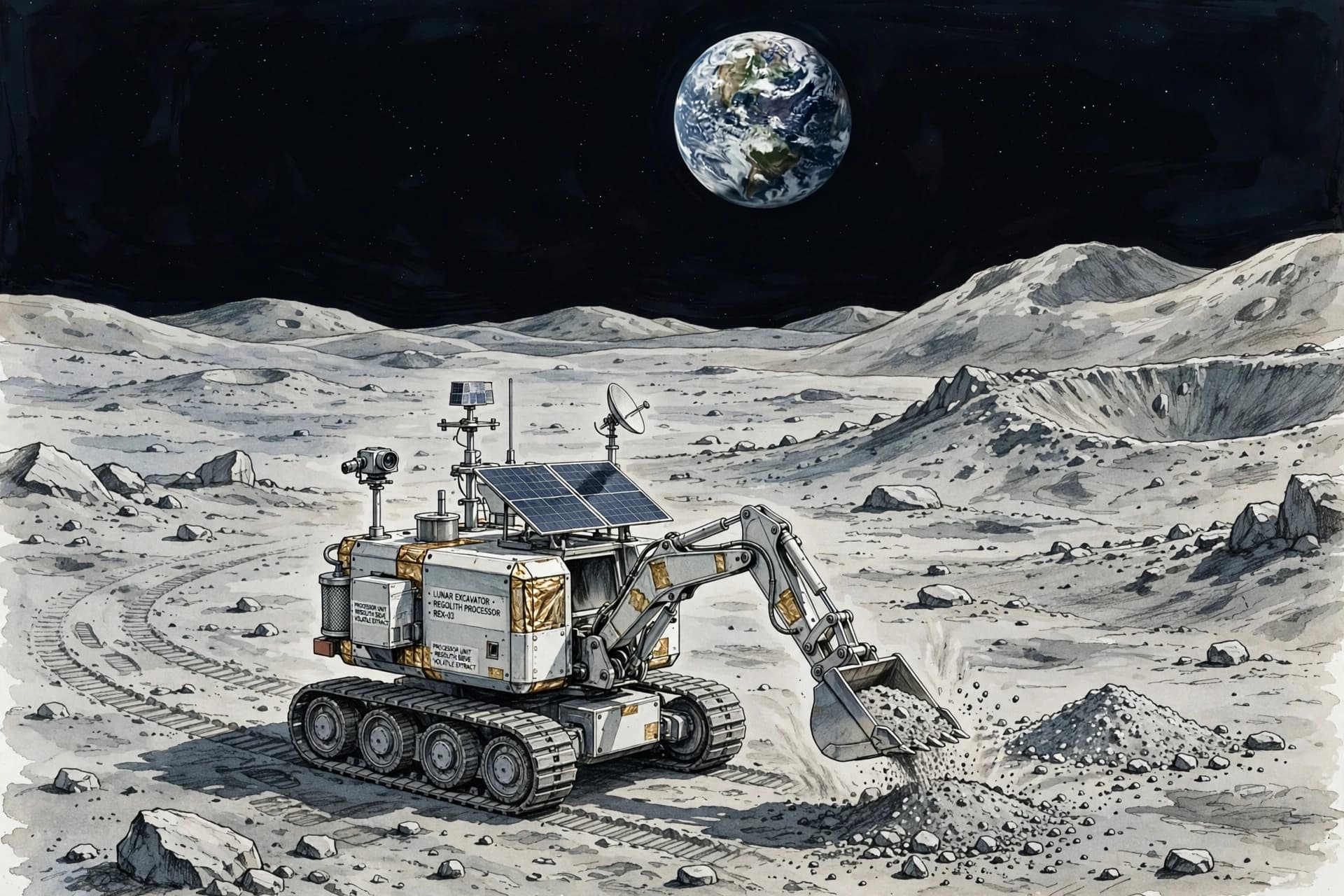
AI Image Disclaimer: The images used in this article are AI-generated illustrations designed to represent scientific concepts and future exploration scenarios.
Sources (verification check): arXiv, NASA, Nature Astronomy, Science News
Published by Banx Network. This article is part of the Banx decentralized media programme, powered by the BXE token on the XRP Ledger.