
Key Highlights
- Mission Overview:NASA's Artemis II aims to send astronauts around the Moon.
- Historical Context:This mission marks humanity's return to lunar exploration after over 50 years.
- International Collaboration:The Artemis program involves partnerships with multiple countries.
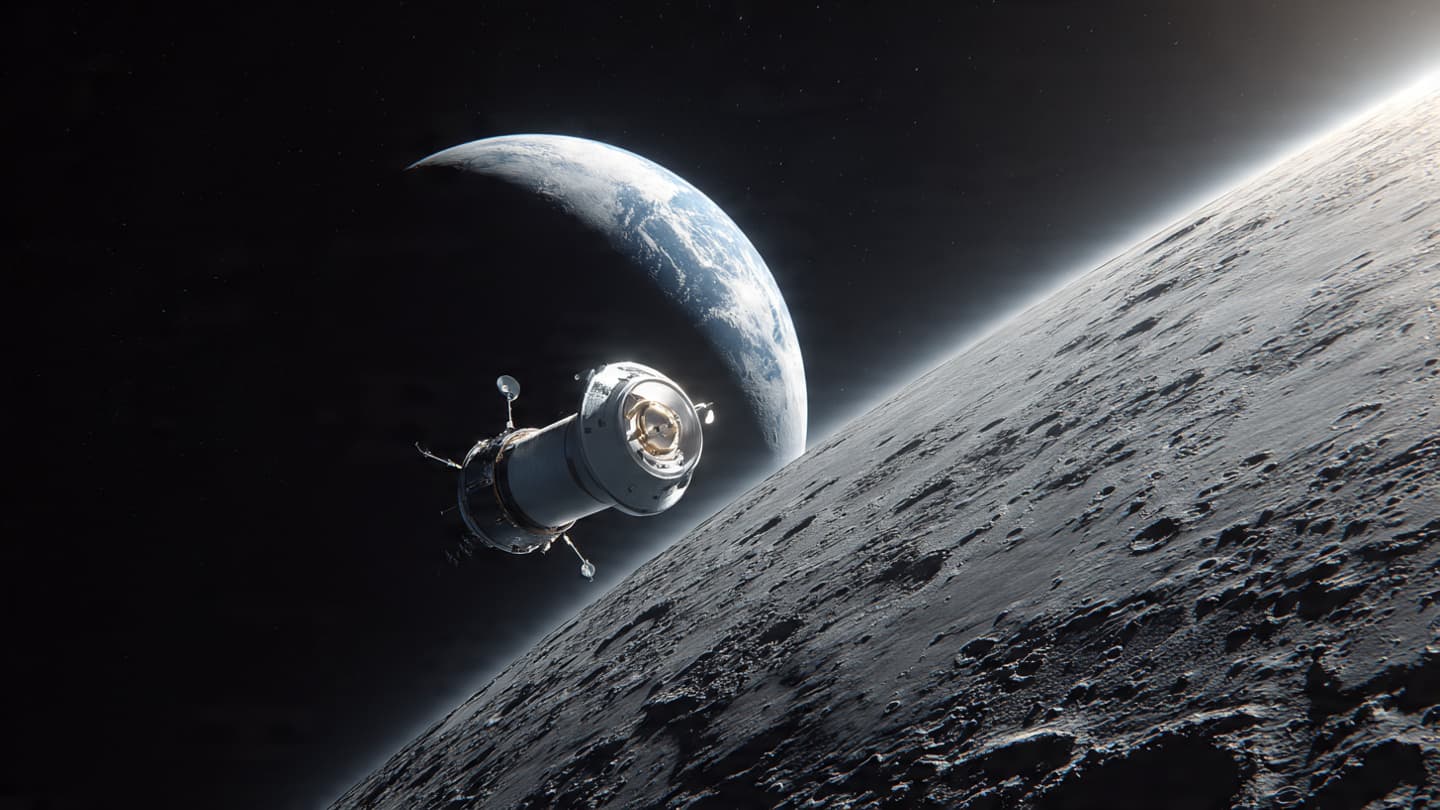
NASA is gearing up for its Artemis II mission, a pivotal step in humanity's journey back to the Moon. Scheduled to launch in the near future, this mission will carry astronauts around the lunar body, testing essential systems for future lunar landings. Unlike its predecessor, Artemis I, which was an uncrewed test flight, Artemis II will place humans aboard the spacecraft, marking a significant milestone in NASA's ambitious Artemis program.
The Artemis program aims to establish a sustainable human presence near the Moon's south pole, a region believed to harbor substantial water ice deposits. These resources could be crucial for future lunar research stations and missions venturing further into deep space. NASA officials emphasize that Artemis II is not just a mission; it is a stepping stone toward long-term exploration and habitation of the Moon.
International collaboration is a cornerstone of the Artemis program, reflecting a shift in space exploration from Cold War-era competition to cooperative scientific endeavors. Agencies and companies from various countries are contributing to the mission, showcasing how global partnerships can enhance technological advancements and foster innovation in space travel.
For space historians and enthusiasts alike, Artemis II holds emotional significance. It connects modern exploration with the legacy of the Apollo missions, which first brought humans to the Moon during a time of intense geopolitical rivalry. However, the current mission is set against a backdrop of scientific ambition and international cooperation, highlighting a more unified approach to space exploration.
NASA also aims to inspire the next generation through this mission. The Artemis program is seen as a catalyst for encouraging interest in science, technology, engineering, and mathematics (STEM) fields. Educational initiatives surrounding Artemis have already sparked discussions in schools and universities about the future of human exploration and innovation.
Despite the excitement, challenges remain. Deep-space missions are fraught with engineering complexities, safety concerns, and significant financial implications. Recent discussions about NASA's funding have raised questions about how to balance scientific investment with domestic priorities, especially in uncertain economic times.
Nevertheless, public interest in lunar exploration is resurging. Advances in private spaceflight, satellite technology, and artificial intelligence have reignited global fascination with missions beyond Earth. The Moon, once considered a completed chapter in exploration history, is now viewed as a new frontier ripe for discovery.
As preparations for Artemis II continue, the mission symbolizes not only a technical endeavor but also humanity's enduring quest to explore the cosmos. In the vast expanse between Earth and the Moon, a new era of exploration is on the horizon, driven by curiosity and collaboration.
Published by Banx Network. This article is part of the Banx decentralized media programme, powered by the BXE token on the XRP Ledger.



