
Human civilization has always measured time. From sundials and mechanical clocks to atomic standards, each advancement has brought greater precision to navigation, communication, and scientific understanding. Now, researchers have taken another significant step by demonstrating what is being described as the world's first nuclear clock.
The achievement represents a new approach to timekeeping. While modern atomic clocks rely on the behavior of electrons surrounding an atom, a nuclear clock focuses on transitions occurring within the atom's nucleus itself. Scientists believe this method may ultimately offer even greater precision.
Precision timing plays a fundamental role in modern society. Global positioning systems, telecommunications networks, scientific experiments, and financial systems all depend on highly accurate clocks operating behind the scenes.
Researchers suggest that nuclear clocks could become valuable tools for testing some of the deepest questions in physics. Extremely precise measurements may help scientists explore whether certain fundamental constants of nature change over time or under different conditions.
The technology could also contribute to efforts aimed at detecting phenomena that remain difficult to observe directly. Some physicists believe future generations of ultra-precise clocks may help reveal evidence of previously unknown physical processes.
Developing a nuclear clock presents substantial technical challenges. The interactions occurring within atomic nuclei are extraordinarily subtle and require specialized equipment capable of measuring them with exceptional accuracy.
The successful demonstration is therefore regarded as an important milestone rather than a final destination. Additional research will be necessary before practical applications become possible, and scientists expect continued experimentation in the years ahead.
The broader scientific community has welcomed the achievement as evidence of continued progress in precision measurement technologies. Advances in this field often create opportunities that extend far beyond their original research goals.
For now, the first nuclear clock stands as a reminder that even something as familiar as time can still inspire innovation. The quest to measure the universe more precisely continues, one tick at a time.
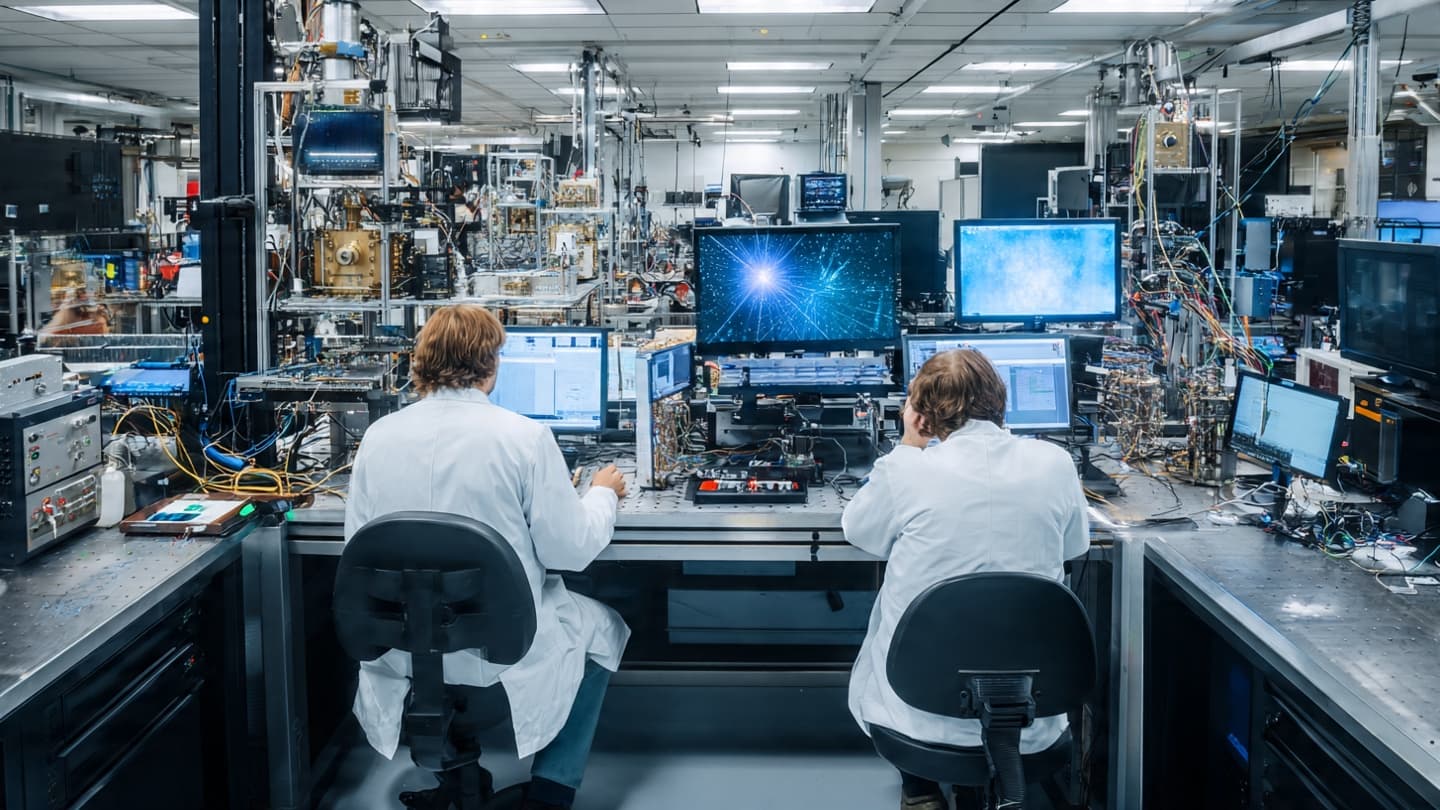
AI Image Disclaimer: The visual associated with this article was generated using AI for illustrative purposes and is not a real image of the experimental apparatus.
Source Verification Check: Live Science, Nature, Science Magazine, Physics Today, New Scientist
Published by Banx Network. This article is part of the Banx decentralized media programme, powered by the BXE token on the XRP Ledger.



