For generations, the Moon has stood as a distant companion in the night sky, a symbol of exploration and quiet wonder. Now, that distant presence is increasingly being reimagined not as a place visited briefly, but as a potential place of residence.
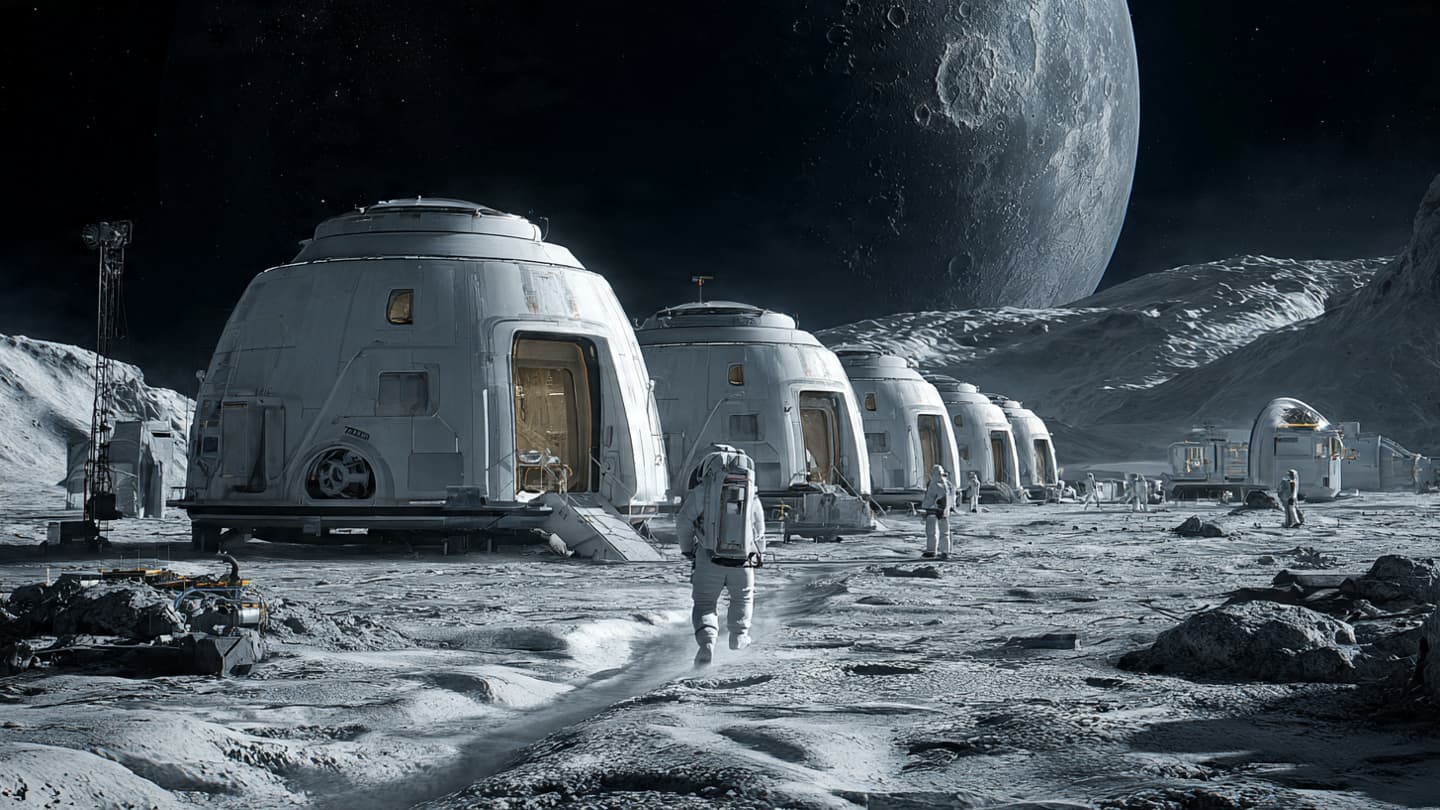
Body: NASA’s Artemis program continues to evolve with growing emphasis on long-term lunar infrastructure. Rather than short exploratory missions, current planning is centered on establishing a sustained human presence on the Moon.
The concept of a permanent base involves more than landing modules or temporary shelters. It includes systems for energy generation, life support, communication, and protection from radiation—each designed for extended operation in an extreme environment.
One of the central challenges lies in the Moon’s harsh conditions. Without a protective atmosphere, temperature shifts are extreme, and radiation exposure remains a significant concern for human health and equipment durability.
International collaboration also plays a key role in shaping the project. Multiple space agencies and private partners are contributing technologies and logistical frameworks to support sustained lunar operations.
Scientists view the Moon not only as a destination but also as a testing ground for deeper space exploration, particularly missions to Mars and beyond. A permanent base could serve as a staging point for fuel production, research, and long-duration habitation studies.
Engineering teams are currently refining landing systems, habitat modules, and robotic support systems designed to assist astronauts in constructing and maintaining lunar infrastructure.
Public interest in lunar exploration has grown alongside technological advancements, reflecting a renewed global focus on space as a shared frontier.
Closing: While timelines remain subject to technical and logistical challenges, NASA’s direction signals a long-term vision in which the Moon becomes part of humanity’s extended living space.
AI Image Disclaimer: Images in this article are AI-generated for editorial visualization purposes and do not represent actual NASA designs.
Sources: NASA, Reuters Science Desk, Space.com, Nature Astronomy, BBC Science
Published by Banx Network. This article is part of the Banx decentralized media programme, powered by the BXE token on the XRP Ledger.