Kutacane, Indonesia—Swift-water rescue teams deployed inflatable rubber boats across low-lying districts of Southeast Aceh early Monday afternoon after torrential highland downpours caused local river basins to breach their banks in a sudden, violent flash flood. The surging brown torrents swept through residential neighborhoods with alarming velocity, catching families unprepared and forcing residents to scramble onto rooftops for safety.
The inundation began shortly after midday when walls of water rushed down from adjacent mountain gorges, overwhelming rural drainage infrastructure and transforming village lanes into raging rapids. Parked motorcycles and household belongings were swept downstream as water levels rose past window sills within minutes, trapping vulnerable elderly residents and children inside waterlogged homes.
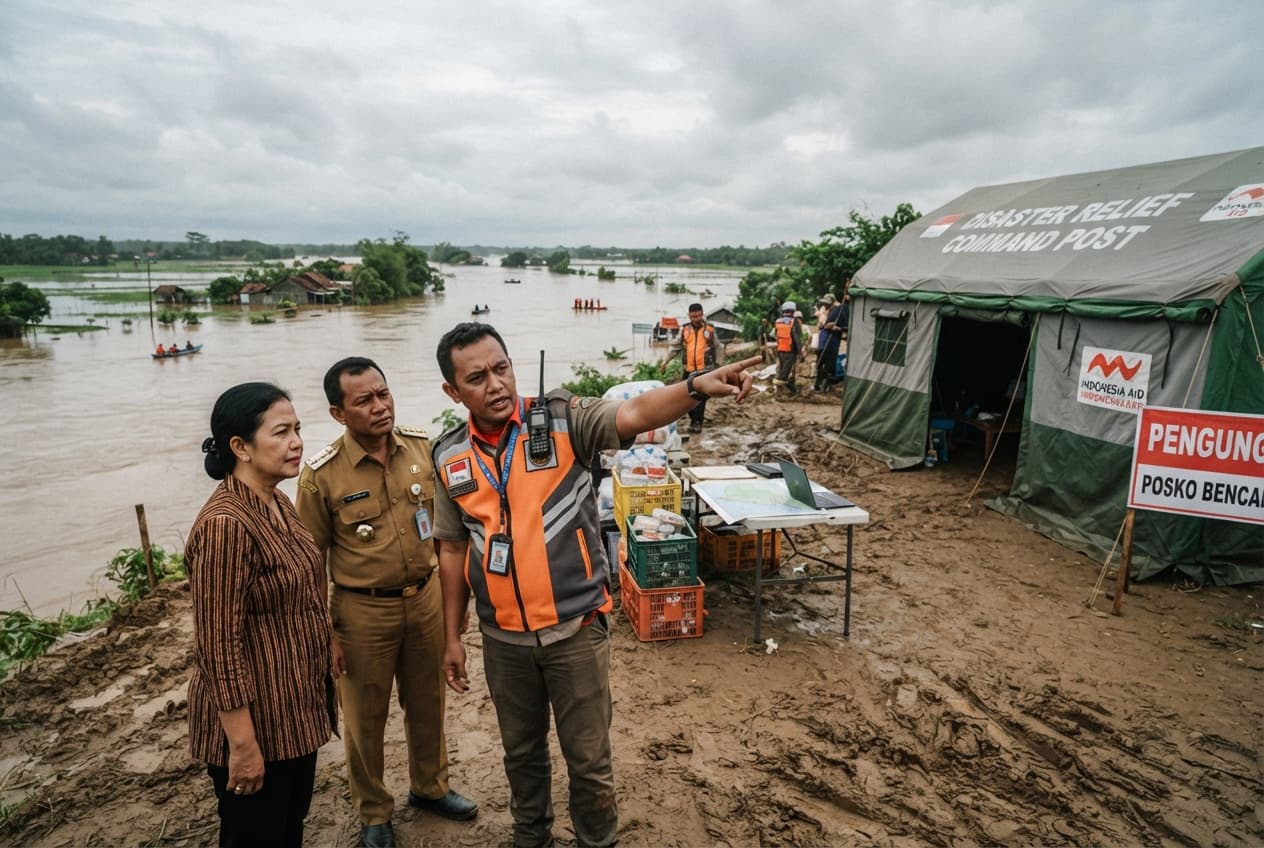
Local disaster management officials activated emergency response protocols, establishing makeshift coordination posts along elevated highway embankments where displaced families sought refuge from the rising tide. "The water rose faster than any seasonal model anticipated, leaving us with narrow windows to extract residents trapped in deep sectors," explained local emergency coordinator Siti Rahma during a briefing at the command center.
Rescue personnel navigated strong currents using motorized skiffs, pulling stranded citizens from second-story balconies and ferrying them to designated evacuation staging grounds established at local government offices. Medical volunteers stationed at the receiving areas administered immediate first aid, treating cuts, bruises, and cases of exhaustion among shivering survivors wrapped in emergency thermal blankets.
Agriculture extension officers reported catastrophic losses across surrounding farming districts, where hundreds of hectares of ripening rice paddies and corn crops were submerged under thick layers of silt and debris. Livestock owners surveyed stranded livestock stranded on isolated patches of high ground, watching helplessly as feed supplies vanished beneath the muddy expanse.
Public health authorities expressed deep concern over potential contamination of shallow community wells, immediately dispatching mobile water purification units and sanitation kits to prevent outbreaks of acute diarrhea and skin infections among the displaced populace. Community kitchens were hurriedly set up by volunteers, preparing thousands of warm meals distributed in polystyrene containers to hungry families crowded into damp school halls.
Regional government representatives inspected damaged bridge approaches and eroded riverbanks, pledging immediate emergency funds for structural reconstruction once the floodwaters fully recede. Engineering teams began assessing the stability of compromised retaining walls to prevent secondary flooding incidents should ongoing weather forecasts bring additional rain to the upper catchment areas.
As twilight settled over the waterlogged landscape, the persistent roar of swollen rivers echoed across the valley while rescue boats continued sweep operations to verify that no isolated households remained unattended. The immediate crisis persists as families contemplate returning to mud-filled homes devoid of electricity and potable drinking water.
Published by Banx Network. This article is part of the Banx decentralized media programme, powered by the BXE token on the XRP Ledger.