There is a particular generosity in the way old instruments teach new ones. Hubble, after more than three decades of service, has seen only one-tenth of one percent of the sky—a narrow, patient gaze that has reshaped our understanding of the universe. The Nancy Grace Roman Space Telescope, launching soon, will image fifty times as much sky in its first five years as Hubble has captured in thirty . It will survey the cosmos at a scale Hubble never could. But it will not do so alone.
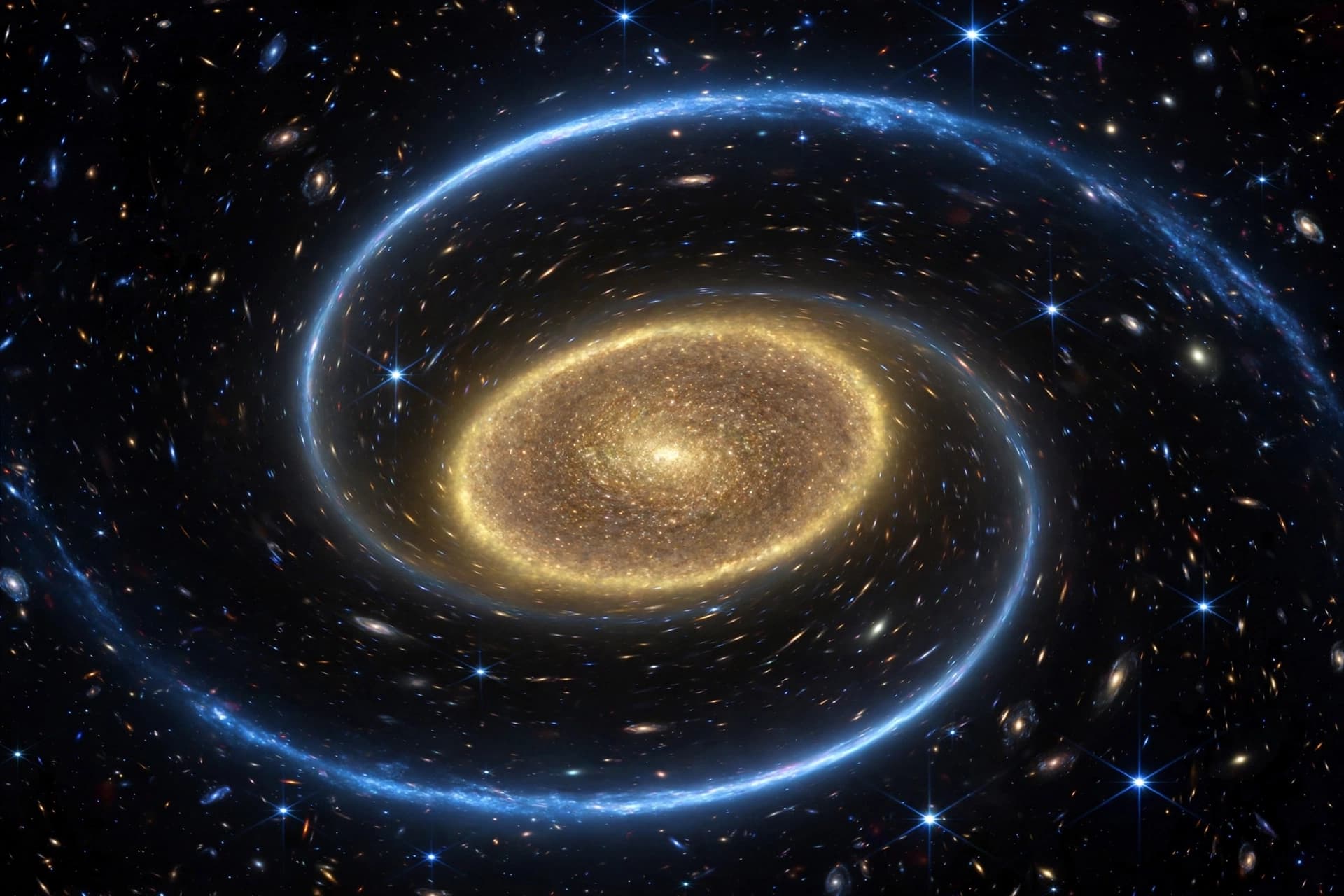
The problem is one of resolution versus breadth. Hubble can examine a single gravitational lens—a massive foreground galaxy bending the light of a more distant one—with enough detail to understand its structure, its mass, and the dark matter that surrounds it. Roman, with its enormous field of view, will detect roughly 160,000 strong gravitational lenses in its High Latitude Wide Area Survey, about fifteen per exposure . It will see them, but it will not see them clearly.
This is where Hubble's helping hand matters. By studying individual lenses in detail, Hubble allows astronomers to build models of how these systems behave. Those models can then be applied to the far greater number of lenses Roman will find, allowing scientists to interpret Roman's data even though Roman's images are 200 times larger and spread across multiple detectors, each with its own point-spread function . The point-spread function—the pattern a point of light makes on a detector, complete with aberrations and diffraction spikes—is easier to understand when you look at one object at a time.
The stakes are not small. Gravitational lensing is one of the primary tools Roman will use to study dark energy, the growth of cosmic structure, and the consistency of general relativity. The distortions in lensed images allow scientists to measure the mass of foreground galaxies, and by comparing that mass to the visible matter, to infer the dark matter present . Every lens is a small measurement in a vast accounting.
Roman's design is optimized for breadth. Its primary mirror is the same size as Hubble's, but its focal length is shorter, and its field of view is one hundred times larger. Its mirror is also more than four times lighter, and smoother—if the mirror were the size of Earth, the largest bump on its surface would be a quarter-inch high . These are engineering achievements. But they do not replace what Hubble offers. They complement it.
What the two telescopes will do together, over the coming years, is something neither could do alone. Roman will find the lenses. Hubble will teach us how to read them. And the universe, in its slow and quiet way, will begin to reveal a little more of what it is made of.
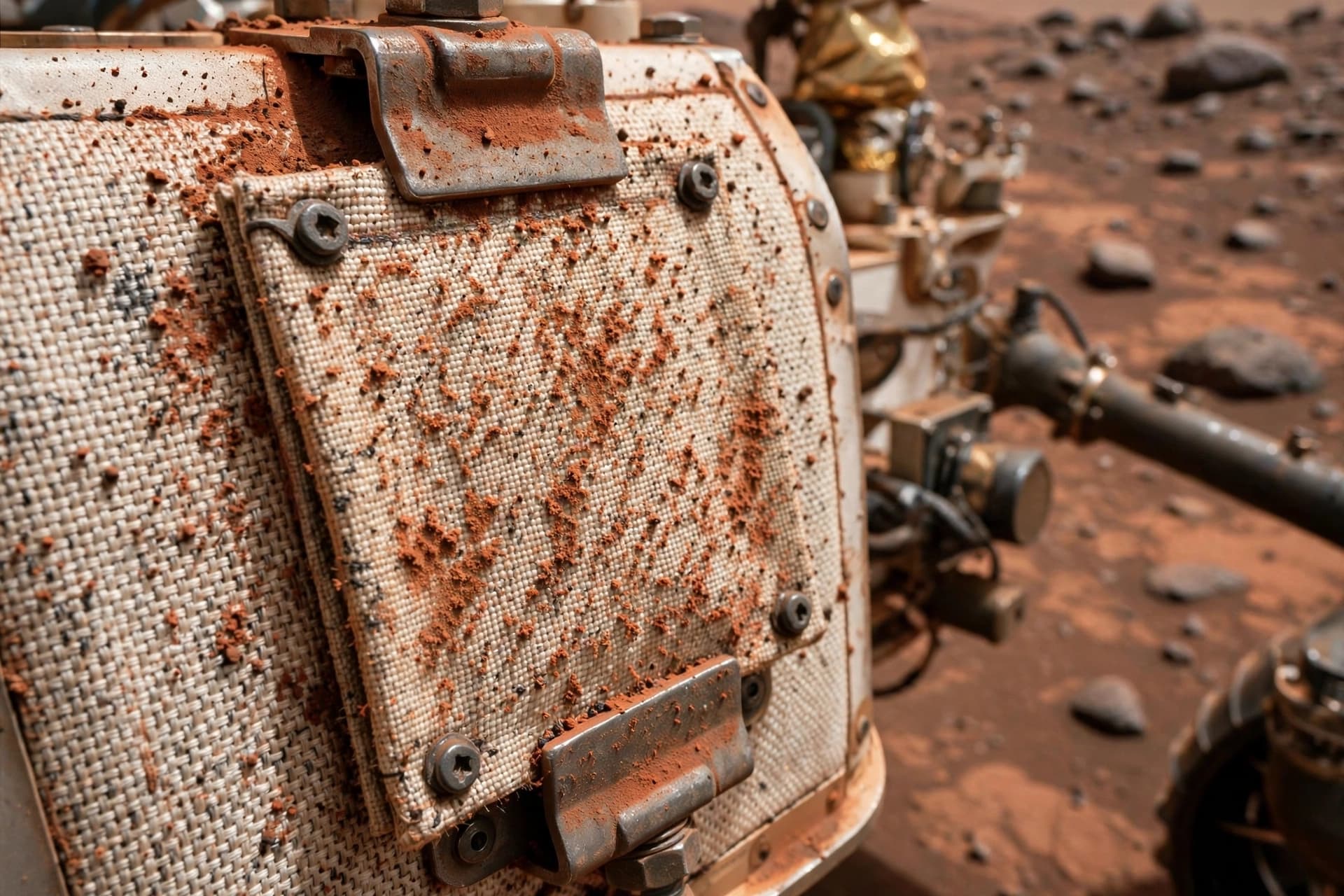
The images in this article are AI-generated and are not actual photographs from either telescope.
Sources: Universe Today, NASA Science, STScI, RRI
Published by Banx Network. This article is part of the Banx decentralized media programme, powered by the BXE token on the XRP Ledger.