There is a particular kind of innocence associated with childhood gatherings, where laughter floats on the breeze and safety feels like a given. Yet, sometimes, the very elements that provide backdrop to our joy can turn unpredictable, reminding us of the fragile balance between celebration and caution. In Mount Duneed, a quiet community near Geelong, this balance was abruptly shifted when strong winds transformed a symbol of fun into a source of alarm.
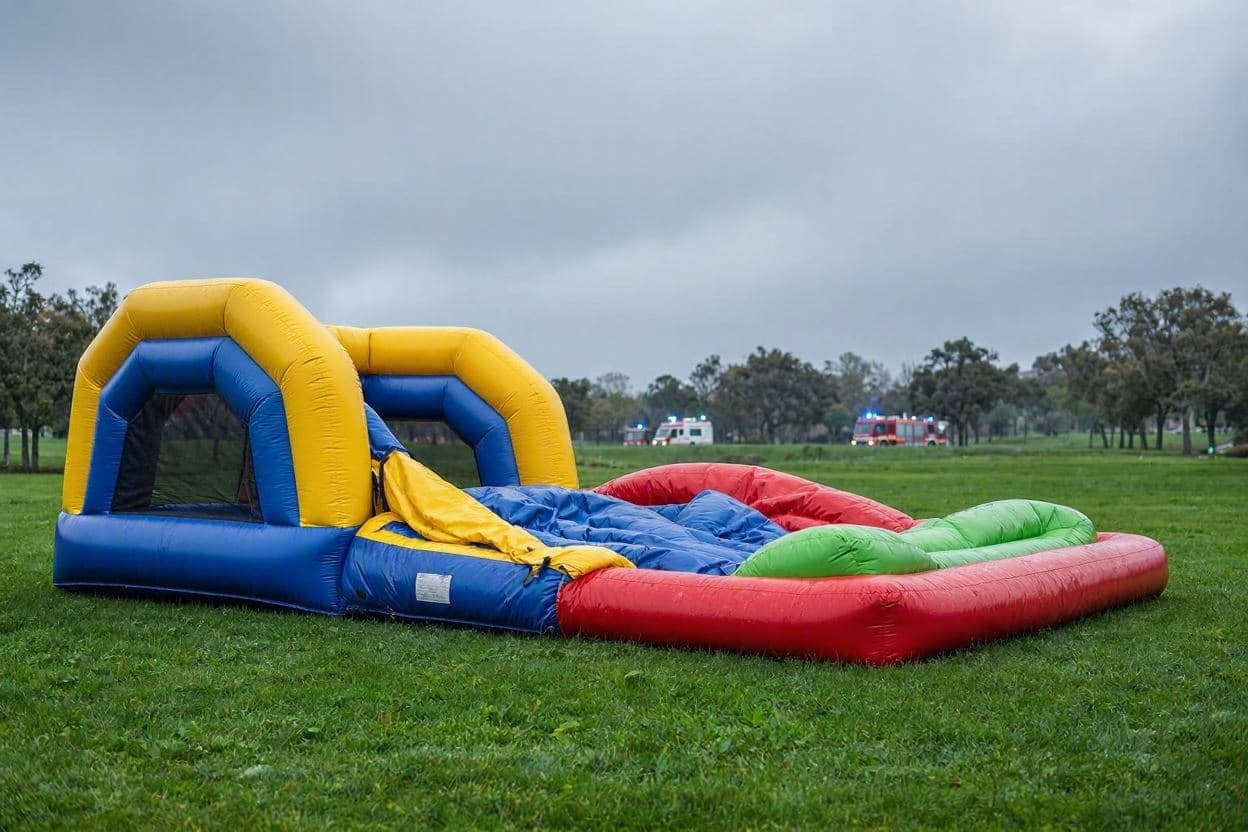
The incident occurred during what appeared to be a typical weekend gathering, where families had come together to enjoy the outdoors. An inflatable jumping castle, anchored on a private property, became the center of attention for several children. However, as gusts picked up, the structure lifted from the ground, carrying with it the young guests who had been playing inside. The scene, described by witnesses as terrifying, unfolded rapidly, leaving parents and onlookers in a state of shock.
Emergency services responded quickly to the distress calls, arriving at the scene to find two primary school-aged children who had been thrown from the airborne structure. Both children sustained injuries, including head trauma, and were treated by paramedics before being transported to the hospital. Their conditions were reported as stable, but the emotional impact of the event rippled through the community, raising questions about safety protocols for such recreational equipment.
This was not an isolated occurrence on that day. Across Australia, another similar incident took place, resulting in a total of five children being hospitalized due to jumping castle accidents within a span of hours. These parallel events have sparked a broader conversation about the risks associated with inflatable amusements, particularly in areas prone to sudden weather changes. The recurrence of such accidents highlights a need for vigilance that extends beyond mere supervision.
Safety guidelines for jumping castles often recommend anchoring them securely and avoiding use in windy conditions. Yet, the unpredictability of local weather patterns can sometimes catch even the most careful hosts off guard. Experts suggest that wind speeds as low as 24 kilometers per hour can pose a risk to improperly secured inflatables, a threshold that can be easily reached in coastal regions like Mount Duneed. The physics of these structures, essentially large sails, make them susceptible to lift when wind catches their surface area.
Community leaders and safety advocates are now calling for stricter adherence to manufacturer guidelines and possibly more robust regulatory oversight. The focus is not on diminishing the joy of childhood play but on ensuring that the environments we create for it are as safe as possible. This incident serves as a poignant reminder that while we cannot control the wind, we can control how we prepare for its arrival.
As the children recover, the community is left to reflect on the day’s events. The images of the flying castle, circulated widely on social media, serve as a stark visual warning. They underscore the importance of respecting nature’s power, even in the most mundane settings. For the families involved, the coming days will be a time of healing, both physical and emotional, as they navigate the aftermath of a day that began with joy and ended in uncertainty.
Authorities continue to investigate the specific circumstances surrounding the Mount Duneed incident, including whether proper anchoring measures were in place. Meanwhile, health officials urge parents and event organizers to remain vigilant about weather conditions when operating inflatable structures, emphasizing that prevention is the most effective form of care.
AI Image Disclaimer: Please note that any accompanying illustrations for this article are AI-generated and intended for representational purposes only.
Sources: Nine.com.au People.com ABC News (Australia) The Nightly
Published by Banx Network. This article is part of the Banx decentralized media programme, powered by the BXE token on the XRP Ledger.