

Key Highlights
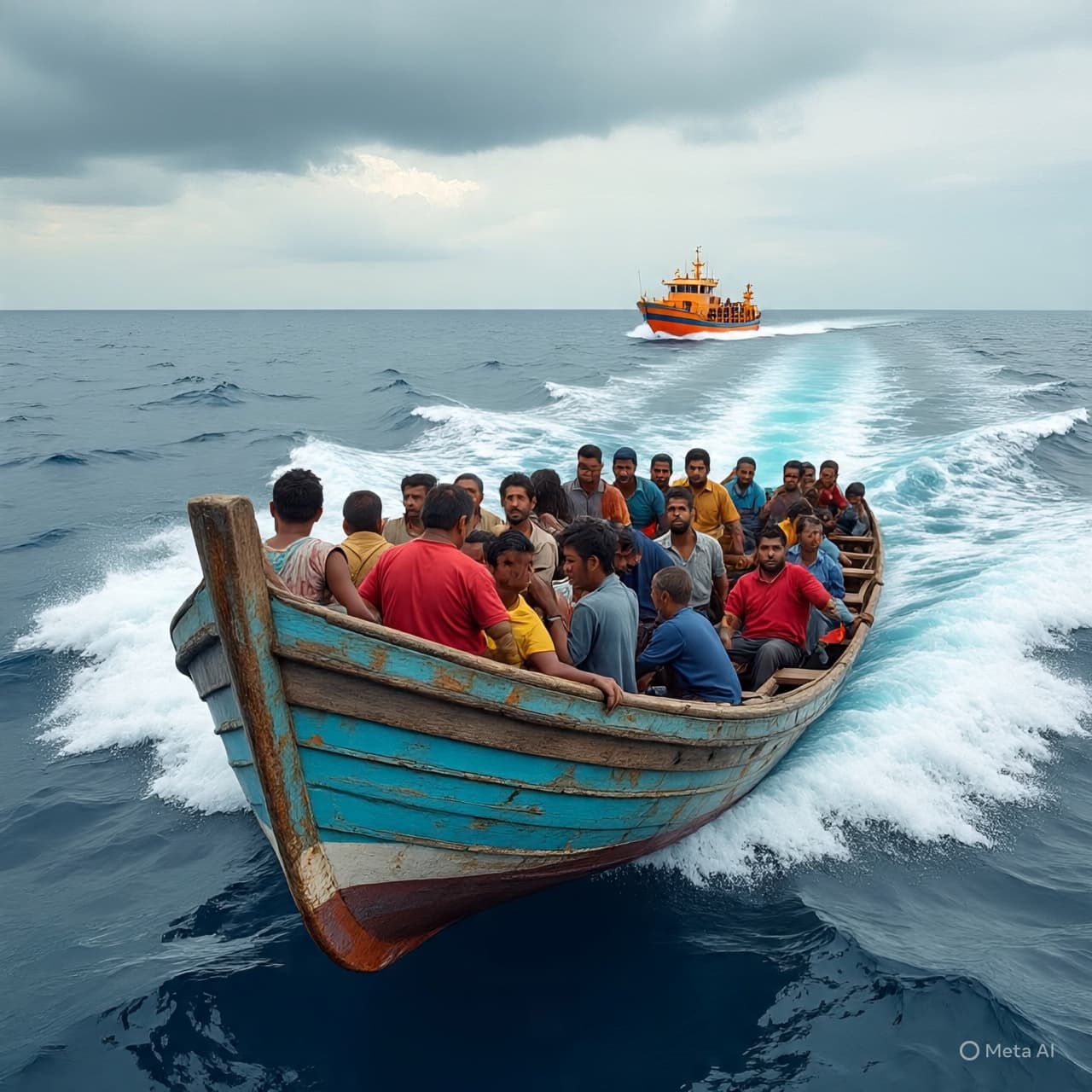
- Incident:A migrant boat capsized in the Mediterranean, leaving many missing.
- Response:Search and rescue teams were deployed to assist survivors.
- Context:The Mediterranean crossing symbolizes desperation amid ongoing crises.
The Mediterranean Sea has long been a storyteller, but not all its stories are meant to be told. Some are carried in silence, drifting between waves that remember more than they reveal. Recently, a tragic narrative unfolded when a migrant boat carrying dozens of people capsized in the central Mediterranean, leaving many missing and feared dead. According to rescue authorities and humanitarian organizations, the vessel departed from North Africa, a route frequently used by those seeking refuge or opportunity in Europe. This incident adds to a growing list of maritime tragedies in one of the world’s most perilous migration corridors.
Search and rescue teams were deployed shortly after distress signals were received. Survivors, many in fragile physical condition, described overcrowded conditions and a sudden shift in the vessel’s stability before it overturned. Some were pulled from the water hours later, while others remain unaccounted for, their fate uncertain beneath the vast expanse of the sea.
The Mediterranean crossing has become a symbol of desperation for thousands. Conflict, economic instability, and environmental pressures continue to push people toward uncertain journeys. For many, the risks of the sea are weighed against the harsh realities they leave behind—often with little hesitation. Humanitarian groups have reiterated calls for stronger international coordination in search-and-rescue operations, arguing that the absence of consistent patrols and safe migration pathways contributes to repeated disasters.
Meanwhile, European authorities face ongoing debates over border policies and responsibility-sharing among nations. Weather conditions at the time of the incident were reported to be moderate, raising concerns about the structural integrity of the vessel and the role of human trafficking networks. Smugglers often use unseaworthy boats, maximizing profit while exposing passengers to extreme danger.
Local communities along Mediterranean coasts have once again become witnesses to tragedy. Fishermen and volunteers frequently participate in rescue efforts, their roles blurring the lines between livelihood and humanitarian response. For them, these events are no longer distant headlines but lived experiences that resonate deeply within their communities.
International organizations, including the United Nations refugee agency, continue to document the rising number of casualties along migration routes. Each incident, while reported individually, contributes to a broader pattern that reflects systemic challenges rather than isolated events. As search efforts continue, attention turns to accountability and prevention. The names and identities of those missing may never be fully known, but their stories echo in the calls for change—quiet yet persistent.
In the end, the sea returns to stillness, but the questions it leaves behind remain unsettled. The Mediterranean, once a bridge between lands, now holds memories that demand to be heard, even when words fall short.
Published by Banx Network. This article is part of the Banx decentralized media programme, powered by the BXE token on the XRP Ledger.




