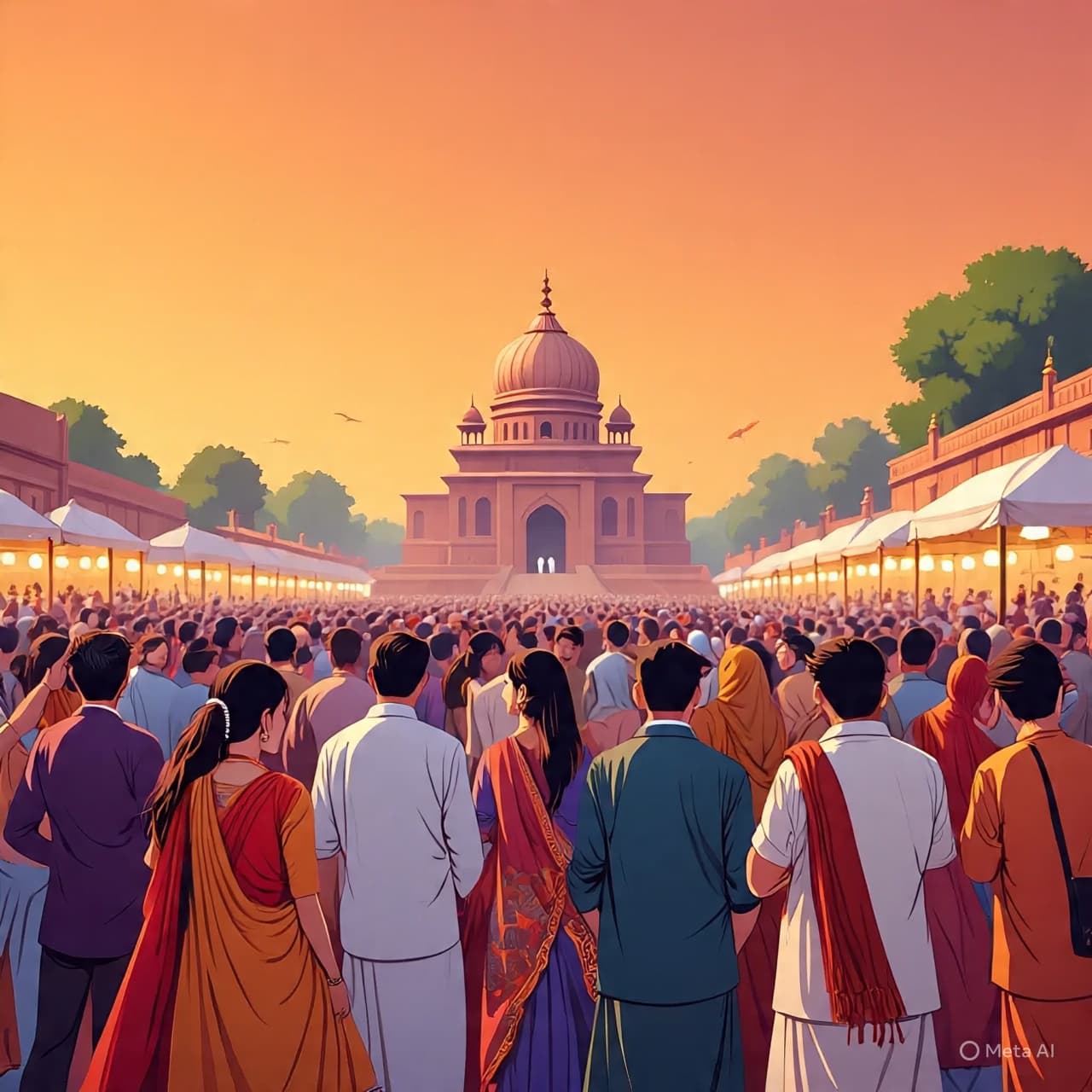
For much of India’s post-independence history, the idea of a Hindu political movement shaping the nation’s destiny existed at the margins — influential in pockets, persistent in ideology, but largely peripheral to the levers of state power. Today, that reality has shifted. What was once a current beneath the surface has become a defining force in India’s political life.
The rise of the Hindu right did not happen overnight. It emerged gradually, through decades of grassroots organizing, cultural mobilization, and ideological persistence. Long before electoral victories, the movement invested in networks of schools, volunteer groups, and social organizations designed to cultivate a shared civilizational identity. Politics, in this vision, was not merely about governance but about reshaping national consciousness.
As India’s economic and social landscape transformed, so too did the appeal of this worldview. Rapid urbanization, uneven development, and the anxieties of globalization created fertile ground for narratives promising cultural restoration and national pride. The message resonated especially with those who felt overlooked by established political elites or unsettled by rapid change.
Over time, electoral success followed. What began as a fringe movement gained legitimacy through the ballot box, eventually translating ideological conviction into institutional power. With that power came a redefinition of the relationship between state and society. Policies once considered symbolic became instruments of governance, and cultural identity increasingly intersected with political authority.
Supporters argue that this transformation has restored confidence and coherence to a nation long constrained by colonial legacies and fragmented politics. Critics, however, warn of narrowing pluralism and the erosion of India’s secular foundations. The tension between these perspectives now defines much of the country’s public life.
Yet the rise of the Hindu right cannot be reduced to a single party or leader. It is the product of decades of social mobilization, strategic patience, and an ability to convert cultural sentiment into political capital. Its success lies not only in electoral victories but in reshaping the terms of national debate itself.
As India moves forward, the question is no longer whether this movement has changed the country — that much is evident. The more consequential question is how enduring its imprint will be, and how India reconciles the pull of identity with the pluralism that has long defined its democratic experiment.
Published by Banx Network. This article is part of the Banx decentralized media programme, powered by the BXE token on the XRP Ledger.