The deep past rarely announces itself clearly. It speaks instead through fragments—pressed into stone, scattered across time, waiting for careful attention. In southern China, within layers of ancient rock, a quiet record has been keeping its memory. The Huayuan biota, preserved with remarkable detail, is now offering a gentler but clearer understanding of Earth’s first great biological loss during the Phanerozoic eon.
Roughly 514 million years ago, life on Earth was still experimenting with form. The Cambrian seas were rich with unfamiliar creatures, many unlike anything alive today. The Huayuan biota captures this moment with unusual completeness, preserving both soft-bodied organisms and more familiar shelled animals. Together, they form a snapshot of ecosystems just before and after a mass extinction that reshaped early complex life.
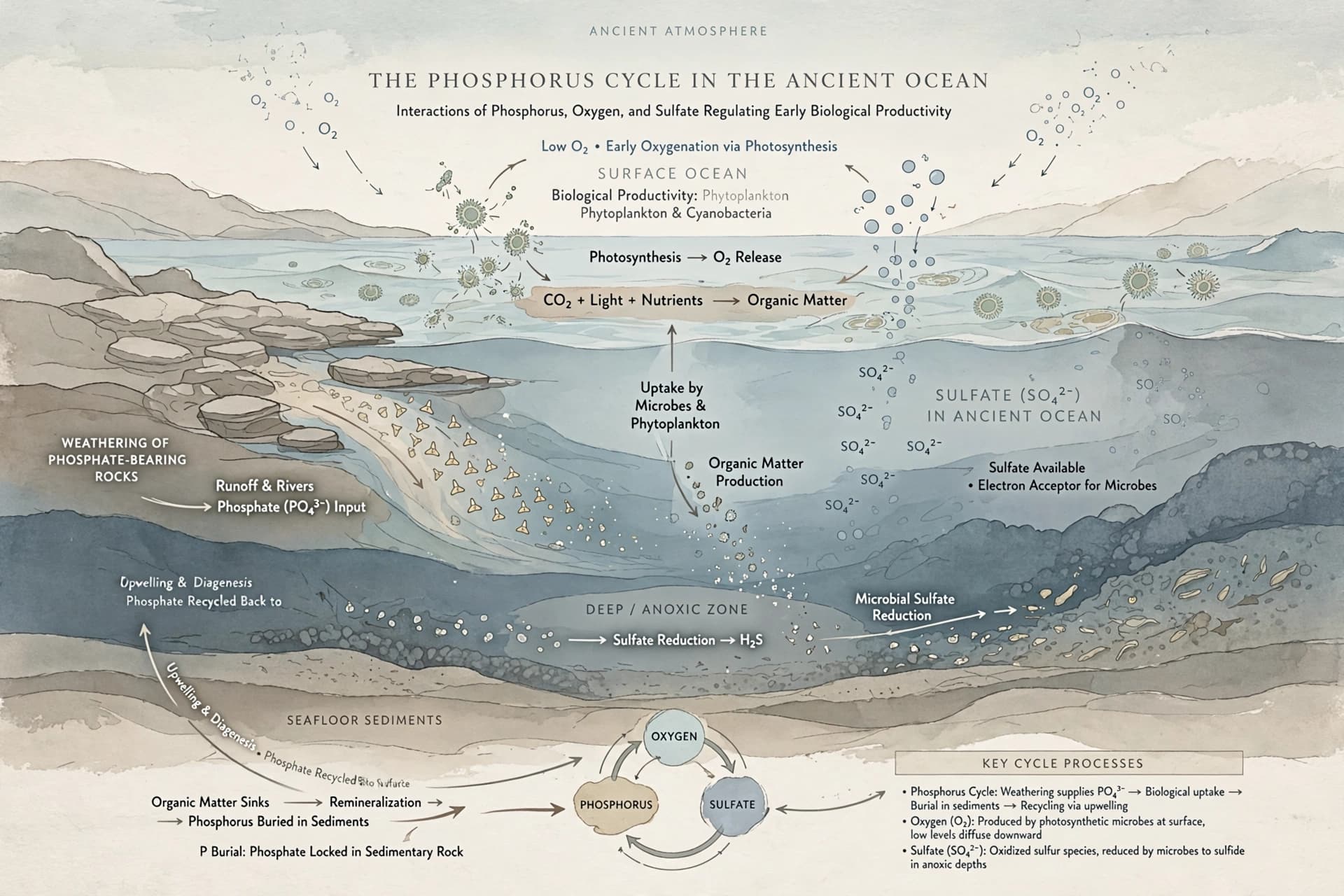
What researchers have uncovered is not a sudden collapse, but a measured unraveling. The fossil record suggests that environmental stressors—likely linked to changes in ocean chemistry and oxygen levels—gradually narrowed the range of organisms that could survive. Species dependent on stable, oxygen-rich waters declined first, while more adaptable forms endured. The extinction appears selective rather than indiscriminate, favoring resilience over specialization.
This interpretation adds texture to our understanding of early mass extinctions. Instead of a single catastrophic event, the Huayuan biota points to prolonged ecological pressure. Communities shifted, food webs thinned, and evolutionary paths quietly closed. Life did not vanish, but it was reshaped, with long-lasting consequences for the development of marine ecosystems.
The significance of the Huayuan fossils lies not only in what disappeared, but in what followed. After the extinction, surviving lineages diversified, laying groundwork for more stable ecosystems later in the Cambrian. The event acted less as an ending than as a narrowing, guiding evolution through constraint rather than abundance.
There is a subtle lesson embedded in these rocks. Earth’s early biosphere was sensitive, responsive, and deeply connected to its environment. Even in its youth, life was shaped as much by planetary conditions as by genetic innovation. The Huayuan biota allows scientists to trace this relationship with unusual clarity.
Researchers say ongoing analysis of the site continues to refine timelines and environmental models associated with the extinction. The findings contribute to a growing body of evidence that Earth’s first Phanerozoic mass extinction was complex, gradual, and influential in steering the course of animal evolution.
AI Image Disclaimer Illustrations were produced with AI and serve as conceptual depictions.
Sources Nature Science PNAS National Geographic Smithsonian Magazine
Published by Banx Network. This article is part of the Banx decentralized media programme, powered by the BXE token on the XRP Ledger.