
Language is among humanity's most remarkable abilities. Every conversation, speech, and written sentence reflects a complex process unfolding within the brain, often in fractions of a second. A new scientific study has provided deeper insight into how the brain constructs sentences word by word, offering a clearer picture of one of the mind's most sophisticated functions.
Researchers used advanced neurological monitoring techniques to observe patterns of brain activity associated with language production. Their goal was to understand how individual words are organized into meaningful sentences during communication.
The findings suggest that sentence construction involves a highly coordinated sequence of neural processes. Rather than assembling complete thoughts all at once, the brain appears to build linguistic structures progressively, integrating words as they are prepared for speech.
Scientists observed that different brain regions contribute distinct functions. Some areas are associated with vocabulary selection, while others help organize grammar, syntax, and sentence flow. Together, these networks enable smooth communication.
The study provides valuable insight into the relationship between language and cognition. Understanding how the brain processes language may help researchers better understand learning, memory, and decision-making.
Medical applications may also emerge from this research. Improved knowledge of language networks could support efforts to diagnose and treat neurological conditions affecting speech, including stroke-related communication disorders and certain neurodegenerative diseases.
Advances in brain-imaging technologies have made such discoveries increasingly possible. Modern tools allow researchers to measure neural activity with a level of detail that was unimaginable only a few decades ago.
Experts emphasize that language remains one of neuroscience's most challenging subjects. Although significant progress has been made, many aspects of how thoughts become words are still not fully understood.
The new findings represent another step toward unraveling that mystery. By mapping how the brain constructs sentences, scientists are gaining a deeper appreciation of the extraordinary processes that make human communication possible.
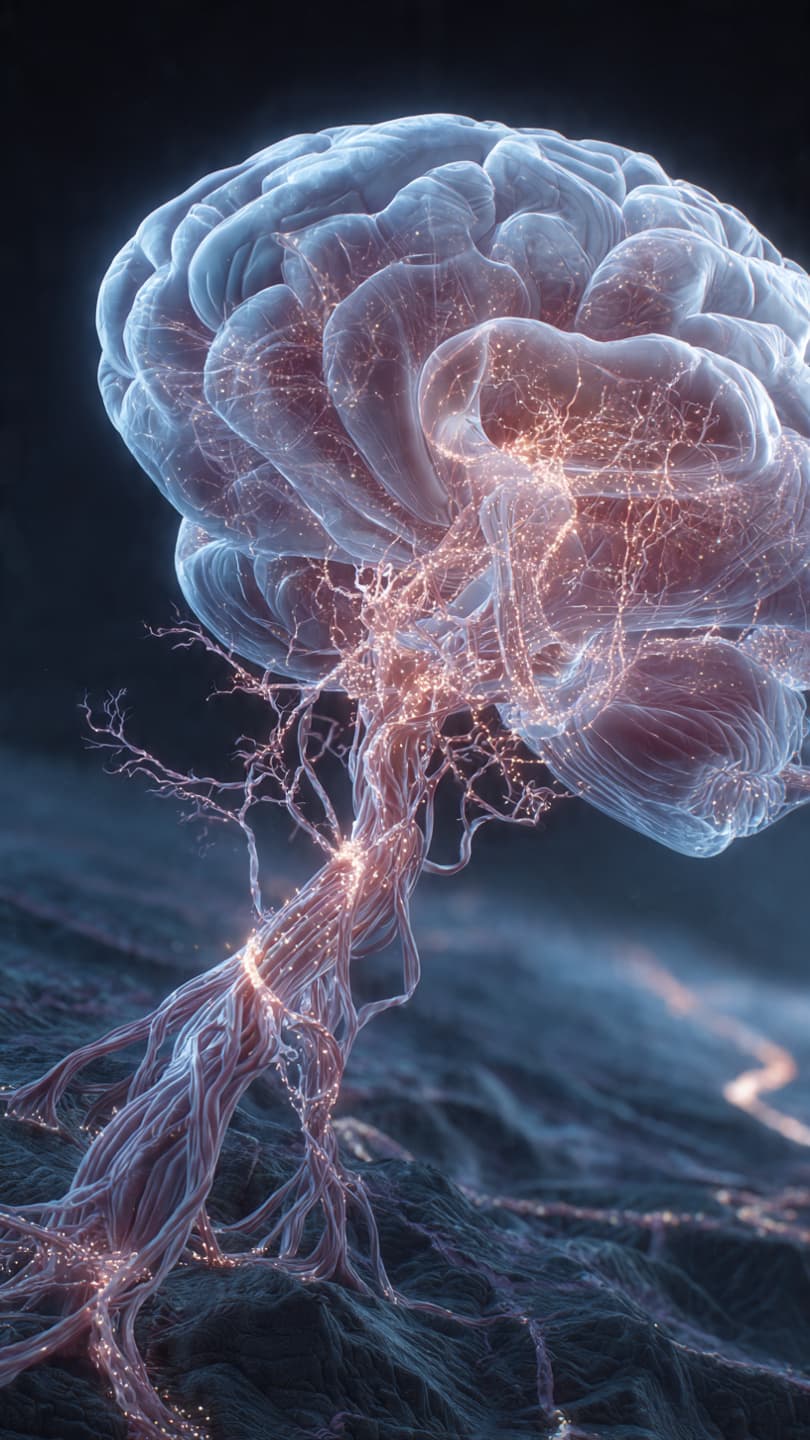
AI Image Disclaimer: The visual materials associated with this article are AI-generated scientific illustrations created to represent neurological and linguistic processes.
Sources Verified Nature Science National Institutes of Health (NIH) Nature Neuroscience Scientific American
Published by Banx Network. This article is part of the Banx decentralized media programme, powered by the BXE token on the XRP Ledger.



