
Key Highlights
- Iran's military strategy in the Strait of Hormuz focuses on asymmetric warfare.
- Deployment of mini submarines and naval mines complicates naval operations.
- Coastal missile systems and cyber capabilities enhance Iran's threat profile.
The Strait of Hormuz, a narrow passage connecting the Persian Gulf to the Arabian Sea, is a critical chokepoint for global oil shipments. Approximately 20% of the world's oil passes through this waterway, making it a focal point of geopolitical tension. Iran's strategic approach to this vital corridor combines military tactics with psychological operations, creating a complex environment for both regional and global powers.
Iran perceives the Strait of Hormuz as both a vulnerability and a leverage point. Over the years, it has developed a multi-faceted strategy that emphasizes asymmetrical warfare. This approach allows Iran to exert influence without engaging in direct confrontation, effectively turning its geographical position into a strategic asset.
One of the most notable components of Iran's strategy is the deployment of mini submarines. These small, stealthy vessels are designed to operate in shallow waters, making them difficult to detect. Equipped with torpedoes and mines, they pose a significant threat to larger naval fleets, particularly those of the United States. The presence of these submarines complicates traditional naval operations, forcing adversaries to reconsider their tactics in the region.
In addition to submarines, Iran has increasingly utilized naval mines as a means of disrupting shipping lanes. Even a limited deployment of these mines can have a profound impact on maritime traffic, necessitating rerouting or halting operations altogether. The process of clearing mines is time-consuming and requires specialized resources, amplifying their strategic significance beyond their immediate physical presence.
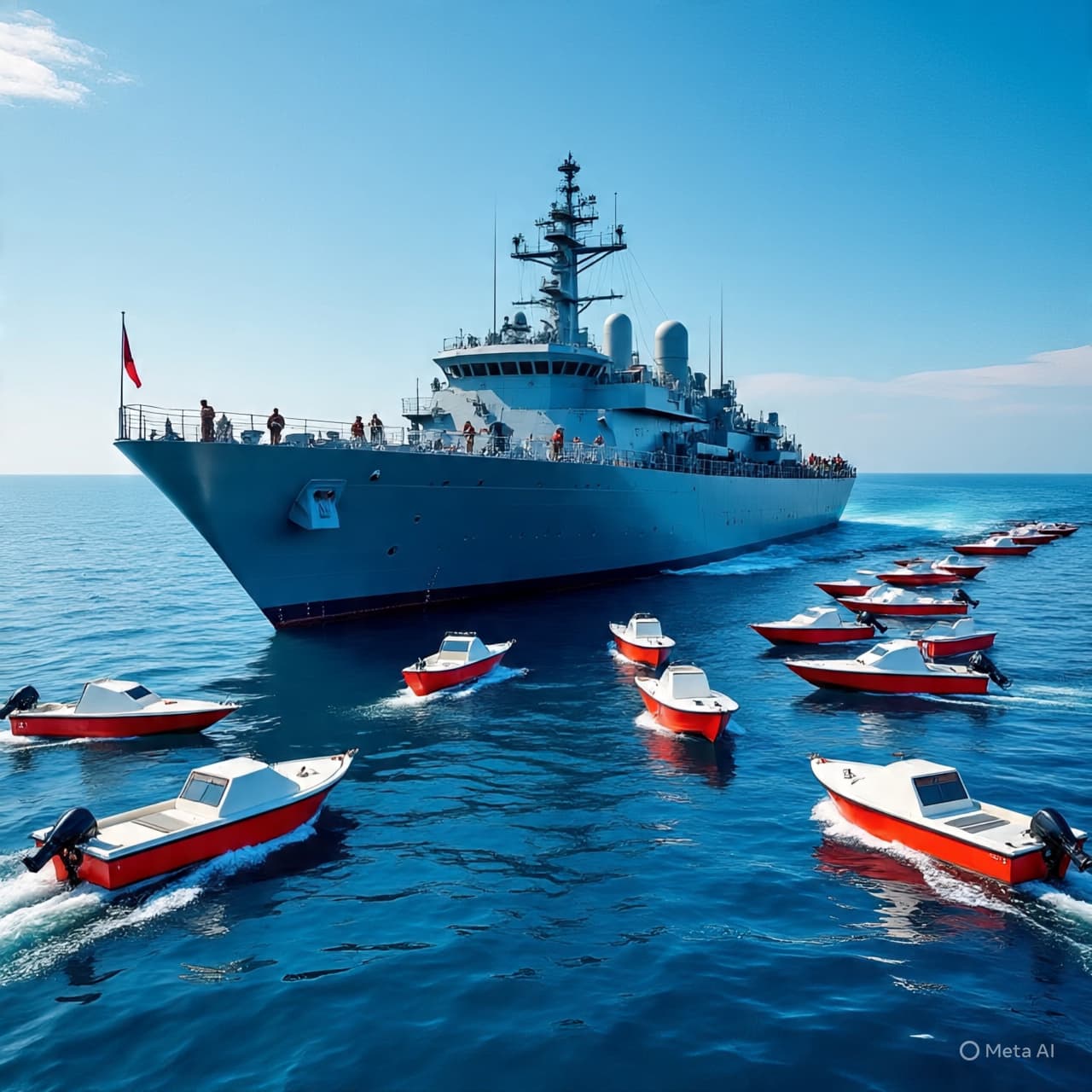
Fast attack boats represent another layer of Iran's naval strategy. These vessels, often deployed in swarms, leverage speed and maneuverability to potentially overwhelm larger ships through coordinated tactics. In the confined waters of the Strait of Hormuz, such strategies can be particularly effective, creating a challenging environment for larger naval forces.
Furthermore, Iran has invested in coastal missile systems positioned along its shoreline. These systems are capable of targeting vessels transiting through the strait, thereby establishing a persistent threat environment. The integration of these missile systems with advanced radar capabilities enhances their range and precision, further complicating the security landscape in the region.
Cyber capabilities add a modern dimension to Iran's strategic toolkit. By disrupting navigation systems or port operations, Iran can create confusion and uncertainty without engaging in direct physical conflict. This approach reflects a broader trend in modern warfare, where cyber tactics increasingly complement traditional military strategies.
Finally, the psychological aspect of Iran's strategy cannot be overlooked. The mere perception of risk in the Strait of Hormuz can influence global markets, insurance rates, and shipping decisions. In this context, control is exercised not only through direct action but also through the anticipation of potential threats, shaping the behavior of global stakeholders.
In summary, Iran's multifaceted strategy in the Strait of Hormuz transforms this narrow waterway into a space of calculated uncertainty. By leveraging a combination of military tactics, psychological operations, and cyber capabilities, Iran effectively exerts influence over one of the world's most critical maritime corridors.
Published by Banx Network. This article is part of the Banx decentralized media programme, powered by the BXE token on the XRP Ledger.



