

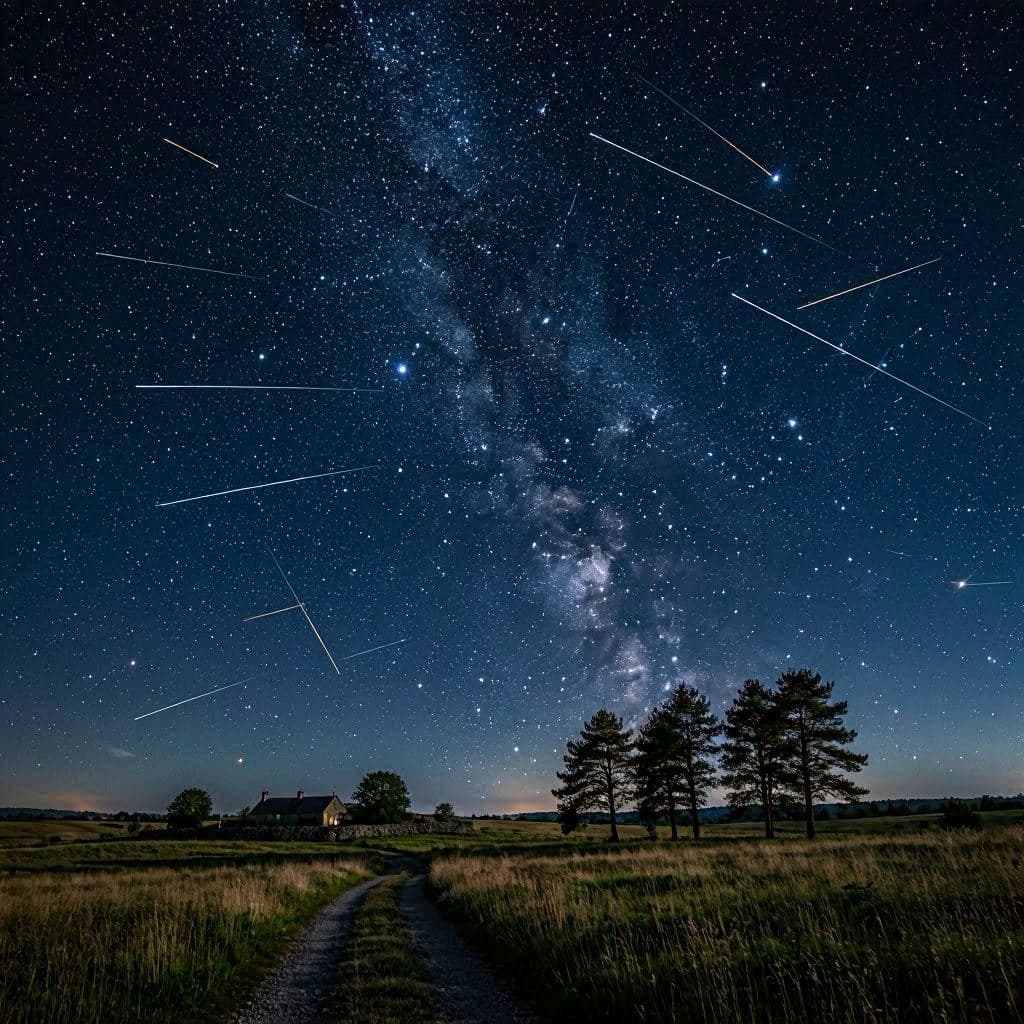
Key Highlights
- 1.7 million satellites planned for launch could brighten the night sky.
- Astronomers warn of interference with astronomical observations.
- Efforts are underway to mitigate the impact of satellite reflections.
The night sky has long been a source of inspiration and wonder, serving as a backdrop for human history and exploration. However, as technology advances, the cosmos faces a new challenge: the proposed launch of over 1.7 million satellites aimed at providing global broadband internet coverage. This unprecedented increase in artificial objects in low Earth orbit raises significant concerns among astronomers and environmentalists alike, who warn that the night sky may become significantly brighter, obscuring our view of the universe.
The primary issue stems from the sheer number of satellites being deployed by various commercial entities. Each satellite reflects sunlight, creating bright streaks that can interfere with astronomical observations. For telescopes designed to detect faint celestial bodies, these artificial trails can ruin long-exposure images, effectively blinding us to parts of the universe that have long captivated human curiosity. Recent studies indicate that the brightness of the night sky could increase dramatically, impacting both professional observatories and amateur stargazers.
Skyglow, a phenomenon exacerbated by light pollution from urban areas, could become even more pronounced with the addition of satellite reflections. Many locations on Earth may find it increasingly difficult to see the Milky Way, a loss that many view as a cultural and environmental tragedy. The implications of this loss extend beyond mere visibility; they touch on our connection to the cosmos and the natural world.
In response to these challenges, astronomers are actively engaging with satellite operators to find solutions. Strategies include designing satellites with darker materials, adjusting their orientation to minimize reflection, and coordinating observation schedules to avoid peak satellite traffic. Some companies have already begun implementing changes, such as adding sunshades or using less reflective coatings. However, with the number of planned launches increasing exponentially, these measures may not be sufficient to fully address the problem.
The regulatory framework governing space activities has struggled to keep pace with technological advancements. Current guidelines are largely voluntary, lacking the enforcement mechanisms needed to ensure compliance with best practices for astronomical preservation. International discussions are underway to establish stricter regulations, but reaching a consensus among nations and private corporations is a complex and slow process. The absence of binding rules leaves the night sky vulnerable to uncoordinated expansion.
Beyond the scientific implications, the brightening of the night sky raises philosophical questions about our relationship with the universe. The ability to gaze up at the stars is a universal human experience that connects us to our history and our place in the cosmos. Losing this connection could diminish our sense of wonder and understanding of the universe. Thus, preserving dark skies is not only a scientific necessity but also a cultural imperative that requires collective action and awareness.
Efforts to monitor and model the impact of satellite constellations are ongoing. Researchers are developing tools to predict satellite positions and brightness, allowing observatories to plan their observations more effectively. Additionally, there is a push to create protected zones in space, akin to national parks on Earth, where satellite deployments would be restricted. These initiatives aim to balance the benefits of technology with the need to preserve our view of the heavens.
As we stand on the brink of this new era, the conversation surrounding satellite proliferation is critical. It necessitates a balanced approach that recognizes the value of global connectivity while respecting the integrity of the natural night sky. Collaboration between industry, science, and policymakers is essential to find solutions that allow both to thrive. The sky above belongs to all of us, and its preservation is a shared responsibility.
The potential brightening of the night sky due to massive satellite constellations poses a significant challenge to astronomy and cultural heritage. While technological solutions and regulatory efforts are underway, the scale of the proposed launches demands urgent attention. Protecting our view of the universe is a task that requires immediate action and ongoing dialogue among all stakeholders involved.
Published by Banx Network. This article is part of the Banx decentralized media programme, powered by the BXE token on the XRP Ledger.




