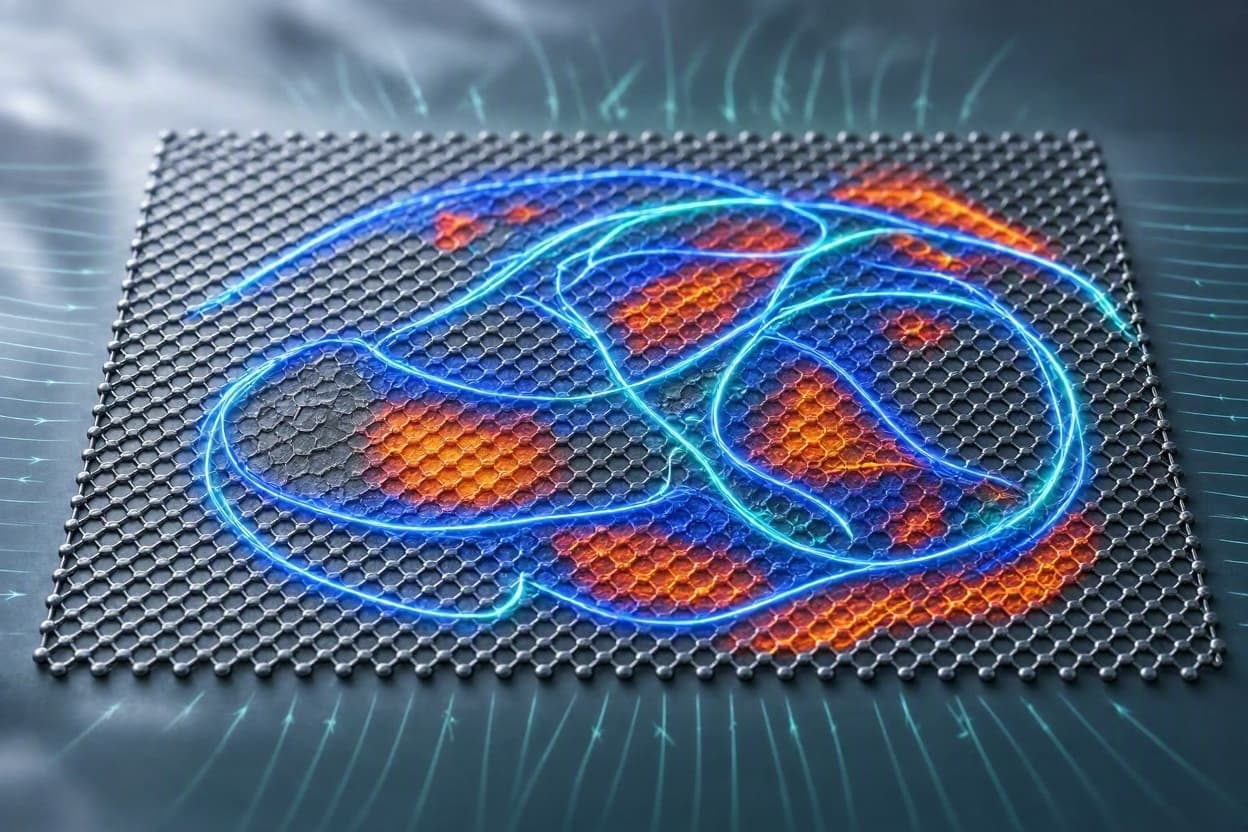
Graphene, the miracle material composed of a single layer of carbon atoms, continues to reveal its secrets to scientists. In a recent breakthrough, researchers have discovered that magnetic fields can be used to detect heat signatures within the flow of electrons in graphene. This finding opens new avenues for understanding thermal management in nanoscale devices, offering a non-invasive way to probe the intricate dance of energy and charge in two-dimensional materials.
The study focuses on the thermoelectric properties of graphene, specifically how heat and electricity interact at the quantum level. When an electric current flows through graphene, it generates heat, but measuring this heat distribution without disturbing the system has been a significant challenge. By applying a magnetic field, researchers were able to induce a measurable voltage response that correlates directly with the local temperature gradients.
This technique, known as the Nernst effect, allows scientists to map heat flow with unprecedented precision. The magnetic field acts as a lens, focusing on the subtle interactions between moving electrons and phonons (vibrations in the crystal lattice). The resulting data provides a detailed picture of how heat dissipates in graphene, which is crucial for designing efficient electronic components.
Graphene is renowned for its excellent electrical conductivity and mechanical strength, but its thermal properties are equally important. As electronic devices shrink, managing heat becomes critical to prevent overheating and ensure stability. Understanding how heat moves in graphene can help engineers design better heat sinks and thermal interfaces for next-generation processors and sensors.
The implications extend beyond simple cooling. The ability to control and measure heat flow at the nanoscale could lead to new types of energy harvesting devices. Thermoelectric generators, which convert waste heat into electricity, could be made more efficient using graphene-based materials optimized through these magnetic field techniques.
Furthermore, this research contributes to the broader field of spintronics, where the spin of electrons is used to store and process information. The interplay between magnetic fields, heat, and charge in graphene offers new possibilities for manipulating electron spin, potentially leading to faster and more energy-efficient computing technologies.
The experimental setup required extreme precision, involving low temperatures and high-quality graphene samples. The success of the study demonstrates the maturity of nanofabrication techniques and the sophistication of modern measurement tools. It is a testament to the collaborative effort of physicists and engineers working at the forefront of material science.
The use of magnetic fields to unveil heat signatures in graphene marks a significant step forward in nanotechnology. It provides a powerful tool for exploring the thermal dynamics of advanced materials, paving the way for innovations in electronics and energy conversion.
AI Image Disclaimer: Visuals associated with this article are AI-generated interpretations designed to reflect the urgency and scale of the public safety concern.
Sources: Nature Nanotechnology, Physical Review Letters, MIT News, ScienceDaily
Published by Banx Network. This article is part of the Banx decentralized media programme, powered by the BXE token on the XRP Ledger.