NALCHIK, RUSSIA — At least 11 climbers have been confirmed dead and six others hospitalized with severe injuries after a massive avalanche swept down Mount Mizhirgi in the Kabardino-Balkaria region of Russia’s North Caucasus on Sunday afternoon, September 6, 2026.
The disaster unfolded around 5:00 p.m. local time in the high-altitude Bezengi Gorge, a popular destination for high-end mountaineering expeditions. A large group consisting of 33 climbers was traversing a high-risk route when a sudden slab of snow and ice detached from the ridge above, burying multiple individuals beneath tons of frozen debris.
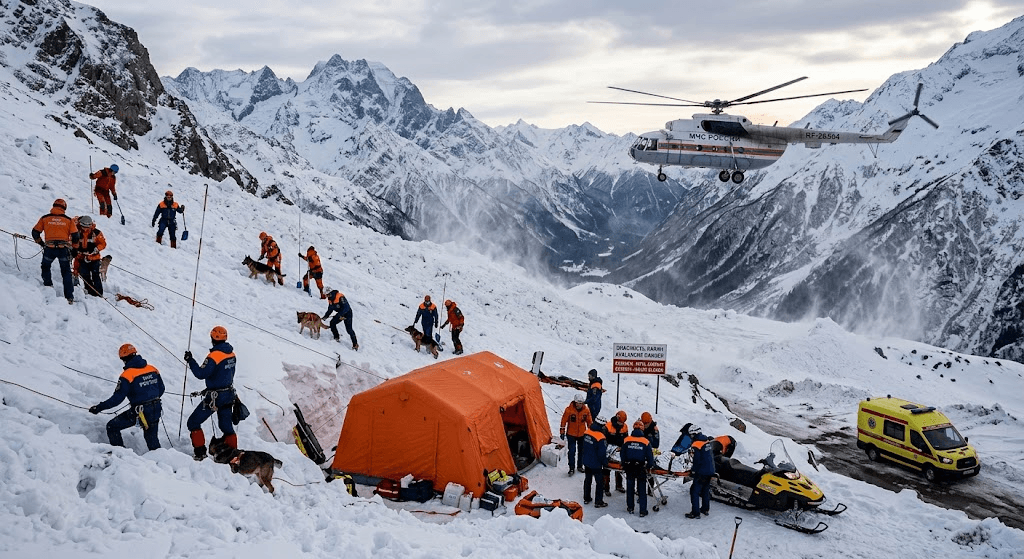
Emergency response teams, including specialist rescuers from the Elbrus High Mountain Search and Rescue Team, launched an immediate large-scale operation using specialized equipment, thermal sensors, and avalanche search dogs. Despite the high altitude and severe weather conditions overnight, rescue crews managed to extricate six injured survivors from the snowpack and evacuate them directly to regional hospital facilities in Nalchik.
Ten members of the expedition managed to escape the path of the slide and made their own way down the mountain to safety by Monday morning, assisting officials in confirming the group's manifest. Emergency services confirmed that 11 individuals suffered fatal injuries incompatible with life and were pronounced dead at the scene.
Search operations remain active for six additional climbers who remain missing in the upper sections of the gorge. More than 50 emergency workers and high-altitude specialists are navigating unstable terrain and a persistent risk of secondary avalanches as they continue searching the avalanche field.
The Russian Investigative Committee has opened a formal inquiry into the circumstances surrounding the expedition, examining safety compliance, weather warnings, and guide certifications for the trip. Local authorities have temporarily closed several access routes throughout the Bezengi region while aviation units wait for weather conditions to clear so they can deploy Mi-8 search helicopters.
Mountaineering federations across the region have expressed condolences to the victims' families while warning that unseasonably warm weather shifts have heightened instability across high-elevation snowpack's throughout the North Caucasus. Safety officials continue to urge all active trekking and climbing parties to postpone high-altitude ascents until snowpack stabilization can be officially confirmed.
Published by Banx Network. This article is part of the Banx decentralized media programme, powered by the BXE token on the XRP Ledger.