
Key Highlights
- Trade Agreement Delay:The EU-Mercosur trade deal signing postponed until January.
- Political Opposition:France and Italy demand stronger agricultural protections.
- Farmer Protests:Thousands demonstrate in Brussels against the trade deal.
The European Union’s long-anticipated free trade agreement with the Mercosur bloc, which includes Argentina, Brazil, Uruguay, and Paraguay, has once again been delayed. Initially expected to be signed at a summit in Brazil, the agreement's signing has been postponed until at least January due to political opposition from key EU member states. This setback marks yet another chapter in a negotiation process that has spanned over 25 years, reflecting the complexities of balancing international trade ambitions with domestic agricultural concerns.
The decision to delay the signing was largely influenced by France and Italy, whose leaders expressed the need for stronger guarantees to protect their domestic farmers. French President Emmanuel Macron stated that it was “too early” to proceed without further commitments to environmental and agricultural safeguards. Similarly, Italian Prime Minister Giorgia Meloni emphasized the necessity of securing internal political support before moving forward. Their concerns resonate with many across Europe, who fear that an influx of cheaper agricultural imports from South America could undermine local producers and threaten rural livelihoods.
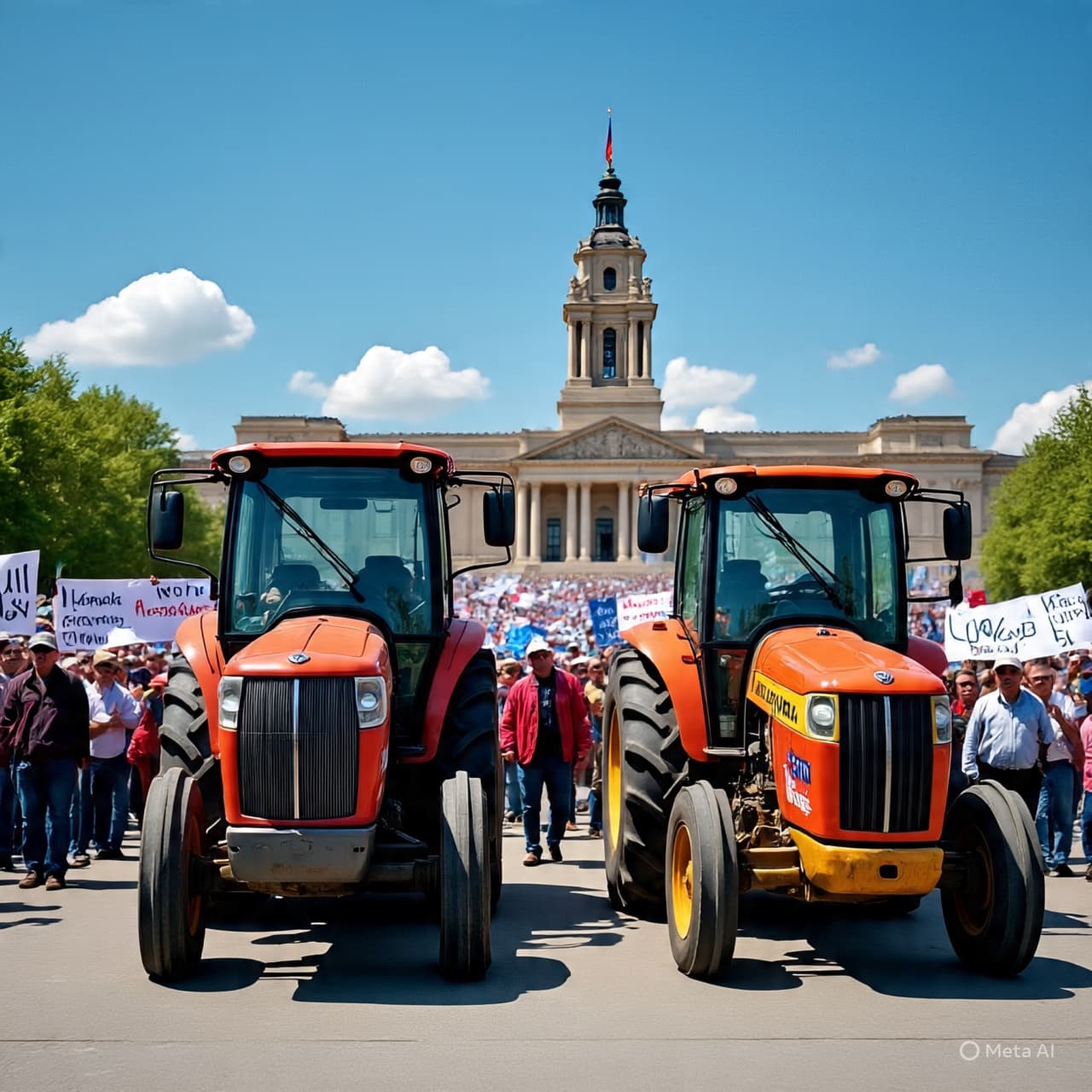
The urgency of these concerns was vividly illustrated by the protests that erupted in Brussels, where thousands of farmers took to the streets. Tractors blocked major intersections, and demonstrators voiced their frustrations with fiery slogans, underscoring the human impact of trade negotiations. These protests serve as a stark reminder that while trade agreements are often framed in economic terms, they have profound implications for families and communities across Europe.
Supporters of the Mercosur agreement, including leaders from Germany, Spain, and various Nordic countries, argue that the deal would significantly benefit EU exports. They contend that it would open up markets for European vehicles, machinery, wine, and spirits, while also reducing reliance on other global powers. Furthermore, proponents view the agreement as a geopolitical statement, reinforcing Europe’s commitment to open markets and strategic partnerships amid shifting global alliances and trade tensions.
However, the delay has sparked frustration among business groups, who view it as detrimental to the EU’s credibility on the international stage. Industry associations in Germany have expressed disappointment, warning that ongoing internal disputes could undermine confidence in Europe’s ability to finalize major trade agreements, especially as other nations move forward more decisively.
In response to the delay, Mercosur partners have shown what one diplomat described as “constructive patience.” Brazilian President Luiz Inácio Lula da Silva has reportedly agreed to allow more time for the EU to address its concerns, highlighting the importance of the deal as a cornerstone of multilateral cooperation. As the EU looks toward January for a potential breakthrough, this delay emphasizes the intricate balance between global trade ambitions and domestic pressures.
What was initially envisioned as a landmark agreement symbolizing transatlantic partnership has become a complex negotiation reflecting the diverse fears and aspirations of EU member states. The path forward remains uncertain, but the stakes are high for both the EU and Mercosur as they navigate the challenges of international trade in an increasingly interconnected world.
Published by Banx Network. This article is part of the Banx decentralized media programme, powered by the BXE token on the XRP Ledger.



