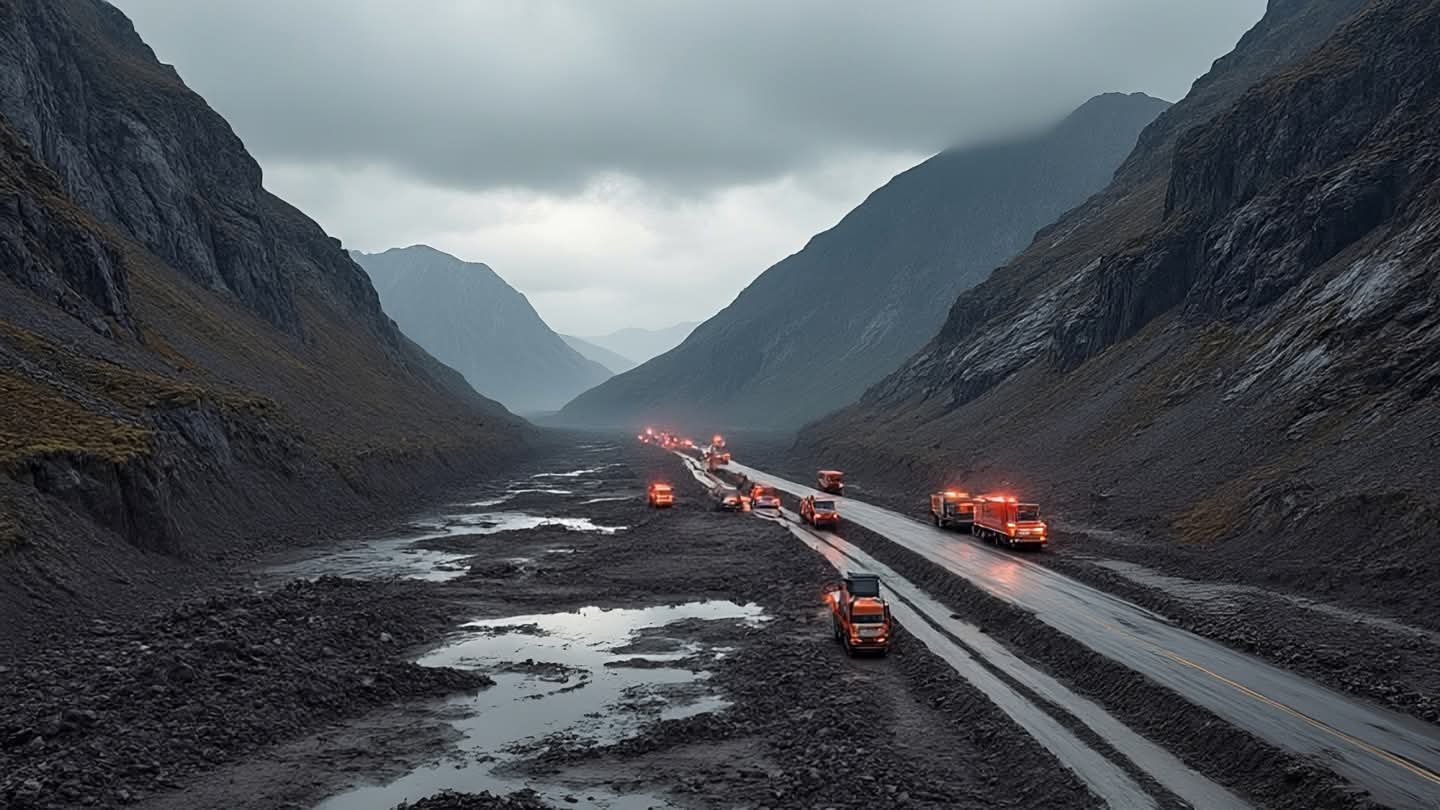
Mountains are often seen as eternal sentinels, standing firm against the passage of time. Yet, they are also fragile ecosystems, vulnerable to the sudden fury of water and earth. Along the border between China and Nepal, recent flash floods have carved a path of destruction, isolating communities and severing vital links. The arrival of Chinese rescue teams at a devastated checkpoint marks a pivotal moment in the response effort, symbolizing both the severity of the disaster and the enduring human commitment to aid those in peril.
The floods, triggered by intense rainfall and glacial melt, swept through remote valleys with terrifying speed. Roads were washed away, bridges collapsed, and communication lines were severed, leaving many residents cut off from the outside world. The checkpoint, once a bustling hub for trade and travel, was reduced to rubble, highlighting the raw power of nature and the vulnerability of infrastructure in such rugged terrain.
Chinese emergency responders navigated difficult conditions to reach the site, using heavy machinery and manual labor to clear debris. Their arrival brought not only physical assistance but also a sense of relief to stranded travelers and local villagers. In these isolated regions, the presence of rescue workers is a beacon of hope, signaling that help has arrived despite the logistical challenges.
The collaboration between Chinese and Nepalese authorities has been crucial in coordinating the response. Cross-border disasters require seamless cooperation, as weather systems and river flows do not respect political boundaries. Joint efforts in search and rescue, as well as resource sharing, demonstrate the importance of regional diplomacy in times of crisis.
For the families of those affected, the days following the flood have been marked by uncertainty and grief. Many are still searching for missing loved ones, while others face the daunting task of rebuilding their lives. The psychological toll of such events is profound, requiring long-term support and community resilience to overcome.
Climate experts note that extreme weather events are becoming more frequent in the Himalayan region. Rising temperatures accelerate glacial melting, increasing the risk of outburst floods and landslides. This incident serves as a stark reminder of the need for adaptive infrastructure and early warning systems to protect vulnerable populations.
Local communities have rallied together, offering shelter and food to those displaced by the waters. This spirit of mutual aid is a testament to the strength of human connection in the face of adversity. It underscores the idea that while nature can be destructive, humanity can be restorative.
Rescue operations continue as teams work to restore access and provide essential supplies. Authorities are assessing the full extent of the damage, with recovery efforts expected to take weeks or even months in the hardest-hit areas.
AI Image Disclaimer: Please note that the visual accompaniments for this article are AI-generated illustrations created to reflect the thematic elements of mountain rescue, natural disasters, and humanitarian aid.
Sources: Xinhua News Agency Reuters Associated Press The Kathmandu Post China Daily
Published by Banx Network. This article is part of the Banx decentralized media programme, powered by the BXE token on the XRP Ledger.