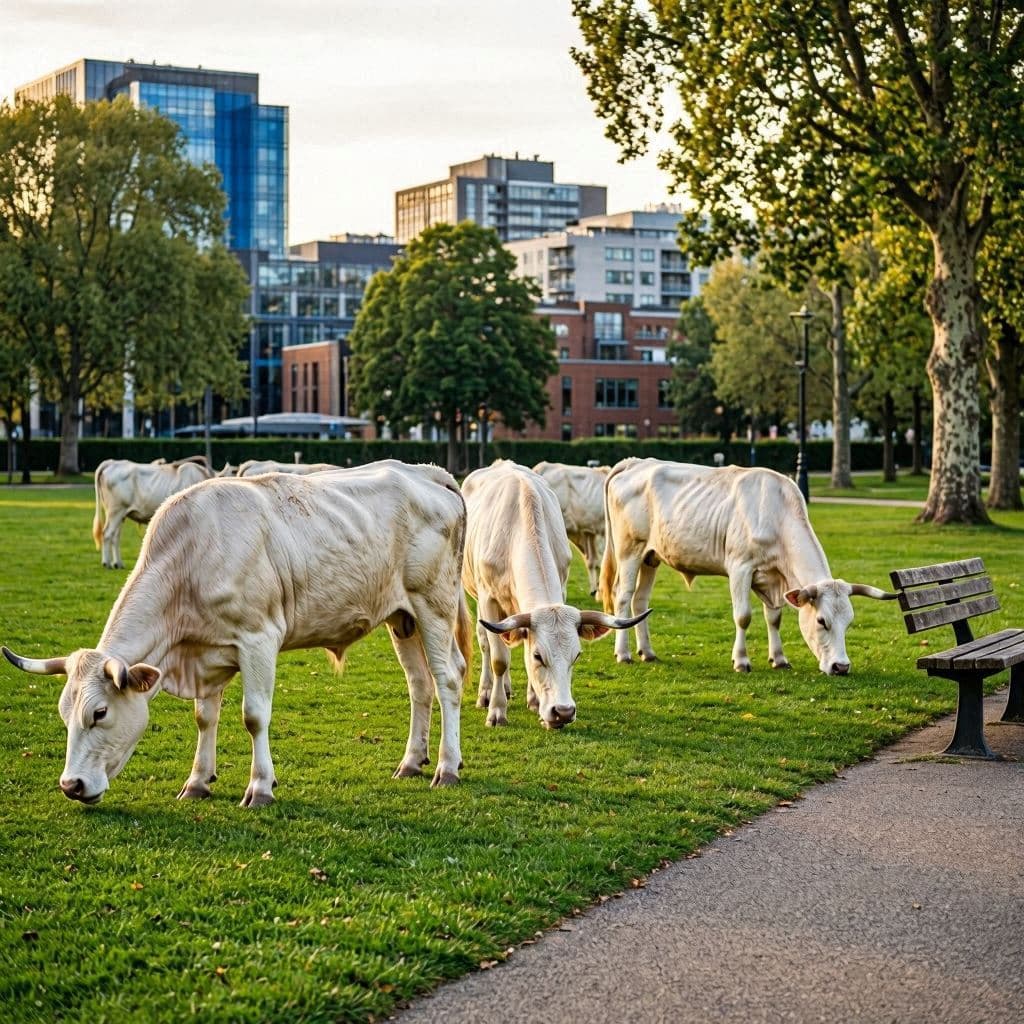
In the quiet corners of urban parks, where the hum of traffic usually drowns out the rustle of grass, a gentle transformation is taking place. A herd of cattle, belonging to a breed so rare it was once on the brink of extinction, has been reintroduced to the city landscape. This initiative is not merely about agriculture; it is an act of ecological restoration, weaving threads of biodiversity back into the fabric of modern life. It invites us to reconsider the relationship between the built environment and the natural world, suggesting that they need not be mutually exclusive.
Body: The breed in question, often identified as White Park or another heritage variety depending on the specific locality, carries with it a genetic history that stretches back centuries. These animals are not just livestock; they are living archives of agricultural heritage. Their reintroduction is part of a broader conservation grazing strategy, where large herbivores are used to manage vegetation naturally. By trampling scrub and eating coarse grasses, they create habitats for wildflowers, insects, and birds that would otherwise struggle to survive in manicured urban green spaces.
For city dwellers, the presence of these majestic creatures offers a tangible connection to the rural roots that often feel distant in metropolitan life. Children who may have only seen cows in picture books can now observe their behavior, size, and social interactions firsthand. This educational opportunity fosters a sense of stewardship and curiosity, encouraging the next generation to value biodiversity. The cattle become ambassadors for nature, softening the hard edges of the city with their calm demeanor.
The logistical challenges of keeping cattle in an urban setting are significant. Fencing must be secure yet unobtrusive, and public safety protocols must be rigorous. Local authorities work closely with conservation groups to ensure that the animals are cared for properly and that their presence does not disrupt daily life. Regular monitoring ensures that the health of both the herd and the ecosystem is maintained, creating a balanced coexistence.
Beyond ecology, the project serves as a cultural touchstone. It reminds residents of the region’s agricultural past, a time when the land was worked by hand and animal. In a world increasingly dominated by digital interfaces and concrete structures, the sight of a grazing cow is a grounding experience. It slows down the pace of observation, inviting people to pause and appreciate the simple rhythms of life.
Critics may question the practicality of such initiatives, citing concerns about waste management or potential hazards. However, proponents argue that the benefits far outweigh the drawbacks. The improvement in soil health, the increase in pollinator populations, and the mental well-being boost for residents are measurable outcomes. The cattle are not just animals; they are active participants in urban sustainability.
As the herd settles into its new home, the community watches with a mix of wonder and pride. The success of this reintroduction could pave the way for similar projects in other cities, expanding the concept of urban wildlife. It suggests a future where cities are not just places for humans, but shared habitats for diverse forms of life.
Closing: The return of this rare cattle breed to the city is a small but significant step toward a more integrated urban ecology. It demonstrates that with careful planning and community support, nature can thrive even in the heart of the metropolis. As the cows graze, they leave behind not just trimmed grass, but a renewed sense of connection to the living world.
AI Image Disclaimer: The images accompanying this article are AI-generated illustrations of heritage cattle in urban park settings, designed to visualize the concept of conservation grazing without depicting specific real-world locations.
Sources: BBC News The Guardian Local Council Press Releases Conservation Grazing Network
Published by Banx Network. This article is part of the Banx decentralized media programme, powered by the BXE token on the XRP Ledger.