
Key Highlights
- Incident:Gunmen attacked a passenger bus in Tegucigalpa, killing two.
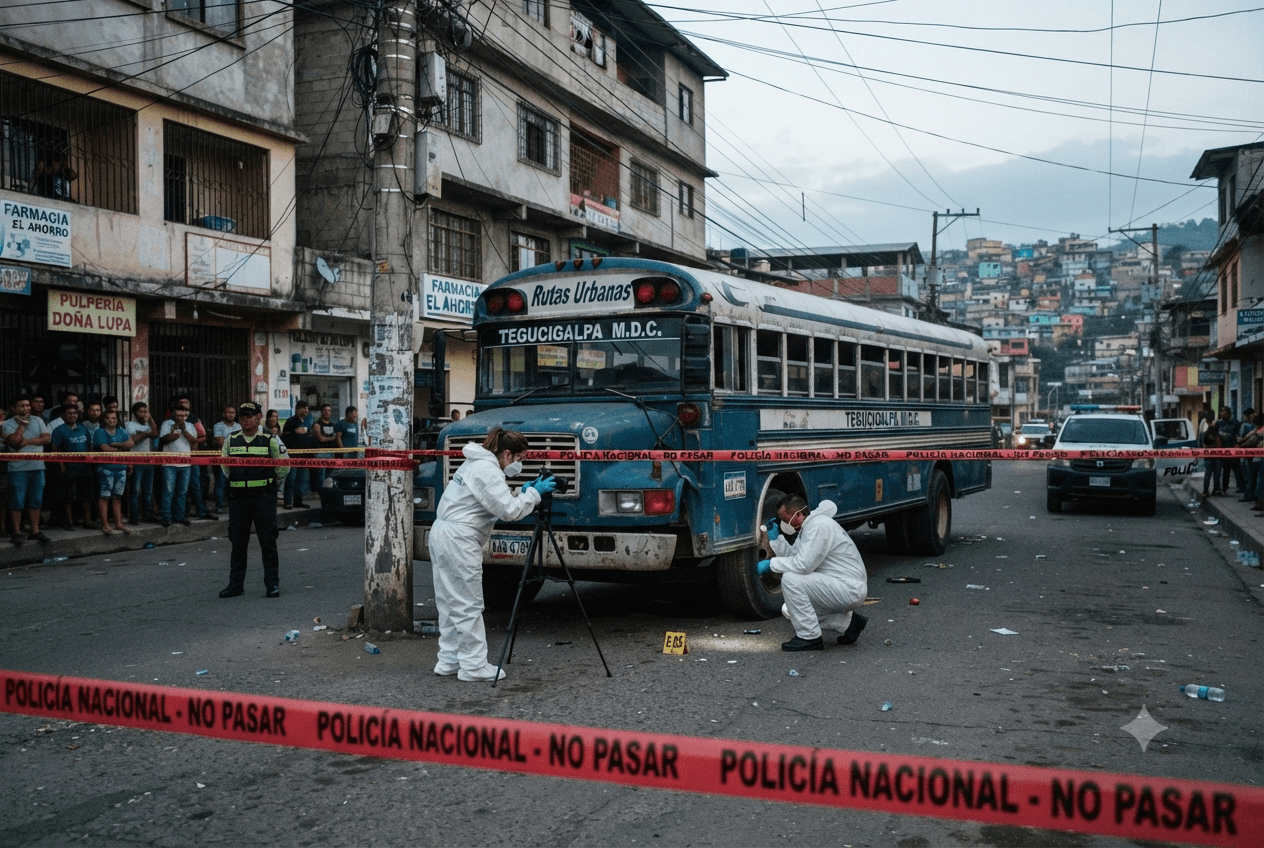
- Response:Police established a security perimeter and initiated an investigation.
- Community Impact:Transport unions threaten strikes over ongoing extortion demands.
Tegucigalpa, Honduras—In a shocking incident that underscores the escalating violence in the country, gunmen boarded a public transport bus in Tegucigalpa Wednesday morning, opening fire and killing both the driver and a passenger. The attack, suspected to be linked to extortion demands from criminal gangs, has sent shockwaves through the community and raised urgent questions about public safety.
Witnesses reported that the assailants fired multiple rounds from inside the bus before fleeing on motorcycles that were waiting in traffic. The bus subsequently veered off the road, crashing into a concrete utility pole, which halted transit along the busy commercial avenue. National Police units quickly established a wide security perimeter around the crime scene to gather evidence and ensure public safety.
Paramedics arrived to find the driver and passenger dead inside the bloodstained cabin, victims of multiple gunshot wounds. Surviving passengers, who had hidden between seats during the terrifying ordeal, were comforted by police officers as they processed the traumatic experience. Forensic technicians recovered numerous spent shell casings from the floorboards of the transport vehicle, indicating the severity of the attack.
Investigators from the national anti-gang division suspect that the attack is a direct result of unpaid extortion fees demanded by criminal syndicates operating in the area. Bus drivers in Tegucigalpa have faced increasing threats and targeted killings for refusing to comply with daily protection quotas imposed by these gangs. In response to the violence, transport associations have threatened to initiate a citywide strike if authorities do not provide armed security escorts for drivers.
In an effort to apprehend the fleeing suspects, police checkpoints were deployed across major intersections throughout the city. Homicide detectives seized internal transit logs and began questioning witnesses to gather information about the identity of the gunmen. Forensic vans transported the victims' bodies to the national morgue as grieving relatives gathered near the cordoned area, highlighting the personal toll of this violence.
Municipal authorities convened an emergency security session to evaluate protective measures for urban transit routes, acknowledging the urgent need for action in light of the recent attack. Transport companies responded by pulling dozens of buses off the streets, leaving many commuters stranded across metropolitan neighborhoods. Meanwhile, police intelligence units are reviewing traffic camera feeds in hopes of tracking the escaped attackers. The criminal investigation remains active and open, with authorities under pressure to restore safety and order in the capital.
The incident reflects a broader trend of violence and extortion that has plagued Honduras, particularly affecting public transport systems. As communities grapple with the implications of such attacks, the demand for effective security measures and government intervention has never been more critical.
Published by Banx Network. This article is part of the Banx decentralized media programme, powered by the BXE token on the XRP Ledger.



