The Mediterranean Sea has long been a silent keeper of history, its depths holding the secrets of ancient trade routes and maritime journeys. Off the coast of Panarea, one of the Aeolian Islands in Italy, divers have recently uncovered a tangible link to the past: a shipwreck laden with amphorae dating back more than two thousand years. This discovery is not merely an archaeological find; it is a window into the commercial life of the Roman Republic, offering a glimpse into how goods moved across the ancient world. The water, clear and blue, now guards these artifacts, preserving them for a future that values understanding over exploitation.
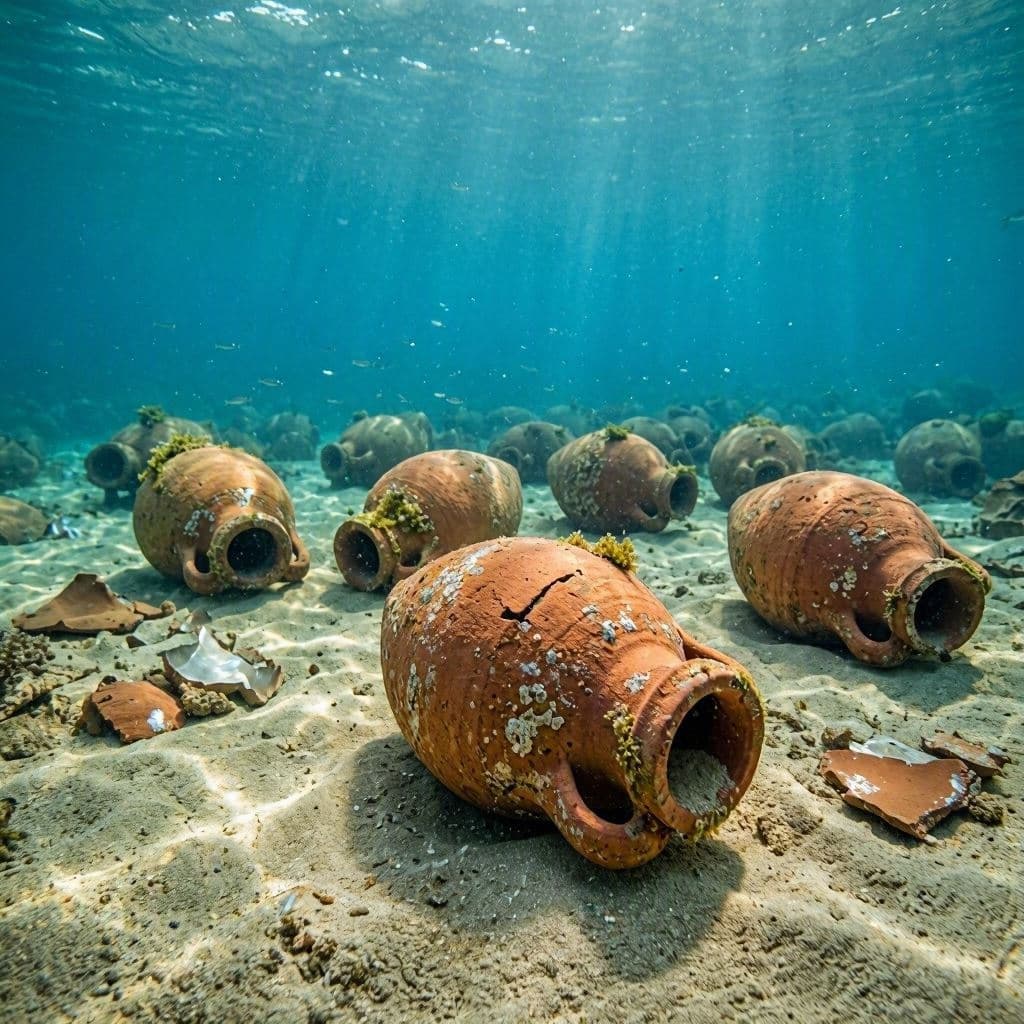
The wreck was identified during routine surveys by marine archaeologists, who spotted the distinctive shapes of clay jars scattered on the seabed. These amphorae, used primarily for transporting wine, oil, and other commodities, are remarkably well-preserved despite centuries under water. Their presence suggests that the vessel was likely a merchant ship, part of the bustling network that connected Italy with other parts of the Mediterranean. The sheer number of jars indicates a significant cargo, hinting at the scale of trade during this period.
Dating the wreck to the late Republican era, experts believe it sank sometime between the second and first centuries BCE. This was a time of great expansion for Rome, both politically and economically. The goods carried by such ships were essential for sustaining the growing population and fueling the empire’s prosperity. Each jar tells a story of production, transport, and consumption, connecting the people of the past with our present understanding of their daily lives.
The location of the wreck, near Panarea, adds another layer of interest. The Aeolian Islands were strategic points in ancient navigation, often serving as stopovers or landmarks for sailors. The conditions that led to the ship’s sinking remain a subject of study, with possibilities ranging from storm damage to navigational error. Regardless of the cause, the site provides valuable data on ancient shipbuilding techniques and maritime practices.
Preservation is now the primary concern. The underwater environment offers a unique protective barrier against decay, but exposure to air can be detrimental. Archaeologists are working carefully to document the site in situ, using advanced imaging technology to create detailed maps without disturbing the artifacts. This non-invasive approach ensures that the wreck remains intact for future generations to study and appreciate.
For the local community, the discovery is a source of pride and potential opportunity. It highlights the rich historical heritage of the region and may attract interest from researchers and tourists alike. However, balancing preservation with access is a delicate task, requiring cooperation between authorities, scientists, and residents. The goal is to protect the site while sharing its significance with the wider world.
The discovery of the ancient shipwreck off the Italian coast is a remarkable addition to our knowledge of Roman maritime history. As researchers continue to study the site, the hope is that it will yield further insights into ancient trade and culture. The sea, once a highway for merchants, now serves as a museum for historians.
AI Image Disclaimer: The visual elements accompanying this report are AI-generated interpretations designed to reflect the archaeological and marine context of the story.
Sources: ANSA Reuters Live Science
Published by Banx Network. This article is part of the Banx decentralized media programme, powered by the BXE token on the XRP Ledger.