
Key Highlights
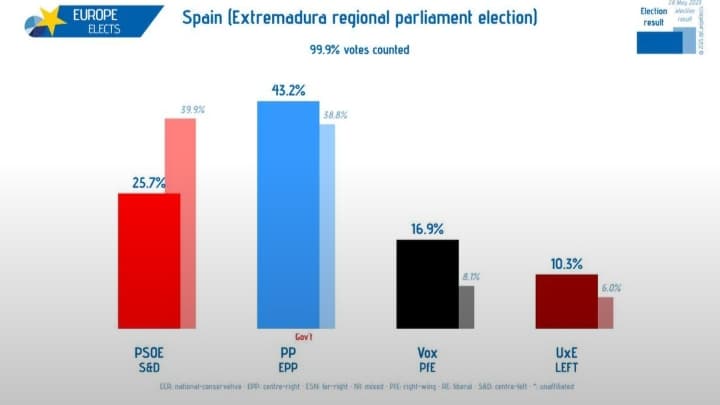
- Historic Defeat:PSOE secures only 18 seats in Extremadura's assembly.
- Popular Party Gains:PP wins 29 seats, retaining presidency under María Guardiola.
- Coalition Dynamics:Vox doubles its seats, influencing regional governance.
The recent regional elections in Extremadura have marked a significant turning point for the Spanish Socialist Workers' Party (PSOE), which has recorded its lowest seat count in the region's history, securing only 18 out of 65 seats in the assembly. This unprecedented defeat is particularly striking given PSOE's historical dominance in Extremadura, where it has long been a political stronghold.
In contrast, the conservative Popular Party (PP) emerged as the largest party, winning 29 seats and successfully retaining the presidency under María Guardiola. However, the PP fell short of an outright majority, which has led to a renewed coalition with the far-right Vox party. Vox, which has seen its representation double from 5 to 11 seats, is now positioned as a crucial player in the regional governance, further complicating the political landscape in Extremadura.
The elections, held on December 21, 2025, were marked by a notably low voter turnout of 60.5%. This figure raises concerns about public engagement and interest in the electoral process, especially in light of the significant political shifts occurring within the region. Analysts attribute the declining support for PSOE to a combination of local dissatisfaction with governance and broader national issues, particularly those surrounding Prime Minister Pedro Sánchez's leadership.
This electoral outcome not only signifies a rightward shift in Extremadura but also serves as a potential bellwether for national political trends as Spain approaches its next general election. The implications of this election extend beyond regional borders, as PSOE grapples with a loss of support and trust among voters. The party's leadership will need to reassess its strategies and policies to regain favor with the electorate.
As party leaders navigate their futures in light of these results, the ramifications for critical policy areas such as healthcare, education, and economic development will be significant. The dynamics of the new coalition government will heavily influence these decisions, as both the PP and Vox will need to collaborate on governance strategies that address the pressing needs of the region.
Political observers are closely monitoring the evolving landscape in Spain, as this significant election outcome is likely to shape the trajectory of Spanish politics in the coming months. The challenges ahead for PSOE and the implications for the broader political climate will be pivotal as the country prepares for future electoral contests.
Published by Banx Network. This article is part of the Banx decentralized media programme, powered by the BXE token on the XRP Ledger.



