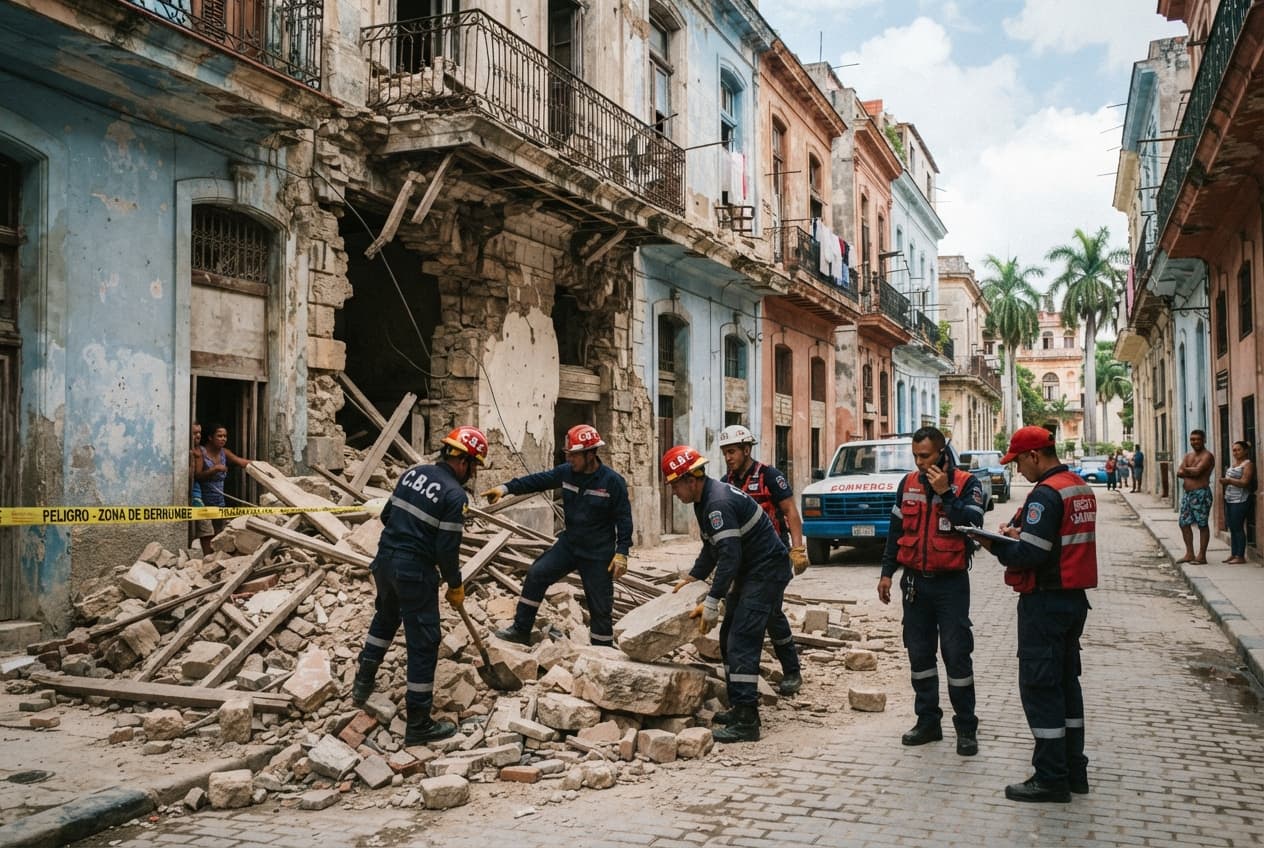
Havana, Cuba—A heavy concrete balcony collapsed from the upper floor of a deteriorating colonial-era building in Old Havana early Monday morning, killing a passing pedestrian and injuring three others. Municipal rescue commanders stated that decades of salt air corrosion and deferred structural maintenance caused the cantilevered stone slab to shear away without warning. Emergency rescue units and municipal firefighters rushed to the historic square, establishing a secure perimeter to extract victims trapped beneath massive chunks of fallen masonry. Paramedics confirmed one pedestrian died instantly from severe impact trauma, while three surviving bystanders sustained critical injuries and were rushed to the regional hospital. Project inspectors immediately cordoned off the entire colonial block as structural engineers initiated stability assessments on adjacent facades.
National preservation inspectors examined exposed rebar corrosion and reviewed structural vulnerability logs compiled for the historic neighborhood zone. Initial architectural testimonies indicated that chronic moisture infiltration and overloaded upper balconies heavily contributed to the sudden structural failure. Neighborhood residents rushed to the scene, angrily condemning the slow pace of state-funded restoration work across crumbling colonial apartment blocks. Municipal authorities suspended pedestrian access along several narrow cobblestone streets pending comprehensive emergency safety audits of aging residential buildings. Forensic specialists photographed shattered stone fragments and torn reinforcing steel strewn across the blocked pedestrian thoroughfare.
Medical personnel at the regional hospital reported that the hospitalized victims remained in critical condition with severe orthopedic fractures and head trauma. Relatives of the deceased pedestrian gathered outside the municipal forensic institute, demanding full accountability regarding building maintenance oversight. Government housing regulators announced an immediate emergency inspection sweep of all multi-story colonial structures throughout the historic district. Heavy cleanup crews arrived by midday to clear tons of rubble and stone debris from the blocked tourist walking corridor. State prosecutors seized architectural blueprints and property management records from the municipal housing office to reconstruct the sequence of the collapse.
As afternoon turned to evening, rescue coordinators concluded their primary search operations across the rubble without finding further casualties. Environmental cleanup crews swept up masonry dust and stone fragments from the cobblestone street before evening pedestrian volumes surged. Municipal officials released a brief written statement expressing condolences while promising increased budgetary allocations for emergency facade stabilization. The historic square remained cordoned off by municipal police patrols as night settled over the colonial capital. Investigators continued analyzing recovered concrete samples to determine whether internal moisture saturation caused the catastrophic failure.
Published by Banx Network. This article is part of the Banx decentralized media programme, powered by the BXE token on the XRP Ledger.