Pokhara, Nepal—Ten local mountain workers are missing and feared dead after a massive avalanche buried a high-altitude base camp at Himlung Himal on September 28, 2026, triggering an urgent multi-agency search operation. The catastrophic snow slide struck the camp without warning during the early morning hours, obliterating tents and gear storage areas while climbers and support staff were resting. Himalayan Rescue Association officials confirmed that communication with the base camp went dead immediately following the impact.
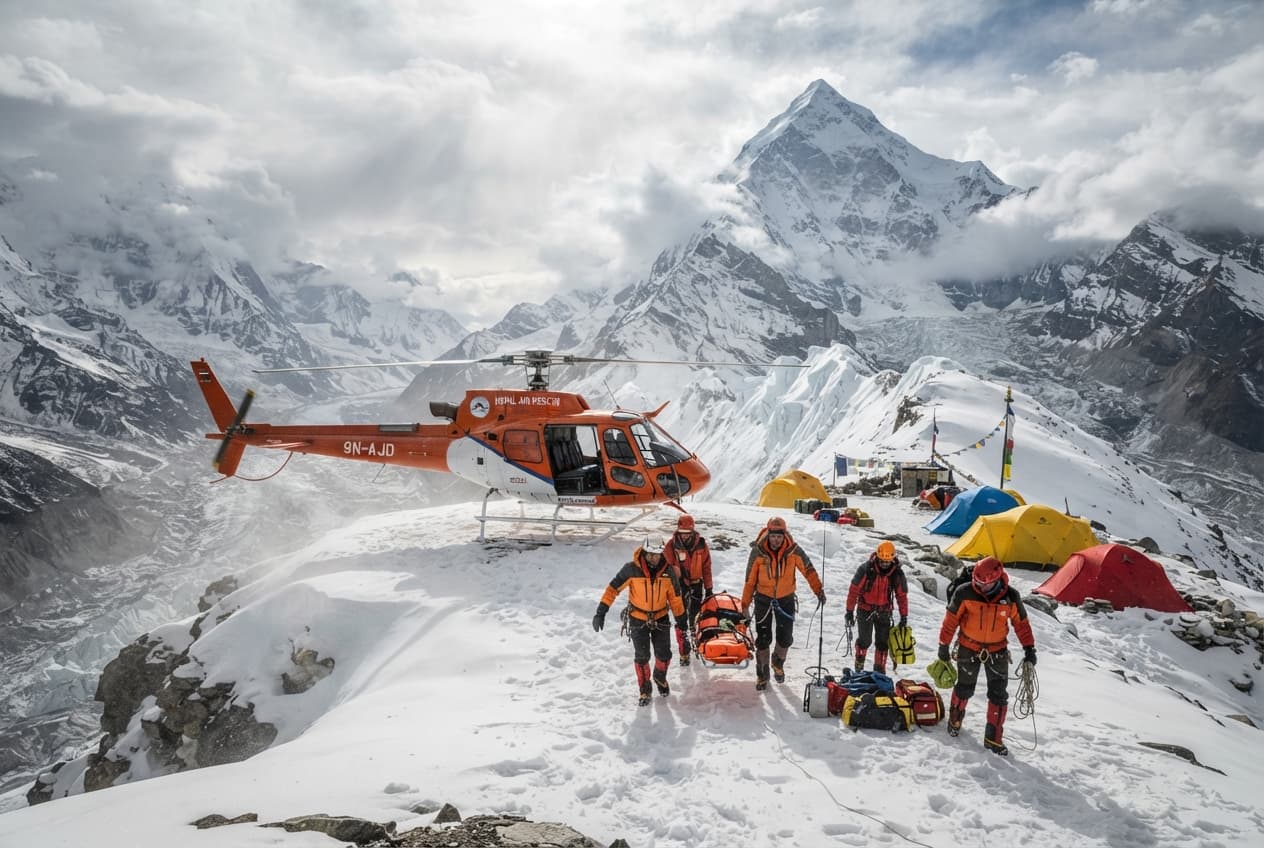
Rescue helicopters carrying elite mountain guides and medical personnel were dispatched from Pokhara but were forced to turn back initially due to blinding whiteout conditions and high winds. Weather windows finally permitted a transport chopper to land near the disaster site late in the afternoon, dropping ground-probing teams into the deep snowpack. Expedition organizer Pemba Sherpa stated that the volume of compacted snow and ice covering the camp site is immense, requiring specialized avalanche probes and electronic beacon locators.
The missing individuals are all local porters and kitchen staff hailing from mountain villages across the Annapurna and Solukhumbu regions. Families have begun assembling at regional agency offices in Kathmandu and Pokhara, demanding answers and immediate updates from expedition operators. Tourism ministry spokesperson Him Lal Gautam confirmed that insurance and emergency search protocols were activated immediately upon receiving the satellite distress signal.
High-altitude mountaineering experts note that unseasonal autumn storms and destabilized snowpacks have dramatically increased avalanche risks across several Himalayan peaks this season. Temperature fluctuations over the past week have weakened structural bonding in upper snowfields, creating volatile conditions for base camps situated in traditional avalanche paths. Safety auditors have repeatedly warned about the placement of camps in hazardous gullies during periods of climatic instability.
Ground search teams utilizing metal detectors and avalanche transceivers are working against the clock as sub-zero temperatures settle over the high camp. Darkness has forced aerial operations to halt for the night, leaving a skeleton crew of ground searchers stationed in secure tents nearby. Rescuers face severe risks of secondary avalanches as shifting winds destabilize the hanging glaciers above the disaster zone.
Hospital morgues and regional rescue coordination desks in Pokhara remain on standby to receive casualties if weather conditions allow for successful extraction flights at dawn. International climbing associations have expressed condolences while urging heightened caution for all active expeditions currently operating in the upper ranges. Expedition leaders are conducting mandatory safety reviews at neighboring base camps to assess structural vulnerabilities.
Search coordinators emphasize that survival times beneath dense, compacted avalanche debris diminish rapidly after the initial twenty-four-hour window. Logistics teams are preparing additional rescue dogs and heavy extraction equipment to be flown in at first light if weather permits. The fate of the ten missing workers remains entirely unknown as freezing winds sweep across the stricken base camp.
Published by Banx Network. This article is part of the Banx decentralized media programme, powered by the BXE token on the XRP Ledger.