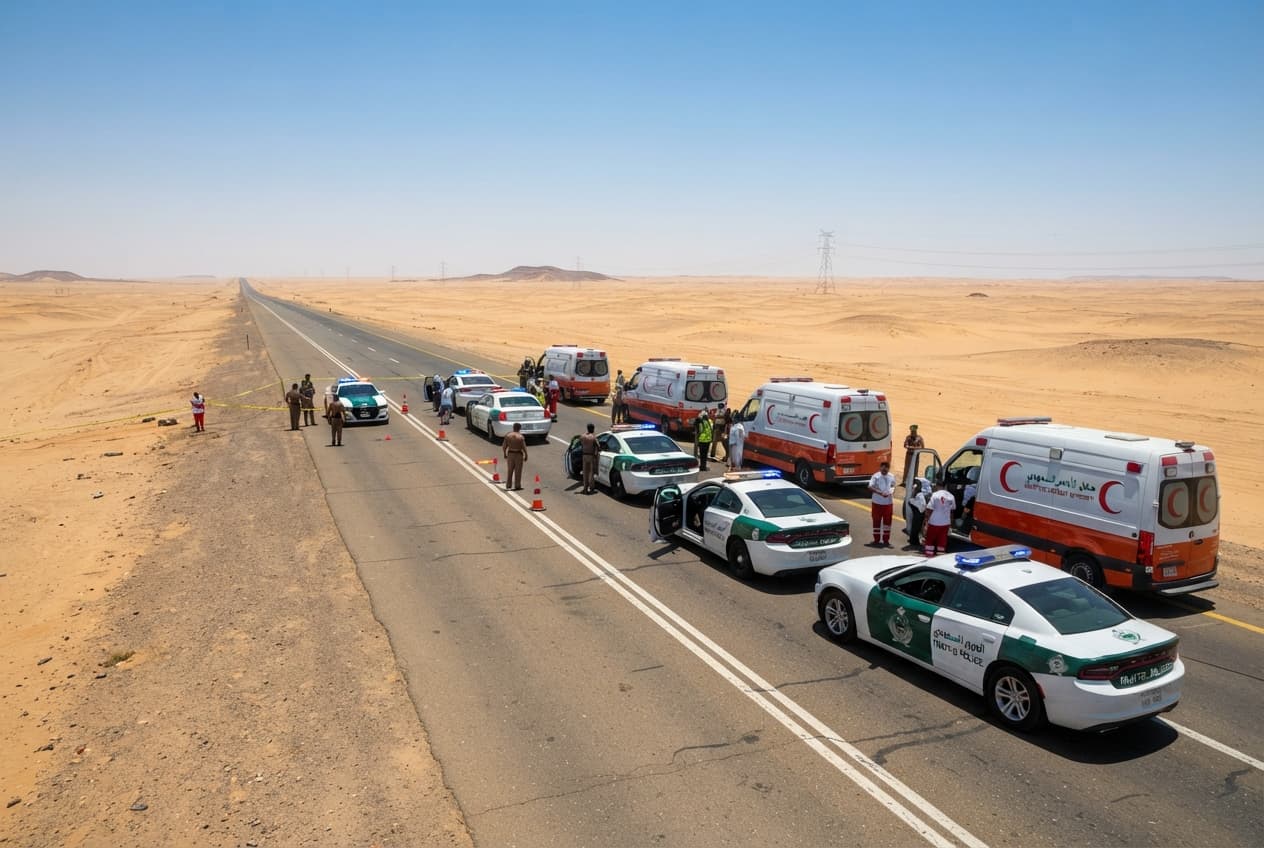
Riyadh, Saudi Arabia—A catastrophic traffic collision along the strategic desert corridor connecting the capital to the holy city left four pilgrims dead and twelve others injured. The long-distance passenger bus veered off the asphalt lanes and struck a stationary heavy transport truck parked on the unpaved highway shoulder. The violent impact crushed the front cabin of the bus, trapping several passengers beneath twisted metal seats. Emergency dispatchers scrambled multiple air ambulance units and ground rescue squads to the remote desert location.
Red Crescent paramedics established a large triage perimeter on the sand shoulder, administering trauma care to bleeding survivors before hospital transport. Security forces confirmed that the deceased victims were international pilgrims traveling toward Mecca for religious obligations. Hospital administrators across the Riyadh provincial network activated emergency preparedness protocols to receive the incoming casualties. Several of the twelve injured passengers remained in critical condition with severe fractures and internal trauma.
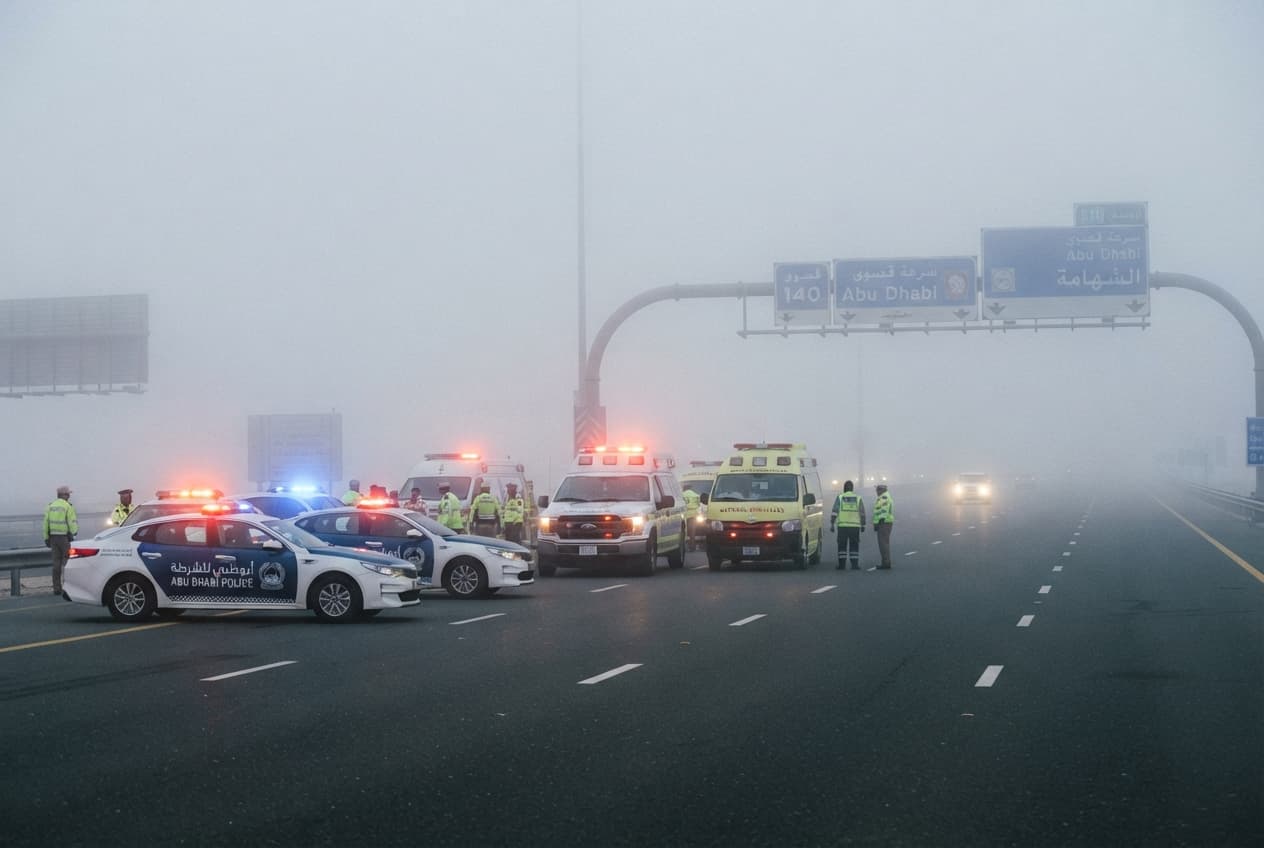
Traffic police investigators deployed forensic accident reconstruction teams to examine skid marks and assess the driver's fatigue logs. Preliminary findings suggest that reduced visibility and excessive speed played a major role in the disastrous roadside collision. Highway maintenance crews utilized heavy tow trucks to separate the wrecked vehicles and clear blocked asphalt lanes. Long-distance transport operators faced mounting public scrutiny regarding mandatory rest breaks for drivers navigating long desert routes.
Consular representatives from the victims' home countries arrived at regional medical centers to coordinate diplomatic and repatriation procedures. State transport authorities reiterated strict warnings regarding illegal shoulder parking by heavy commercial trucks along desert highways.
The desert highway corridor remained restricted to single-lane traffic as cleanup crews cleared scattered debris from the road.
Published by Banx Network. This article is part of the Banx decentralized media programme, powered by the BXE token on the XRP Ledger.