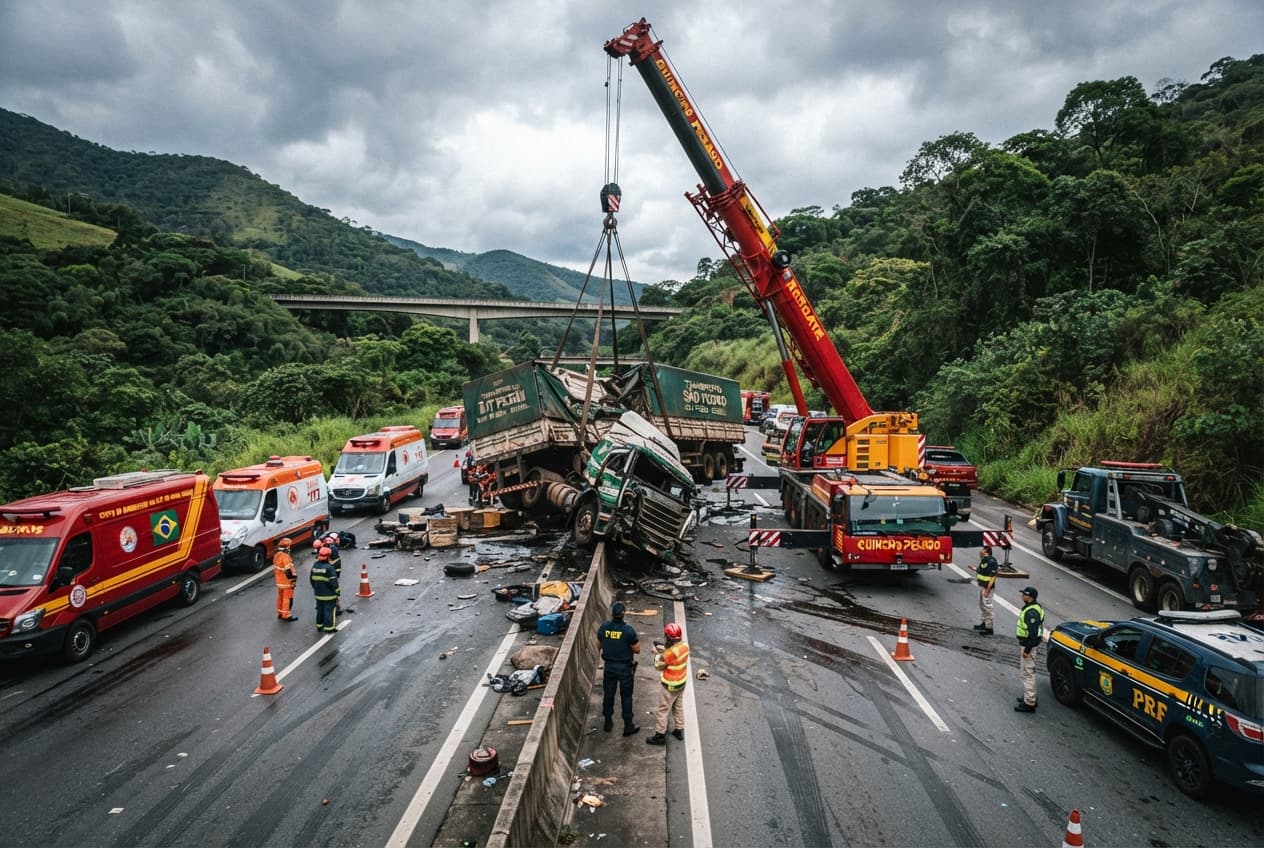
São Paulo, Brazil—Metal crumpled and shattered glass littered the asphalt at 6:30 AM on Monday when a heavy freight truck slammed into three passenger vehicles on a congested stretch of the BR-116 highway. The deafening impact sent vehicles spinning across multiple lanes before colliding with a concrete barrier, leaving four people dead at the scene. Federal highway police rushed to the corridor, finding the highway completely blocked by twisted wreckage and spilled cargo.
Paramedics set up triage stations on the shoulder, treating several survivors with severe trauma before transporting them to regional medical centers. Emergency dispatchers confirmed that thick morning fog had severely reduced visibility along the winding mountain ascent just minutes prior to the disaster. Rescue crews utilized hydraulic extraction tools to peel back crushed steel and recover victims trapped inside the flattened automobiles.
Commercial transport traffic ground to an immediate standstill, creating a massive fifteen-kilometer queue of stalled trucks and commuter buses stretching back toward the industrial outskirts. Highway patrol officers diverted lighter vehicles onto secondary dirt roads, though unpaved routes quickly clogged under the sudden surge of diverted traffic. Representatives from the federal transport agency arrived to inspect the tachographs and brake lines of the heavy freight truck involved in the initial impact.
Witnesses reported that the commercial lorry appeared unable to brake in time as traffic slowed for a previous minor fender-bender on the downgrade. Union representatives representing long-haul truck drivers pointed to chronic fatigue and unrealistic delivery schedules as systemic contributors to highway fatalities. Freight operators declined immediate comment while corporate investigators gathered electronic logs from the wrecked vehicle.
As morning sunlight burned through the valley mist, federal forensic teams began photographing skid marks and mapping the precise trajectory of the multi-vehicle pileup. Heavy towing cranes arrived from the nearest depot to drag the destroyed semi-truck and passenger cars off the blocked asphalt lanes. Commuters stranded in stalled buses stepped onto the roadway, watching the grim extraction process unfold beneath an overcast sky.
Provincial health authorities confirmed that morgue transport vans had removed the bodies of the four deceased victims for formal forensic identification. Highway maintenance crews scraped oil and automotive fluids from the lanes while repairing damaged guardrails along the treacherous mountain curve. Federal police officials warned motorists that full clearance of the transport corridor would take several hours into the afternoon.
Traffic flow remained restricted to a single makeshift lane as long lines of commercial freight trucks waited for the green light to resume their journey.
Investigation units maintained an active presence at the crash site as technical experts awaited final downloads from the wrecked vehicle computer systems.
Published by Banx Network. This article is part of the Banx decentralized media programme, powered by the BXE token on the XRP Ledger.