
Key Highlights
- Six confirmed dead following a powerful earthquake in Papua New Guinea's highlands.
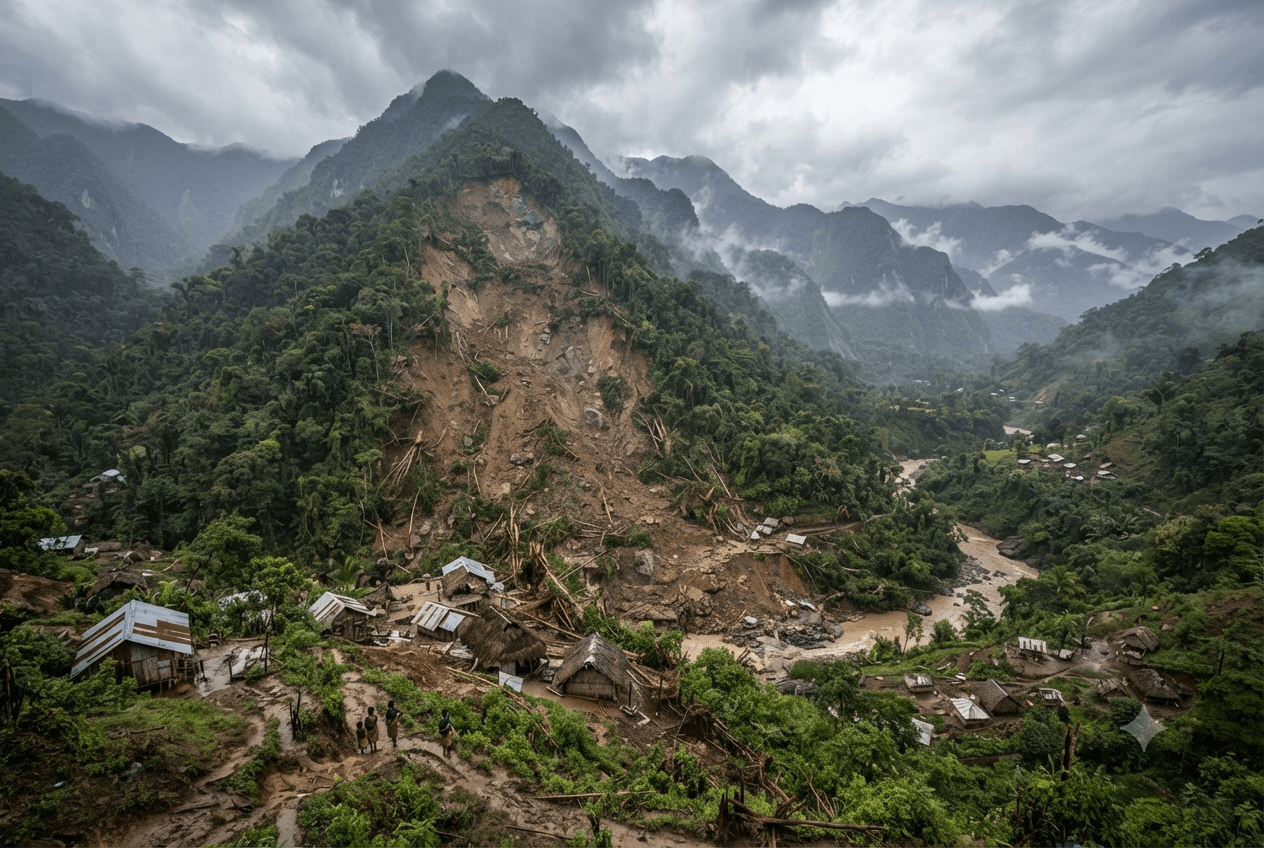
- Landslides have buried remote settlements, complicating rescue efforts.
- Emergency services mobilized to treat injured victims and assess damage.
A powerful earthquake struck the highlands region of Papua New Guinea on Wednesday morning, resulting in significant devastation. The tremor, which registered a magnitude of 6.7, caused landslides that buried several remote settlements, leading to the tragic confirmation of six fatalities. Emergency services are currently engaged in rescue operations, but communication remains limited due to damaged infrastructure in the area.
Local police and volunteer rescue teams have begun the challenging task of digging through the debris. The rugged terrain and the remote location of affected villages make it difficult to deploy heavy machinery, forcing rescuers to rely on manual tools to clear paths and search for survivors. Many small villages are now completely inaccessible by vehicle, further complicating the rescue efforts.
Medical teams have been dispatched to the highland centers to treat the injured, who are suffering from fractures and blunt force trauma consistent with building collapses. The capacity of local health clinics is being severely tested as they receive an influx of casualties. Authorities are prioritizing the airlifting of critically injured patients to major regional hospitals to ensure they receive the necessary care.
This region is no stranger to seismic activity, but the impact of this earthquake has been particularly severe. Experts from the geological observatory are closely monitoring the area for further tremors that could hinder ongoing rescue operations. Public buildings and schools in the vicinity have been closed as engineers assess their structural integrity. Residents have been advised to stay in open fields away from hillsides to avoid potential landslides.
In response to the disaster, government officials have declared a state of emergency for the province, which will expedite the delivery of relief supplies. Aircraft are being utilized to drop food and water to isolated communities that have been cut off due to landslides. However, the logistics of the relief operation are complicated by continuous rain in the highlands, which poses additional challenges.
The loss of life has deeply affected the local community, as the earthquake struck during the early hours of the day. Families are now working to identify the victims and provide them with proper rites. The regional government is coordinating with international partners to monitor the geological instability and ensure the safety of residents. Search and rescue operations will continue as long as daylight permits, with a focus on the stability of the slopes overlooking populated valleys. A geological assessment team is expected to arrive at the site by tomorrow to provide further insights into the situation.
Until then, villagers are being urged to exercise extreme caution in their movements across the mountainous landscape, as the risk of further landslides remains a significant concern.
Published by Banx Network. This article is part of the Banx decentralized media programme, powered by the BXE token on the XRP Ledger.



