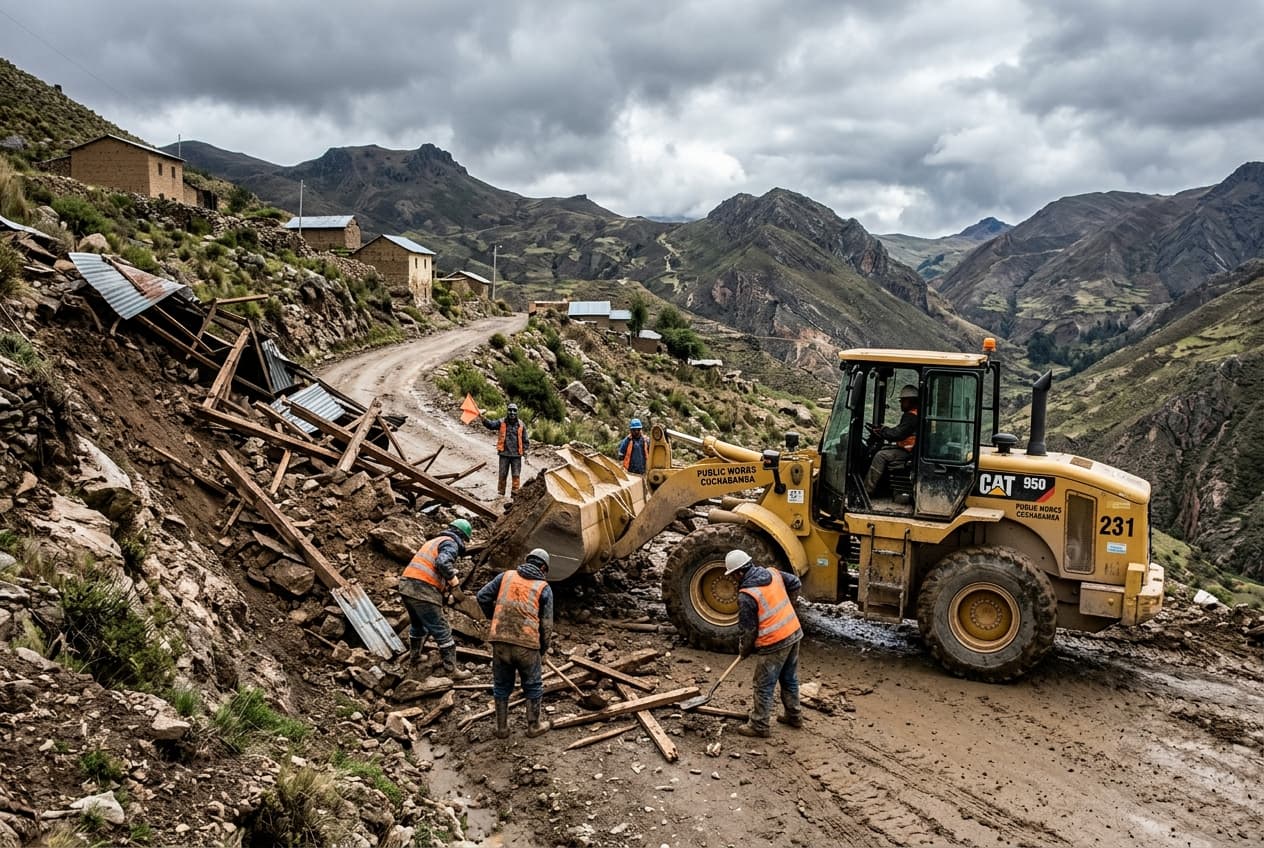
Potosí, Bolivia—Gale-force seasonal winds swept through the high-altitude rural stretches of Potosí on Thursday, leveling dozens of traditional adobe structures and forcing emergency response teams into the Andean backcountry. The sudden surge in wind speed began around dawn, tearing corrugated zinc roofs from homes and cracking load-bearing mud walls across several farming hamlets.
Local authorities confirmed that the hardest-hit areas lost critical utility connections within hours of the storm’s arrival. Power lines snapped under the pressure of flying debris, while rural telecom towers suffered severe structural damage, cutting off communications between regional dispatchers and distant settlements. Municipal emergency crews dispatched from the department capital found early access routes blocked by fallen trees and loose soil pushed down from surrounding hillsides.
Resident families spent the morning sifting through collapsed clay walls to salvage grain stores, livestock, and personal belongings. Mud-brick architecture, long relied upon for insulation against harsh Andean night temperatures, proved incapable of handling persistent lateral wind gusts exceeding 70 kilometers per hour.
Emergency medical workers reported scattered non-fatal injuries, mostly sustained from falling structural timber and dislodged masonry. Field clinics in nearby towns received victims suffering from minor head trauma, lacerations, and respiratory irritation caused by thick clouds of kicked-up dust and crushed dry clay.
Regional authorities set up temporary emergency shelters in community centers and public schools that managed to withstand the gales. However, local leaders pointed out that the current supply of blankets, potable water, and emergency rations remains vastly insufficient for the number of displaced residents seeking refuge before temperatures drop overnight.
Public works crews equipped with heavy machinery began clearing secondary roads around mid-afternoon, attempting to open channels for relief convoys carrying emergency tarpaulins and construction tools. Progress remains slow due to narrow mountain passes and ongoing wind resistance that hazards high-profile clearing equipment.
Municipal civil defense officials declined to provide an official count of destroyed properties, citing the ongoing difficulty of establishing direct contact with distant sector leaders. Preliminary estimates gathered from radio broadcasts suggest at least forty households lost their main living quarters during the initial wind bursts.
Regional meteorological agencies warned that unstable atmospheric pressure across the Altiplano will sustain high wind speeds through the late evening hours. Emergency coordinators advised residents in vulnerable structures to evacuate to reinforced public spaces immediately, as field reports continue to confirm structural failures throughout the rural perimeter.
Published by Banx Network. This article is part of the Banx decentralized media programme, powered by the BXE token on the XRP Ledger.