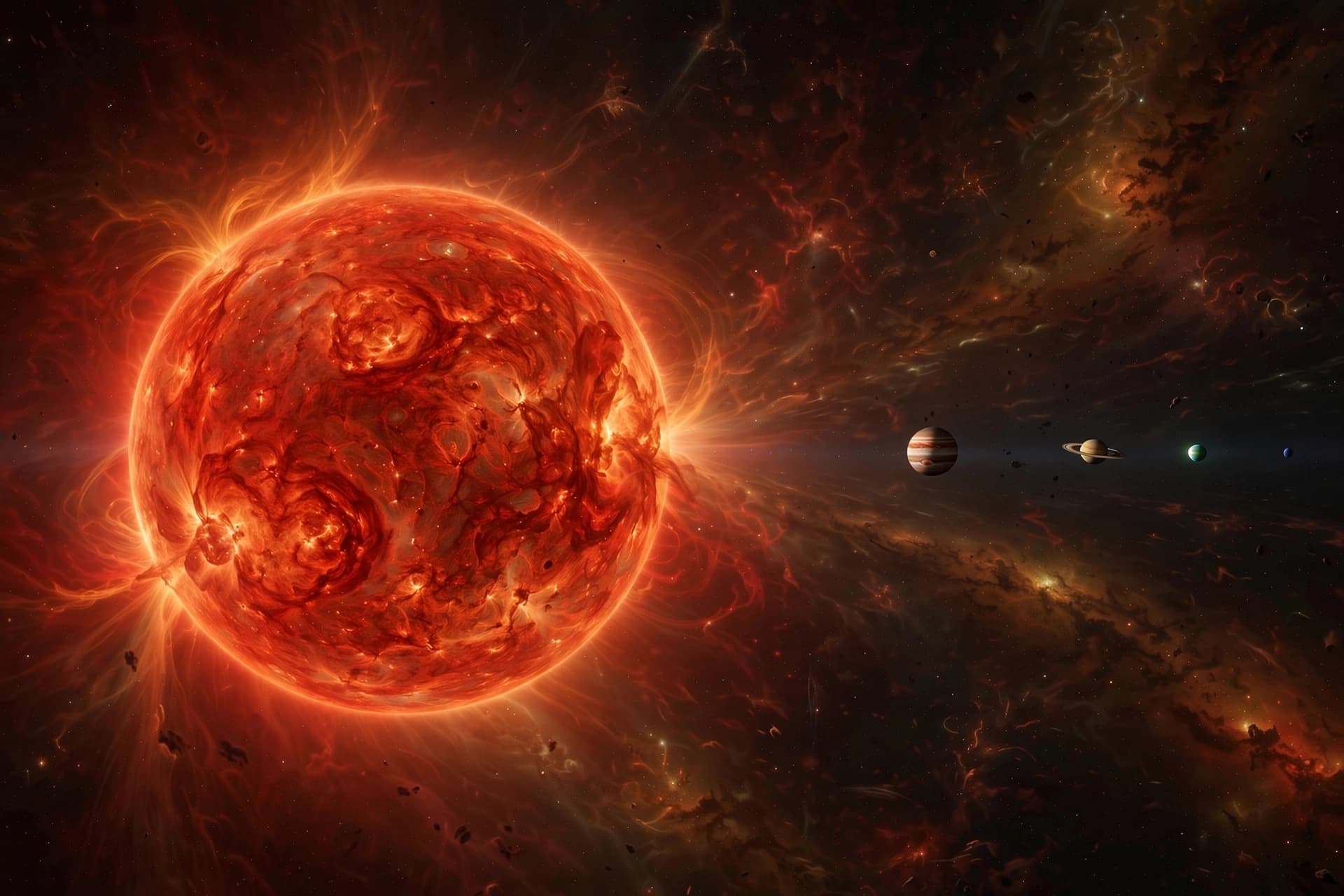
Beneath the thick, swirling clouds of Venus, a hidden pattern has finally been revealed. Astronomers have discovered giant concentric rings encircling the planet’s atmosphere, visible only through the subtle lens of polarized light. These structures, spanning much of the day side of our sister planet, offer a new glimpse into the complex dynamics of its upper atmosphere.
The discovery, published in recent studies, challenges previous assumptions about the uniformity of Venus’s cloud layers. It suggests that atmospheric gravity waves and other forces are creating large-scale patterns that were previously invisible to standard observation methods.
Body: The rings were detected using polarimetry, a technique that measures the polarization of sunlight reflected by the planet. This method allowed researchers to see faint variations in the density and composition of the upper atmosphere, revealing the concentric structures. The rings are believed to be caused by atmospheric gravity waves, which propagate upward from lower layers.
Venus’s atmosphere is known for its super-rotation, where winds circle the planet much faster than the planet itself rotates. The newly discovered rings may be linked to this phenomenon, providing clues about the energy transfer and stability of the atmospheric flow. Understanding these mechanisms is key to modeling Venus’s climate.
The findings contribute to a growing body of research aimed at unraveling the mysteries of Venus. Recent missions and ground-based observations have focused on understanding its runaway greenhouse effect and geological activity. The rings add another layer of complexity to this puzzle, suggesting that the atmosphere is more dynamic than previously thought.
For scientists, the discovery opens new avenues for investigation. By studying the properties of the rings, such as their spacing and intensity, researchers can infer details about the wind speeds and temperature gradients in the upper atmosphere. This information is crucial for comparing Venus with Earth and other terrestrial planets.
The use of polarimetry highlights the importance of advanced observational techniques in astronomy. As technology improves, astronomers are able to detect finer details in planetary atmospheres, leading to unexpected discoveries. This approach may be applied to other planets in the future, revealing hidden structures elsewhere in the solar system.
Public interest in Venus has surged in recent years, driven by the possibility of past habitability and the search for signs of life. While the rings themselves are not indicative of biological processes, they enhance our understanding of the planet’s environment and its evolution over time.
Future missions, such as those planned by NASA and ESA, will likely incorporate polarimetric instruments to study these features in greater detail. The data collected will help refine models of atmospheric circulation and improve predictions of weather patterns on Venus.
Closing: The discovery of concentric rings in Venus’s atmosphere is a testament to the power of innovative observation. It reminds us that even our nearest planetary neighbor holds secrets waiting to be uncovered by careful and creative science.
AI Image Disclaimer: The visuals in this article are AI-generated illustrations designed to reflect the atmospheric phenomena described.
Sources: ScienceAlert Astrobiology Magazine IOP Science BioScience
Published by Banx Network. This article is part of the Banx decentralized media programme, powered by the BXE token on the XRP Ledger.