The universe often reveals its deepest mysteries through patterns hidden beneath the surface of reality. Like frost forming intricate shapes on a winter window, nature repeatedly demonstrates that order can emerge from complexity. A new theoretical study suggests that similar patterns may exist within space-time itself, potentially offering clues about the origins of some of the rarest black holes ever imagined by physicists.
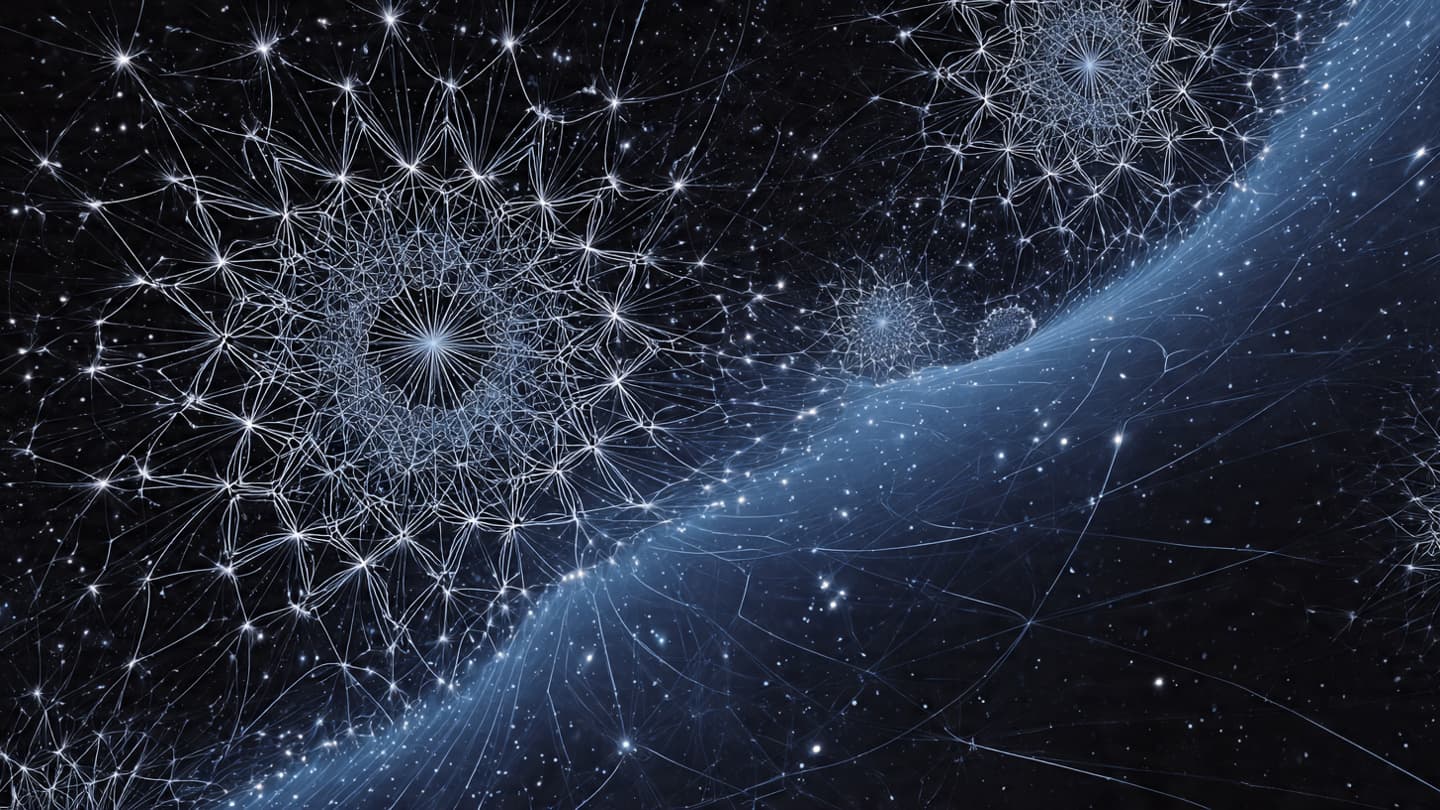
The research explores the concept of so-called “space-time crystals,” mathematical structures that repeat in an organized way across the fabric of the universe. While the idea sounds unusual, it emerges from efforts to understand how gravity behaves under extreme conditions where conventional theories become difficult to test.
Scientists involved in the study revisited questions that have intrigued physicists for decades. During the 1990s, numerical simulations by researchers investigating gravitational collapse hinted that highly unusual cosmic objects might form under carefully tuned circumstances. These possibilities included rare black holes and even naked singularities, theoretical objects not hidden behind an event horizon.
At the time, computing limitations left many uncertainties unresolved. The new work attempts to address some of those challenges by applying analytical methods that simplify Einstein’s equations through a mathematical assumption involving a very large number of dimensions. Although the universe we observe does not possess infinite dimensions, the approach allows researchers to explore behaviors that would otherwise remain difficult to calculate.
Within this framework, repeating structures resembling crystals appear in the geometry of space-time. According to the study, these patterns could influence the formation of exotic gravitational objects under specific conditions. The results do not demonstrate that such objects exist in nature, but they strengthen the theoretical foundation behind the possibility.
The findings also connect to broader scientific efforts aimed at understanding how black holes originate. Astrophysicists continue to investigate whether some black holes may have formed shortly after the birth of the universe, while others emerged through the collapse of massive stars. Questions surrounding these origins remain among the most active areas of modern cosmology.
For researchers, studies like this serve as conceptual bridges between mathematics and observation. Theoretical models often begin as abstract ideas before future instruments provide opportunities to test them. In that sense, the work represents another step in a long scientific journey rather than a final destination.
The notion of crystalline patterns hidden within space-time may sound poetic, yet it reflects a serious attempt to understand how gravity behaves at its limits. As physicists continue refining their models, such ideas may help illuminate corners of the universe that remain beyond direct observation.
For now, the study offers a fresh perspective on rare black holes and the possible structures underlying reality itself. Further theoretical and observational research will be needed before any conclusions can be confirmed.
AI Image Disclaimer: This article is accompanied by an AI-generated illustration created to visualize scientific concepts discussed in the report.
Sources Verified Live Science Physical Review Letters arXiv Academic astrophysics publications
Published by Banx Network. This article is part of the Banx decentralized media programme, powered by the BXE token on the XRP Ledger.