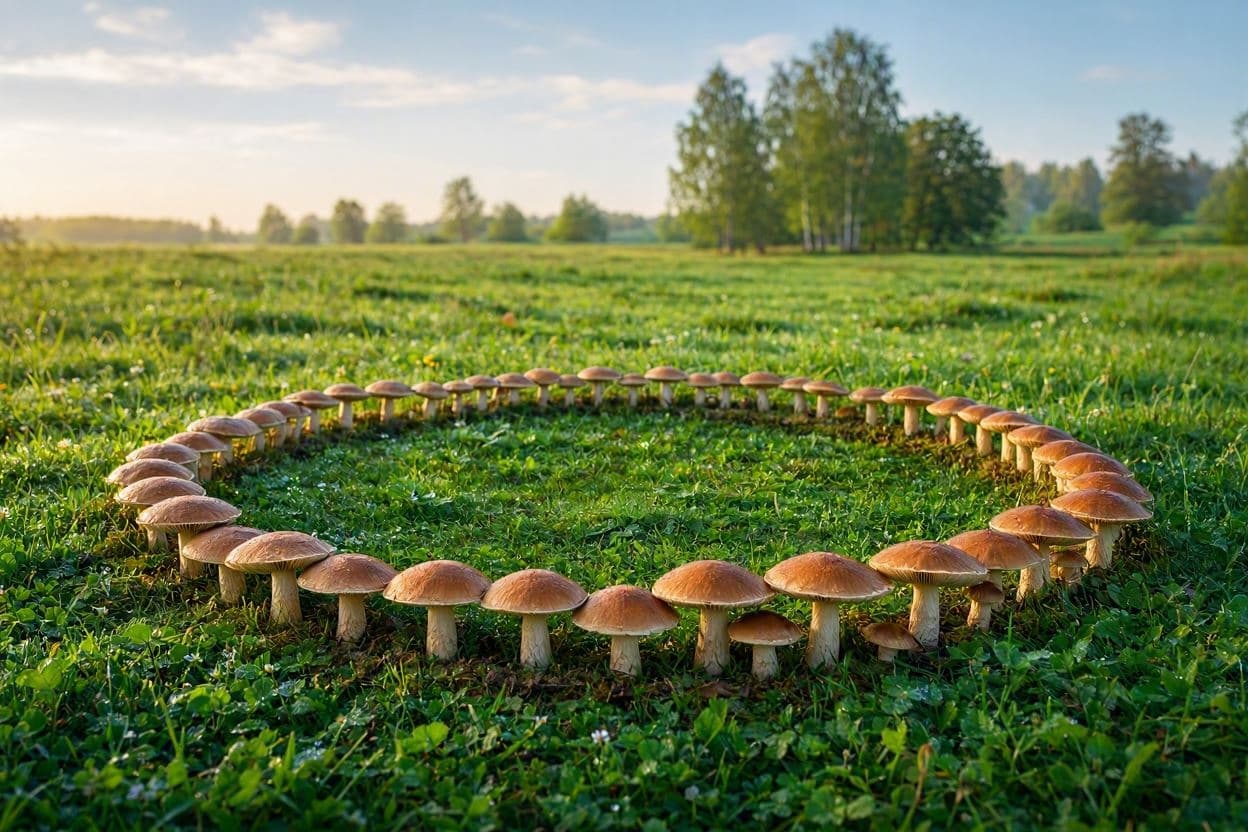
In the quiet glades of forests, nature sometimes draws perfect circles, sparking tales of fairies and magic. These mushroom fairy rings, long the subject of folklore, are now understood through the lens of biology as the result of a simple yet elegant growth pattern. This explanation invites reflection on the beauty of natural processes and the way science demystifies the magical without diminishing its wonder. It is a moment where myth meets mycelium.
The rings are formed by the mycelium, the underground network of fungal threads, which grows outward from a central point in search of nutrients. As it expands, it consumes the resources in the soil, creating a zone of depletion in the center. Growth seeks food. Depletion marks path.
When conditions are right, the fungus produces fruiting bodies—mushrooms—at the active outer edge of the mycelial mat, resulting in a visible ring. The center often appears bare or dead because the nutrients have been exhausted, while the outer edge thrives. Edge holds life. Center holds memory.
This radial growth is a common strategy for many organisms, allowing them to efficiently explore their environment and maximize resource acquisition. It is a testament to the efficiency of natural selection and the adaptability of life. Strategy ensures survival. Efficiency aids growth.
While the scientific explanation is straightforward, the visual impact of these rings continues to captivate the imagination. They serve as a reminder that nature is full of patterns waiting to be discovered and appreciated. Pattern pleases eye. Discovery delights mind.
For ecologists, studying fairy rings provides insights into soil health, fungal diversity, and ecosystem dynamics. Each ring is a snapshot of a hidden world, revealing the intricate connections beneath our feet. Study reveals connection. World lies below.
As we walk through the woods, the hope is that we see these circles not just as curiosities, but as signs of the vibrant, living network that supports all terrestrial life. Appreciation honors nature. Network sustains life.
Mushroom fairy rings are caused by the radial growth of underground mycelium, which depletes nutrients in the center and produces mushrooms at the active edge. This natural process explains the circular patterns often seen in forests and fields. The hope is for greater appreciation of fungal ecology.
AI Image Disclaimer: The images provided are AI-generated to visually represent the biological and ecological aspects of the story.
Sources: The Average Scientist Woodland Trust USU Herbarium Foraging Course Company
Published by Banx Network. This article is part of the Banx decentralized media programme, powered by the BXE token on the XRP Ledger.