The Red Planet has long been viewed as a silent, dusty neighbor, its thin atmosphere offering little protection against the harshness of space. For decades, scientists have planned missions to Mars with a clear understanding of the primary threats: radiation from cosmic rays and the occasional solar flare. However, recent observations have revealed a more complex and insidious danger. Solar storms, when combined with Martian dust events, create a synergistic heating effect that was previously underestimated, posing unexpected challenges for both robotic explorers and future human crews.
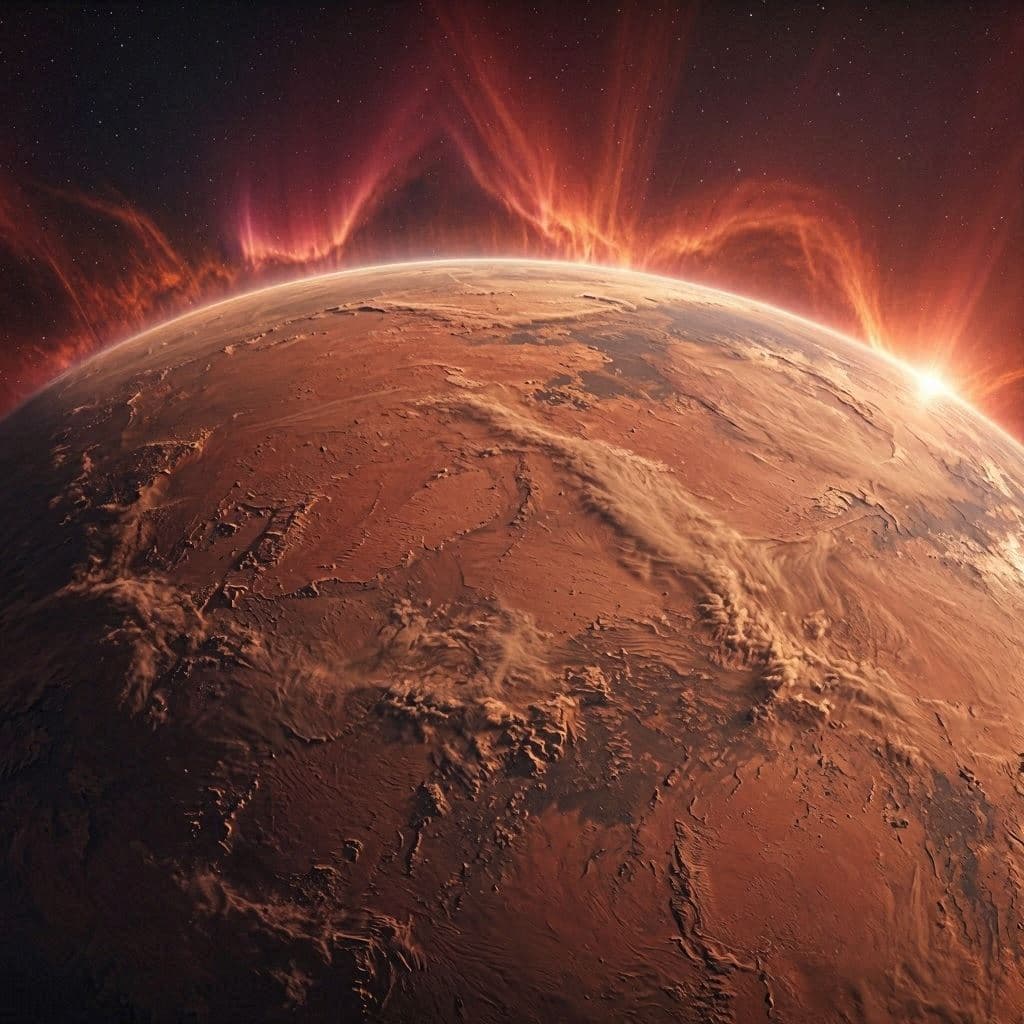
Body: New data from NASA and ESA orbiters indicate that during intense solar storms, the interaction between charged particles and Martian dust can amplify atmospheric heating by up to 90 degrees Fahrenheit. This phenomenon occurs because the dust particles absorb energy from the solar wind and re-radiate it as heat, creating a thermal trap in the upper atmosphere. While this might sound like a minor fluctuation, in the delicate balance of Martian climate systems, it can lead to significant atmospheric expansion and increased drag on orbiting spacecraft.
For robotic missions, this unexpected heating can alter orbital trajectories, requiring more frequent course corrections and consuming precious fuel. For future human missions, the implications are even more profound. The expanded atmosphere could affect entry, descent, and landing procedures, making it harder to predict where landers will touch down. Additionally, the increased thermal stress on habitats and life-support systems could compromise their integrity over time.
Scientists had previously modeled solar storms and dust storms as separate events, but the reality of Mars is that they often coincide. The planet’s global dust storms, which can envelop the entire globe for months, provide the perfect medium for solar energy to be trapped and amplified. This discovery forces a reevaluation of mission planning, emphasizing the need for more robust thermal shielding and adaptive navigation systems.
The finding also highlights the importance of continuous monitoring. Space weather forecasts, which are crucial for Earth-based satellites, must now be extended to include Martian conditions. Agencies are working to integrate real-time data from multiple orbiters to create a more accurate picture of the planet’s dynamic environment. This collaborative effort is essential for ensuring the safety and success of upcoming missions.
Beyond the technical challenges, there is a philosophical shift in how we view Mars. It is not just a static destination but a living, breathing world with its own complex weather patterns. Understanding these patterns is key to not only surviving but thriving on the surface. The unexpected risk serves as a humble reminder that nature always has more to teach us, no matter how much we think we know.
As preparations for human exploration accelerate, this new knowledge will be integrated into training and equipment design. Engineers are already exploring materials that can withstand greater thermal variability, while mission planners are developing contingency protocols for sudden atmospheric changes. The goal is to turn uncertainty into preparedness, ensuring that when humans finally set foot on Mars, they are ready for whatever the sky throws at them.
The discovery of synergistic heating from solar storms and dust on Mars adds a layer of complexity to future exploration. Yet, it also offers an opportunity to refine our technology and deepen our understanding of planetary science, paving the way for safer and more sustainable missions to the Red Planet.
AI Image Disclaimer: The visuals accompanying this article are AI-generated illustrations designed to represent the themes of space weather and Martian atmospheric dynamics.
Sources: Gizmodo, NASA Science, ESA, Astrobiology.com
Published by Banx Network. This article is part of the Banx decentralized media programme, powered by the BXE token on the XRP Ledger.