
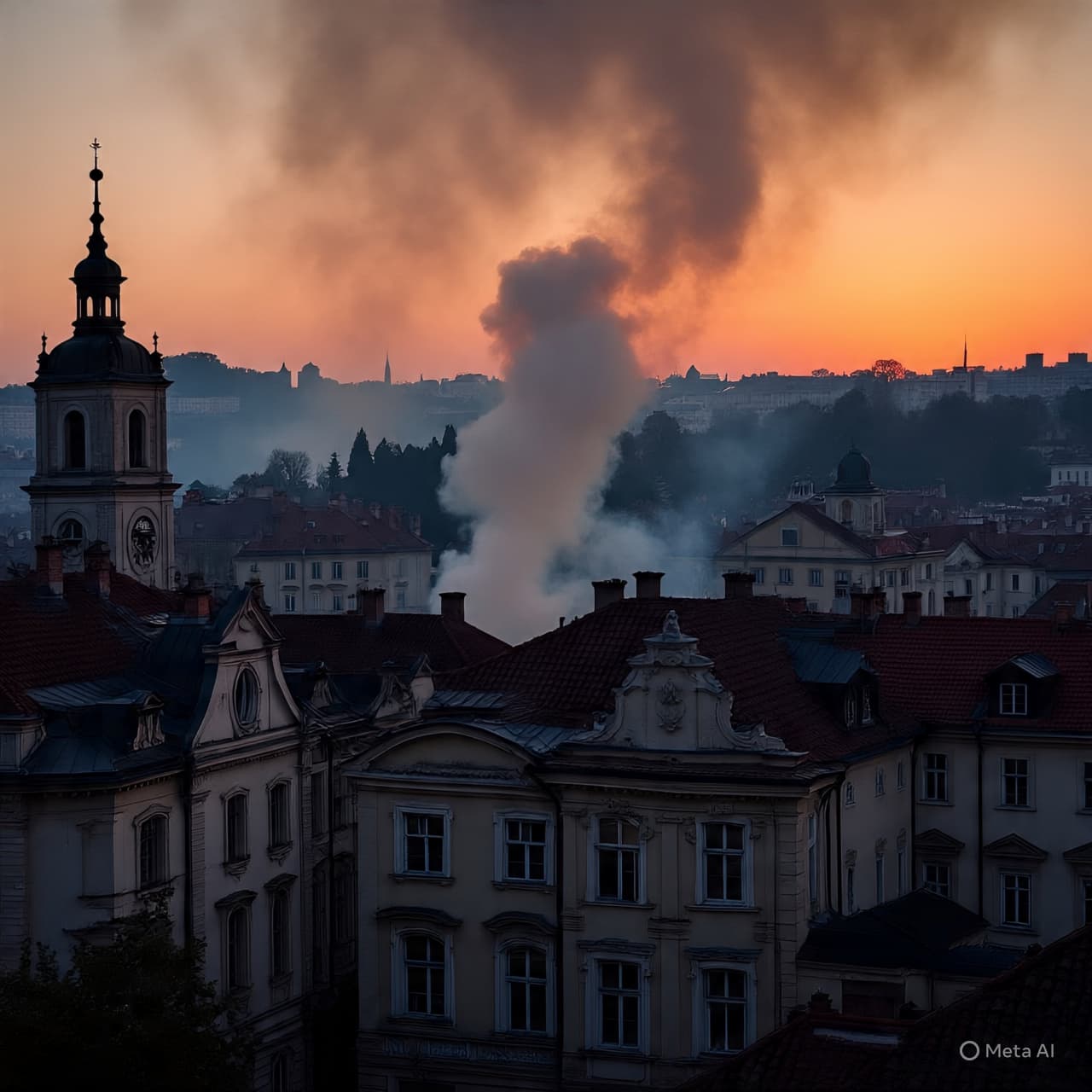
The first light of a chilly spring dawn settled over Lviv’s cobblestone lanes like a soft whisper — a city aged by time, its stones cradling centuries of stories. Here, in the weave of Gothic spires and tumbling rooftops, heritage is not just preserved in records but lived in the slow hush of footfalls through narrow streets and the quiet creak of ancient doors. In those early hours after March’s longest night, the echo of that history — and of its fragility — spoke through smoke that curled above the city’s heart.
Lviv, far from the principal frontlines that have scarred much of eastern Ukraine, has long been a corridor of memory and refuge: a place where medieval urban patterns remain stitched into daily life and where the hum of conversation drifts through stalls and cafés alongside the architecture of centuries past. Its Historic Centre, inscribed on UNESCO’s list of World Heritage, is a mosaic of styles reflecting the many cultures that have shaped this crossroads of Europe. But on a late winter afternoon, that woven pattern of time was unsettled by a sudden rupture. Russian drones, part of a broader aerial onslaught sweeping across Ukraine, descended over the western city on March 24, their mechanical flight disrupting the usual rhythm of midday. Among the structures struck were parts of the fortified church of St. Andrew and the neighboring monastic precinct — places that had stood for generations, repositories of art and embodiment of memories held in stone and timber.
The light that once played upon the ornamented façades was replaced by the flicker of flame and the rumble of collapsing timbers as emergency crews and residents alike moved through the smoke. In the maelstrom of that moment, at least two people were reported wounded near the historic church, and elsewhere buildings bore the brunt of the attack, their facades scarred and windows shattered.
This was not merely a blow to physical structures — it was a jolt to the city’s sense of continuity. For years, Lviv’s heritage had been shielded by locals, scholars, and guardians who wrapped statues, reinforced masonry, and catalogued treasures against the distant specter of conflict. Today’s damage arrived just as international bodies had underscored the peril facing Ukraine’s cultural patrimony; Lviv’s historic centre had been listed as endangered under the World Heritage Convention, as global stewards weighed the legal and moral obligations to protect such places amid conflict.
In the hours that followed, voices rose beyond the city’s limestone shields — in government offices, in diplomatic channels, among citizens who see in these walls not only architectural beauty but the imprint of their own histories. Calls spread for broader recognition of the stakes of war, for vigilance in safeguarding what remains, and for deeper reflection on the fragile interplay between human conflict and cultural inheritance.
By dusk, the streets were still quiet once more, marked by the distant wail of sirens and the methodical work of clearing debris. In the lingering glow of twilight, the city’s silhouettes remained — graceful, resilient, yet now etched with fresh reminders of vulnerability. Yet even here, where history seemed so close one could almost touch its grain, life continued to unfurl: vendors opened shutters, church bells tolled, and residents passed through squares that had witnessed centuries of change. And beneath it all was the sense that these stones, scorched though some now were, still carried the narratives of those who had walked here before — and those who will walk here still.
AI Image Disclaimer Visuals are AI‑generated and serve as conceptual representations.
Sources Reuters Reuters News UNESCO World Heritage Centre (documents) Wikipedia (Lviv heritage)
Published by Banx Network. This article is part of the Banx decentralized media programme, powered by the BXE token on the XRP Ledger.


