Morning light moves across a wide country in uneven ways—catching first on a flag at a schoolyard, later on a courthouse dome, finally on a porch where coffee cools and the radio hums. In the United States, national pride is rarely a single feeling. It arrives in fragments, shaped by place, memory, and the quiet rituals of everyday life.
Polls and long-running surveys suggest that pride here ebbs and flows rather than stands fixed. One enduring fact is that Americans tend to feel strongest attachment to local identities—towns, states, regions—before the nation itself. The map matters. A person’s sense of belonging often begins with a neighborhood block or a county fair, then stretches outward, tentative but resilient.
Another fact: pride has grown more generational. Older Americans, shaped by the Cold War and postwar expansion, report higher levels of national pride than younger adults, who often express attachment through critique as much as celebration. For many under 30, caring for the country means questioning it—holding ideals up to the light and asking whether they still fit the times.
A third truth sits in the calendar. National pride spikes around shared moments—Independence Day, Olympic Games, moments of collective crisis—then recedes. These surges are brief but telling. They reveal how pride here is event-driven, stitched together by occasions that pause ordinary life and invite a common glance upward.
Fourth, immigration reshapes the story. Naturalized citizens frequently report levels of pride equal to—or higher than—those born in the country. For them, the feeling is earned through choice and ceremony, a conscious step into a civic promise. Pride, in this sense, is not inherited but adopted, practiced through participation.
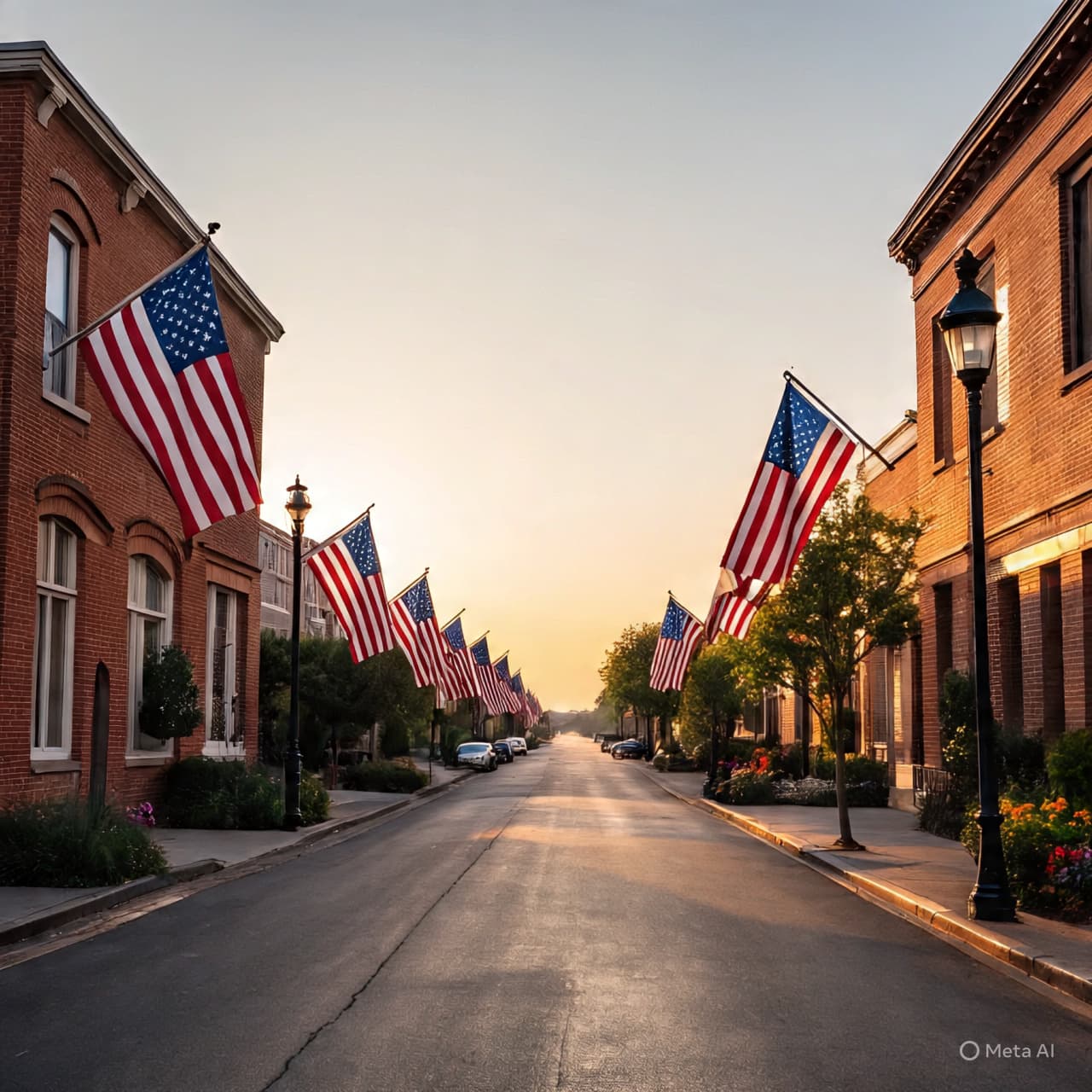
Fifth, symbols still carry weight, but their meanings are plural. The flag, the anthem, the pledge—each can signal unity, protest, reverence, or dissent, depending on who is holding them and why. Pride does not always look like agreement; sometimes it looks like argument conducted in public, under shared signs.
Finally, national pride in the U.S. is closely tied to ideals rather than outcomes. Surveys show Americans are most proud of democratic principles—freedom of speech, equality under law—even when they believe the country falls short of them. The attachment is aspirational. It leans toward what the nation claims to be, not only what it is.
As the day fades, flags are lowered, parades disperse, and the country returns to its many private rhythms. Pride remains—uneven, debated, unfinished—less a shout than a steady undertone. In the United States, it lives not as a single note, but as a chord, held together by difference and the shared hope that the music can keep playing.
AI Image Disclaimer Visuals are AI-generated and serve as conceptual representations.
Sources Pew Research Center Gallup U.S. Census Bureau World Values Survey Brookings Institution
Published by Banx Network. This article is part of the Banx decentralized media programme, powered by the BXE token on the XRP Ledger.