There are encounters that never fully happen.
Two forces draw close, shaped for connection, their tendencies aligned toward union. And yet, something intervenes—an obstruction, a constraint, a subtle misalignment that keeps them from completing what seems almost inevitable. What remains is not absence, but tension. A kind of held energy, suspended between approach and refusal.
In chemistry, this space has found a name: the Frustrated Lewis pairs.
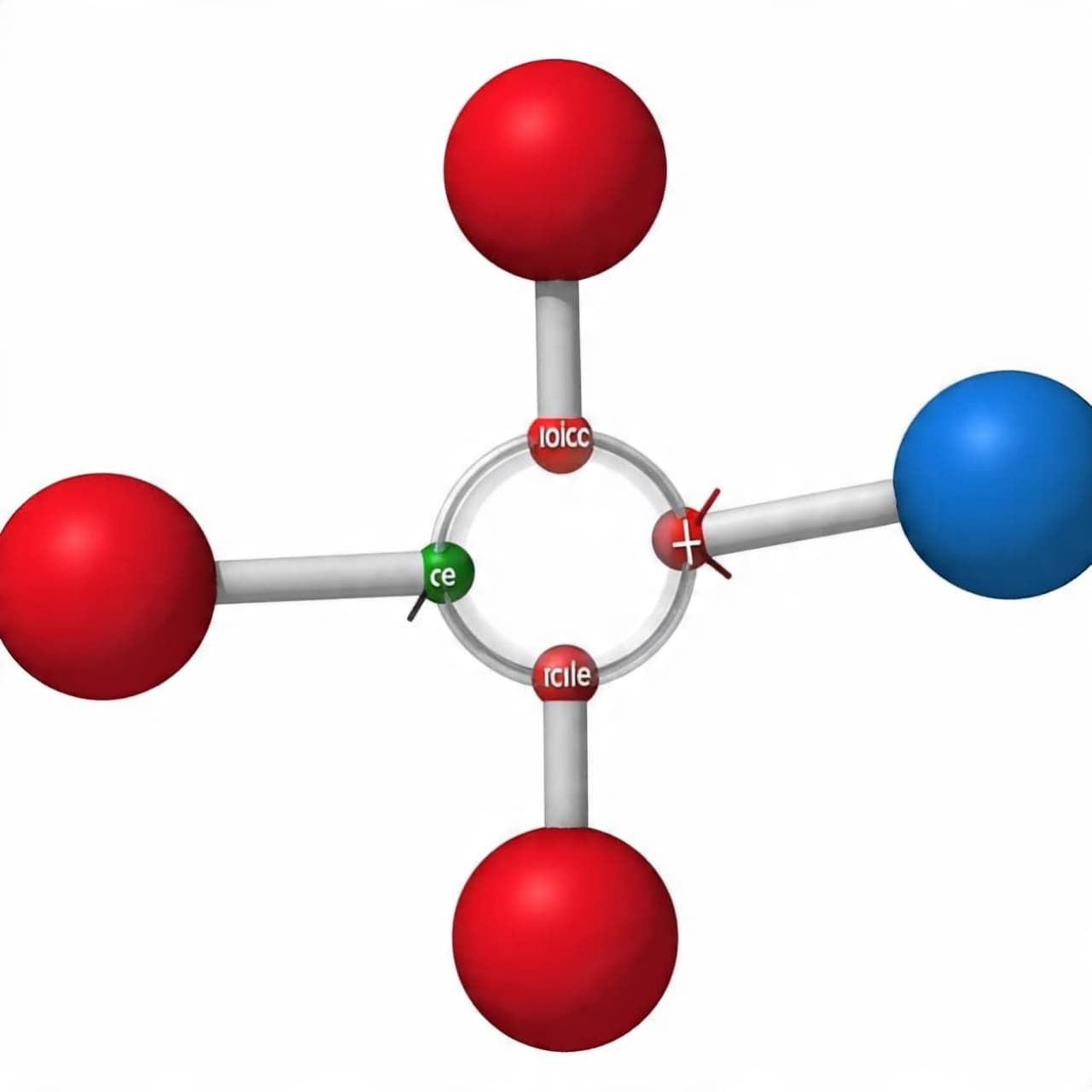
First described in the mid-2000s, frustrated Lewis pairs—often shortened to FLPs—emerged from a simple but unexpected observation. A Lewis acid and a Lewis base, typically inclined to bond by sharing electrons, were prevented from doing so by the presence of bulky molecular groups. These groups acted as barriers, keeping the two reactive centers close, but not quite close enough to combine.
What might have seemed like a limitation became something else entirely.
Held in this near-contact, the pair retained an unusual level of reactivity. Without forming a stable bond, they remained poised—able to interact with other molecules in ways that conventional systems could not. It was, in effect, a different kind of chemistry, one that operated not through completion, but through interruption.
Over the past two decades, this idea has expanded quietly but steadily. Researchers have explored how FLPs can activate small, stable molecules—most notably hydrogen—without the need for metal catalysts. In traditional catalysis, metals often serve as the central actors, facilitating reactions that would otherwise proceed too slowly or not at all. FLPs offered an alternative, one rooted in organic frameworks rather than metallic cores.
The implications have unfolded gradually.
Metal-free catalysis carries certain advantages. It can reduce reliance on rare or expensive elements, simplify purification processes, and open pathways to reactions that might be incompatible with metals. In industrial and laboratory settings alike, these possibilities have drawn attention, not with urgency, but with sustained curiosity.
There is also something conceptually distinctive about FLPs.
They challenge a familiar expectation—that reactivity follows from bonding. Instead, they suggest that reactivity can arise from proximity alone, from the tension of two entities held just apart. It is a reminder that chemistry, like many systems, is not defined solely by what forms, but also by what does not.
Over time, the range of reactions accessible through FLPs has broadened. Researchers have applied them to hydrogenation processes, carbon dioxide activation, and other transformations relevant to energy and synthesis. The systems themselves have grown more varied, with different combinations of acids and bases, each tuned to specific tasks.
Yet the underlying principle remains consistent.
A pair that cannot settle becomes a pair that continues to act.
As the field marks roughly twenty years since the introduction of frustrated Lewis pairs, the focus has shifted toward refinement and application. New designs aim to increase efficiency, selectivity, and stability, while also exploring how these systems might be integrated into larger catalytic cycles.
The work continues in laboratories across the world, often at a measured pace, shaped by incremental advances rather than singular breakthroughs.
Researchers report that frustrated Lewis pairs have matured into a versatile platform for metal-free catalysis, with ongoing studies expanding their use in hydrogen activation, carbon dioxide conversion, and organic synthesis. The field, now two decades on, remains an active area of chemical research, bridging fundamental theory and practical application.
AI Image Disclaimer
Visual content is generated by AI and represents conceptual scientific imagery.
Source Check: Nature, Science, Chemistry World, Royal Society of Chemistry, American Chemical Society
Published by Banx Network. This article is part of the Banx decentralized media programme, powered by the BXE token on the XRP Ledger.