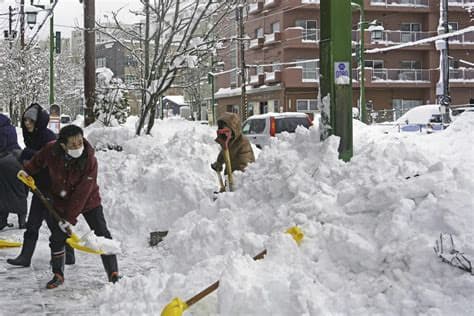
As of January 26, 2026, northern Japan is grappling with severe winter weather, characterized by heavy snowfalls that have significantly impacted daily life and transportation. Areas along the Sea of Japan coast, including Ishikawa and Niigata Prefectures, have seen exceptional snowfall, with accumulations reaching up to 264 centimeters in some regions.
The Japan Meteorological Agency has issued heavy snow alerts, warning of the potential for travel disruptions amid continuing adverse weather conditions. Between January 21 and January 25, significant accumulations were reported, resulting in slippery roads and the risk of avalanches. Notably, cities like Kanazawa recorded unprecedented snow levels, with more than 64 centimeters falling in just a 24-hour period.
Transportation across northern Japan has been heavily affected, with numerous flights and train services canceled. For instance, ANA Holdings canceled 56 flights affecting nearly 3,900 passengers, primarily at New Chitose Airport near Sapporo. Communities are advised to exercise extreme caution, as sections of major roadways have been closed and emergency services remain on high alert.
The ongoing weather pattern is attributed to a cold air mass lingering over the region, driving snowfall that exceeds seasonal averages. Officials are urging residents to avoid non-essential outings, and preparations are underway to manage power outages and snow-related accidents.
As the snow continues, local governments are working to clear roads and ensure public safety, reiterating the importance of being vigilant and prepared for further weather fluctuations.
Published by Banx Network. This article is part of the Banx decentralized media programme, powered by the BXE token on the XRP Ledger.