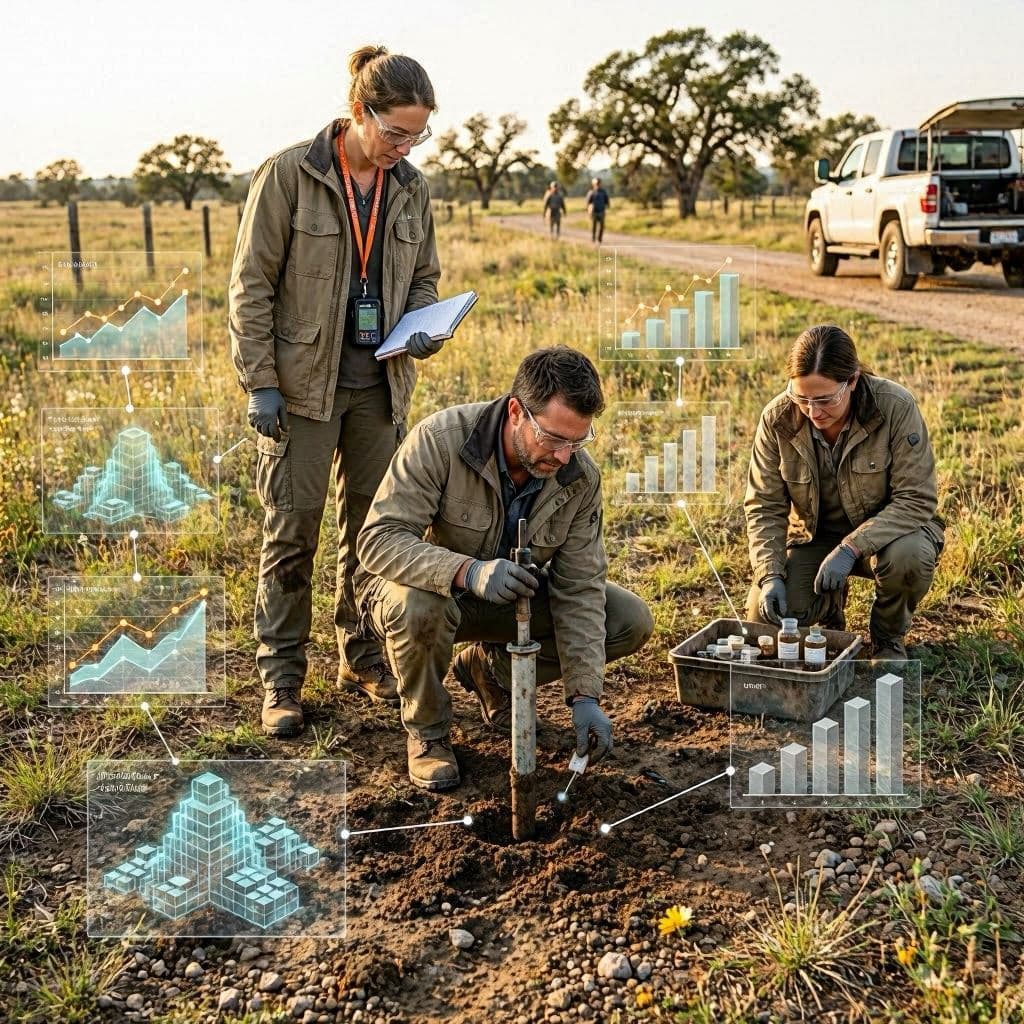
The surface of the Earth often conceals a complex world beneath it. Within layers of soil lie minerals, microorganisms, nutrients, and sometimes contaminants that influence ecosystems, agriculture, and public health. Understanding these hidden conditions has become an important scientific priority, and artificial intelligence is beginning to play a meaningful role.
Researchers have developed a machine learning approach that improves the detection of harmful contaminants in soil. The method analyzes large environmental datasets to identify patterns that may be difficult to recognize using traditional analytical techniques alone.
Soil contamination can result from industrial activity, mining, waste disposal, agricultural chemicals, and other human activities. Early identification helps environmental scientists evaluate risks and determine appropriate remediation strategies.
Machine learning models examine relationships among chemical measurements, geographic information, and environmental variables. By recognizing subtle patterns, the system assists researchers in locating areas that may require further investigation.
Scientists emphasize that artificial intelligence serves as a decision-support tool rather than a replacement for field sampling and laboratory testing. Physical soil analysis remains essential for confirming environmental findings.
The technology may also improve monitoring efficiency by helping environmental agencies prioritize locations for detailed investigation. Faster identification could support more effective resource allocation while reducing monitoring costs.
Researchers continue refining the algorithms using larger datasets collected across different climates and geological conditions. Ongoing validation will help improve model reliability under diverse environmental circumstances.
As environmental science increasingly incorporates advanced data analysis, machine learning offers another tool for protecting ecosystems and public health. Better understanding of soil conditions supports more informed environmental management in the years ahead.
AI-generated image disclaimer: The accompanying illustration was created using AI to support scientific visualization and does not represent an actual research site.
Source Verification: ScienceDaily, environmental science research publications
Published by Banx Network. This article is part of the Banx decentralized media programme, powered by the BXE token on the XRP Ledger.