
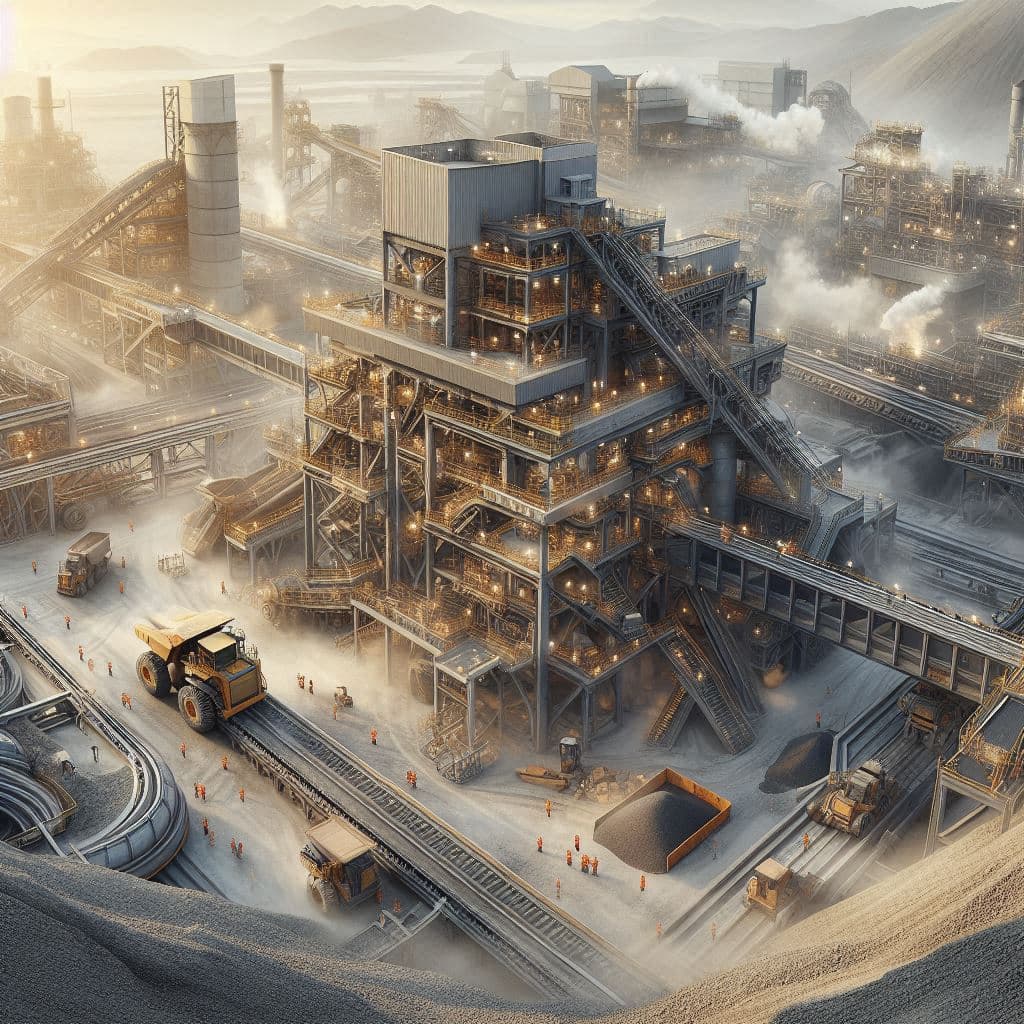
There are certain invisible threads that bind the world’s technologies together — delicate strands woven from elements hidden deep beneath the surface of the earth. These are the rare earths, the quiet enablers of modern life: the magnets in wind turbines, the chips powering electric cars, and the sensors that guide satellites. They are, paradoxically, both common in use and rare in reliable supply. In recent years, the United States has come to recognize one of those threads — long taken for granted — is fraying under the strain of global geopolitics. For decades, China’s stewardship of rare earth supplies has been like a seasoned gardener tending a shared orchard — abundant but centralized, yielding much of the world’s production while shaping its prices and flow. Now, as Washington searches for resilient alternatives, its gaze has shifted toward neighbors closer to home and a renewed call for cooperation with México.
In the soft corridors of diplomacy and strategy, the United States and México have begun to chart a course toward deeper collaboration on what are called “critical minerals,” among them the rare earth elements essential to advanced industries. At a ministerial meeting in Washington earlier this month, officials from both capitals announced a joint action plan to spend the next 60 days exploring coordinated trade policies that could help diversify and stabilize these supply chains, historically dominated by exporters in East Asia. The plan includes discussions about price floors for certain mineral imports, regulatory cooperation, and the identification of specific mining, processing, and manufacturing projects.
This emerging cooperation does not emerge from isolated ambition. It exists within a broader context in which the U.S. has recognized the vulnerability of relying too heavily on any single foreign source for materials that underpin everything from smartphones to defense systems. China’s near-monopoly on rare earth processing — refining and separating the ore into usable components — has long been seen as a strategic vulnerability for countries with advanced industrial bases. This dependence has prompted Washington to propose new frameworks with allies and partners, including not only México but also the European Union and Japan, as part of a wider strategy to build resilient supply chains for critical minerals.
For México, the conversation offers a gentle invitation into a field of economic opportunity that could deepen industrial ties across the continent. Resources within its borders and expertise in traditional mining could become part of a shared not-too-distant future in which raw materials and refining capacity flow more predictably between neighbors. Yet this path is not without its complexities. Domestic mining regulations and environmental concerns remain part of the broader debate in México, which under recent leadership has taken steps to reconfigure its extractive policy even as it engages externally. The dialogue with the U.S. thus unfolds not only as a matter of international partnership but as a reflection of México’s evolving approach to resource management and economic development.
In this unfolding narrative, markets and policymakers alike are reminded of the delicate balance between interdependence and autonomy. Rare earths are but one chapter in the larger book of global supply chains, yet they carry outsized symbolic and practical weight. They speak to a modern era in which the unseen ingredients of everyday life and national security are entangled, not solely through geography but through policy choices made far from the mines that produce them. Partnerships like the one being sketched between the U.S. and México are, in effect, attempts to weave new strands of cooperation — not isolation — into an ever more interconnected world.
As this dialogue continues, observers will watch whether the planned action over the next several weeks results in concrete mechanisms that reduce strategic vulnerability, foster shared investment, and support more resilient technologies. For now, the discussions stand as a testament to how countries seek strength not through control alone, but through collaboration — a reminder that the future of modern industry may well depend on the bridges we build as much as the minerals we extract.
In other developments, recent announcements by the U.S. government include the launch of a significant stockpiling initiative aimed at securing strategic minerals, while other partners such as Taiwan have also shown interest in evaluating and refining domestic deposits to bolster supply chain security. These steps underline the growing importance of reshaping the architecture of critical mineral sourcing and processing, even as China remains a central figure in the global rare earth landscape.
AI Image Disclaimer (rotated wording) “Illustrations were produced with AI and serve as conceptual depictions.”
Sources (media names only):
Reuters The Guardian AP News Yahoo Finance / Investing.com ManufacturingDive
Published by Banx Network. This article is part of the Banx decentralized media programme, powered by the BXE token on the XRP Ledger.


