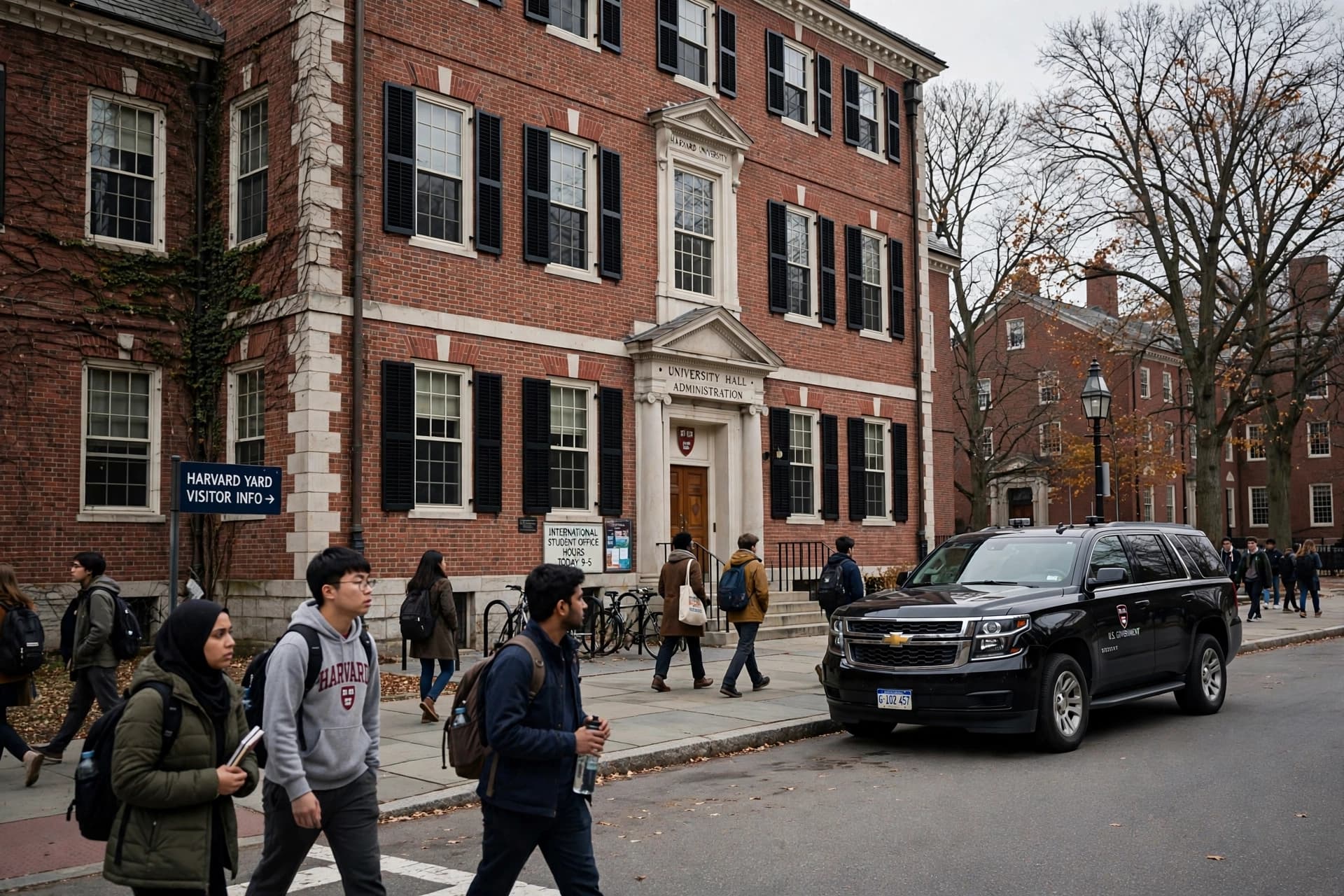
There is a particular concern that settles over a university when the government begins to scrutinize the visa status of its students and scholars—a concern made sharper by the knowledge that the scrutiny is not about individual wrongdoing but about a broader political posture, that the universities are being targeted not for what they have done but for what they represent, and that the consequences will fall not only on the institutions but on the people who came to America to study and to contribute. In Cambridge, Massachusetts, that concern has now arrived. Harvard and MIT are facing visa probes as part of a broader U.S. crackdown on international students and scholars.
The investigations, led by the Department of Homeland Security and the State Department, are examining whether the universities have complied with the requirements of the Student and Exchange Visitor Program, which governs the visas of international students and scholars. The probes are part of an effort by the Trump administration to scrutinize the presence of foreign nationals at American universities, particularly those from countries that are considered strategic competitors, including China and Iran. According to officials, the focus is on ensuring that visa holders are engaged in the activities for which their visas were issued and that they are not involved in espionage or intellectual property theft.
The universities have said they are cooperating with the investigations but have expressed concern about the chilling effect on international recruitment. Harvard and MIT rely heavily on international students and scholars, who make up a significant portion of their graduate programs and research staff. Restrictions on their ability to come to the U.S., or the perception that they are no longer welcome, could have profound consequences for American higher education and for the nation's competitiveness in science and technology.
The crackdown is part of a broader pattern of the administration's approach to immigration and to the academic sector. The president has repeatedly criticized universities as bastions of liberal ideology, and his administration has sought to reduce their influence. The visa probes are being conducted in a way that university officials describe as opaque, with little information about the scope of the investigations or the specific allegations. Some students have already seen their visas revoked or their applications delayed, and universities are advising international students and scholars to be cautious about travel and to carry their documentation at all times.
For Harvard and MIT, the probes are a challenge that goes to the heart of their mission. They are institutions that have built their reputations on their ability to attract talent from around the world, and they have long argued that this openness is a source of American strength. The administration's crackdown is a test of whether that argument still holds—and whether the universities can protect their international communities while complying with the government's demands.
AI Image Disclaimer: The visual elements in this article were created using AI generation tools and are intended for illustrative purposes only.
Sources: Reuters, The Boston Globe, Inside Higher Ed, Associated Press
Published by Banx Network. This article is part of the Banx decentralized media programme, powered by the BXE token on the XRP Ledger.