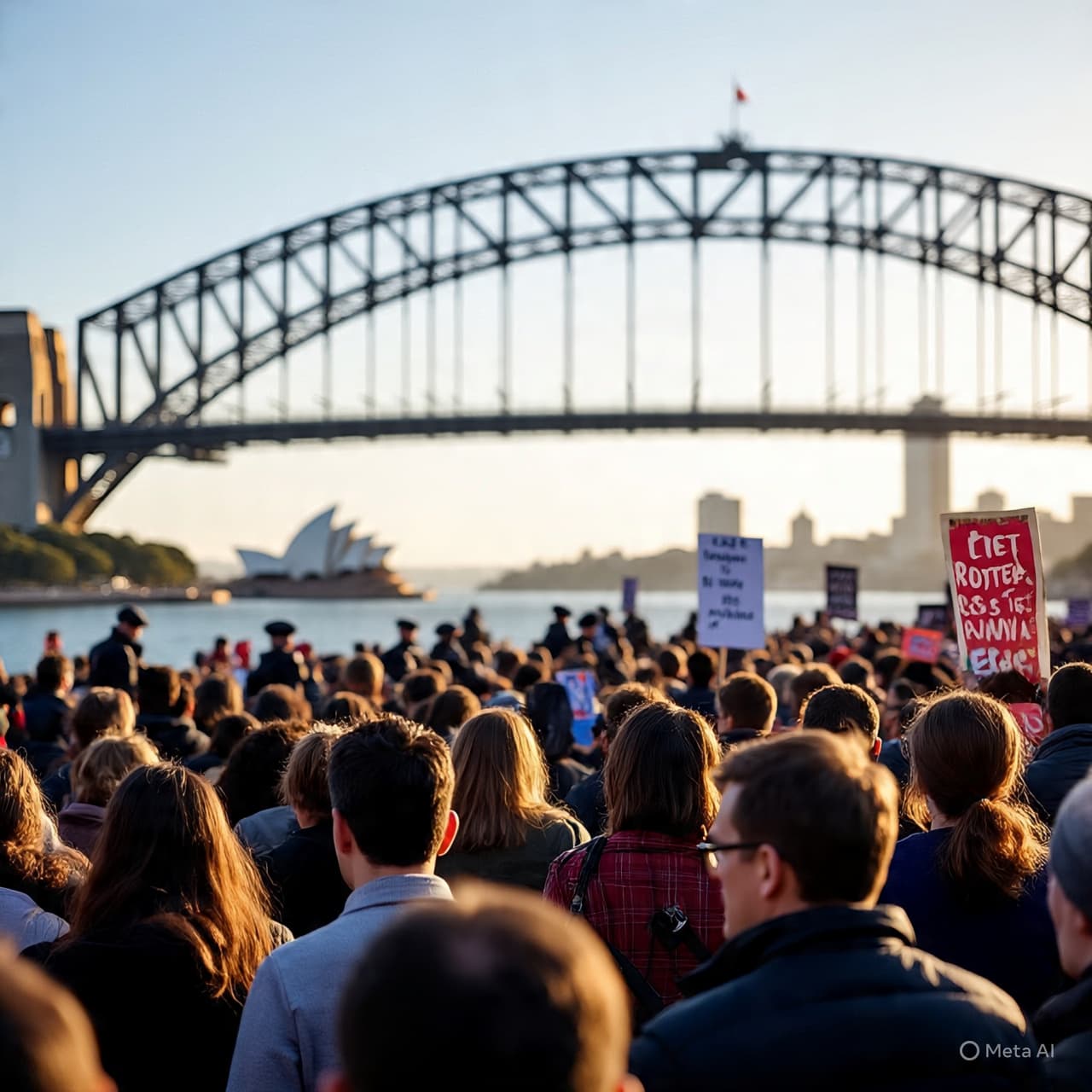
The afternoon light over Sydney Harbor usually softens everything it touches, smoothing the sharp edges of the city into a postcard calm. Ferries cut across the water, the Opera House gleams, and footsteps echo along the quay in steady rhythms. But on this day, the air carried a different pulse — a gathering sound, layered with chants, whistles, and the low thrum of anticipation.
Crowds assembled as Israel’s President Isaac Herzog arrived in the city, his visit unfolding against a backdrop of global conflict and deepening polarization. What began as protest soon tightened into confrontation. Demonstrators pressed forward, police lines responded, and the space between words and bodies narrowed. Scuffles broke out, briefly disrupting the city’s practiced flow.
Authorities said officers were deployed to maintain order as tensions rose. Several people were detained, and some sustained minor injuries amid pushing and clashes near the protest site. Police vehicles edged closer, sirens briefly puncturing the chants before receding again into the noise. Organizers and officials offered differing accounts of how the moments escalated, but the result was visible enough: a public square transformed into a contested ground.
For many in attendance, the protest was less about the visiting motorcade than about distant places carried into local streets. Placards referenced Gaza, Israel, and international responsibility, while flags and slogans condensed complex histories into gestures meant to be seen and heard. Sydney, far from the immediate geography of war, became a temporary stage for its emotional aftershocks.
City officials emphasized the importance of lawful protest while condemning violence. The visit continued under heightened security, a reminder of how diplomacy now travels with layers of protection. As evening approached, the crowds thinned, chants softened, and workers returned to resetting barriers and sweeping debris from the pavement.
By nightfall, the harbor lights returned to their familiar reflections. Yet the events of the day lingered — not as spectacle, but as a quiet indication of how global fractures surface in local spaces. The facts remained clear: protests during President Herzog’s visit turned violent, prompting police intervention and arrests. What stayed unresolved was the deeper question carried home by those who watched or marched — how far the echoes of distant conflicts can travel, and how heavily they land when they reach another shore.
AI Image Disclaimer Visuals are AI-generated and serve as conceptual representations.
Sources Reuters; Associated Press; BBC News; ABC News Australia; The Guardian.
Published by Banx Network. This article is part of the Banx decentralized media programme, powered by the BXE token on the XRP Ledger.