
Key Highlights
- Protests erupted in Sydney during President Isaac Herzog's visit, leading to clashes.
- Police intervened to maintain order, resulting in several detentions and minor injuries.
- The protests reflected local responses to global conflicts, particularly regarding Gaza and Israel.
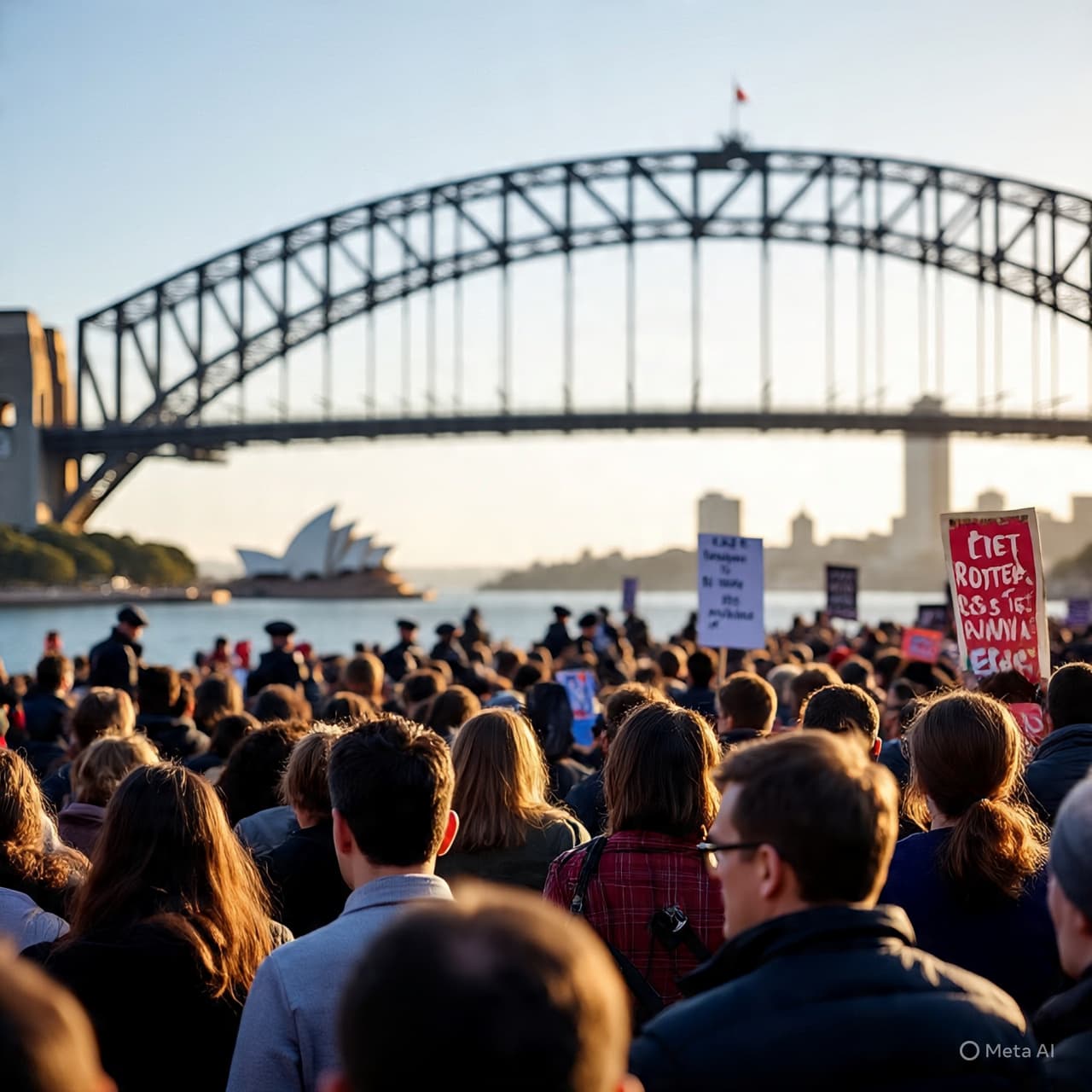
On a typical afternoon, the light over Sydney Harbor casts a serene glow, transforming the city into a picturesque scene. Ferries glide across the water, the iconic Opera House shines, and the sounds of footsteps create a rhythmic backdrop. However, on this particular day, the atmosphere was charged with a different energy, marked by the sounds of chants, whistles, and a palpable sense of urgency.
The arrival of Israel’s President Isaac Herzog in Sydney coincided with a backdrop of escalating global tensions and polarization. What began as a peaceful protest quickly escalated into a confrontation as demonstrators surged forward, prompting a response from police. The once calm harbor area became a focal point of tension, with scuffles breaking out and disrupting the usual flow of city life.
Authorities reported that police were deployed to manage the situation as tensions heightened. Several individuals were detained, and minor injuries were reported amid the chaos. Police vehicles moved closer to the protest site, their sirens momentarily piercing through the chants before fading back into the cacophony. While organizers and officials provided varying accounts of how the situation escalated, the visible outcome was clear: a public square transformed into a battleground of voices and bodies.
For many participants, the protest transcended the immediate context of President Herzog's visit. It became a platform for expressing solidarity with distant conflicts, particularly those in Gaza and Israel. Placards bearing messages about international responsibility and justice filled the streets, while flags and slogans encapsulated complex histories into powerful visual statements. Sydney, though geographically distant from these conflicts, became a temporary stage for their emotional reverberations.
City officials reiterated the importance of lawful protest while condemning any violence that occurred. The heightened security measures during the visit underscored the reality that diplomacy often comes with significant risks. As the day transitioned into evening, the crowds began to disperse, chants softened, and city workers returned to clear the remnants of the protest, resetting barriers and sweeping debris from the pavement.
By nightfall, the familiar lights of the harbor returned, reflecting off the water as if to restore a sense of normalcy. Yet, the events of the day left an indelible mark, serving as a reminder of how global fractures can manifest in local spaces. The facts were clear: protests during President Herzog’s visit turned violent, necessitating police intervention and resulting in arrests. However, the deeper questions lingered for those who witnessed or participated in the protests: how far do the echoes of distant conflicts travel, and what weight do they carry when they reach new shores?
Published by Banx Network. This article is part of the Banx decentralized media programme, powered by the BXE token on the XRP Ledger.



