
Key Highlights
- Hamas announces plans to dissolve its Gaza government for a new technocratic leadership.
- The transition is part of a U.S.-brokered peace initiative.
- Ongoing violence continues despite the ceasefire agreement.
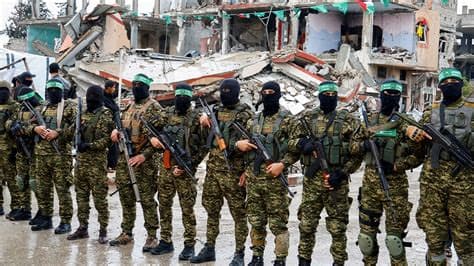
Hamas announced on Sunday its intention to dissolve its existing government in Gaza, contingent upon the establishment of a Palestinian technocratic leadership committee. This decision aligns with the stipulations of a U.S.-brokered peace plan aimed at stabilizing the region. However, Hamas has not specified a timeline for this transition, leaving many questions unanswered regarding the future governance of Gaza.
The technocratic committee, which is expected to be politically neutral, has yet to have its members publicly disclosed. This lack of transparency raises concerns about the committee's acceptance by key stakeholders, including Israel and the United States. The Palestinian Authority, recognized internationally as the legitimate representative of the Palestinian people, has not provided clarity on its role in this new governance structure.
Hamas indicated that the “Board of Peace,” an international body led by U.S. President Donald Trump, will oversee the transition and other critical aspects of the ceasefire agreement. This includes the disarmament of Hamas and the deployment of an international security force, which are essential components for the reconstruction of Gaza. However, the membership of this board remains undisclosed, adding to the uncertainty surrounding the peace process.
Despite the ceasefire, violence has persisted in the region. Reports from Palestinian hospital officials indicate that Israeli gunfire resulted in the deaths of three Palestinians, highlighting the fragile nature of the current situation. The ongoing conflict underscores the challenges that lie ahead for any new governance structure in Gaza.
In a related development, Hamas is reportedly sending a delegation to Egypt for discussions involving Qatari and Turkish officials. These talks are focused on advancing to the second phase of the peace agreement. Hamas spokesperson Hazem Kassem emphasized the urgency of establishing the technocratic committee, reflecting the group's desire to move forward with the proposed changes.
An Egyptian official, who requested anonymity due to the sensitive nature of the discussions, confirmed that Hamas plans to meet with other Palestinian factions this week to finalize the committee's formation. Khalil al-Hayya, a prominent negotiator for Hamas, is expected to lead the delegation in these crucial talks.
As the situation evolves, the international community watches closely, hoping for a resolution that can bring lasting peace to Gaza and the broader region. The establishment of a technocratic leadership could represent a significant shift in governance, but its success will depend on the cooperation of various stakeholders and the ability to address ongoing violence and humanitarian needs.
Published by Banx Network. This article is part of the Banx decentralized media programme, powered by the BXE token on the XRP Ledger.



