In the soft light before the sun fully rises over the Gangetic plains, there’s a sense of movement stirring beneath the surface of familiar landscapes. Roads have always carried more than wheels — they carry aspirations, connections, and the quiet promise of possibility. Soon, a long ribbon of pavement that links Meerut to Prayagraj, stretching nearly six hundred kilometres across the breadth of Uttar Pradesh, will open to the public in an event layered with both hope and history.
The Ganga Expressway, one of the most ambitious infrastructure projects in the state’s recent memory, nears its formal inauguration after years of planning and construction. Built at a cost exceeding ₹36,000 crore, this six‑lane, access‑controlled highway is expected to halve travel times between major cities, shrinking journeys that once spanned half a day into a matter of hours. The contrast is striking: where dusty highways once meandered through towns and fields, a smoother, swifter connection now awaits, bearing the imprint of modern ambition.
For the ruling Bharatiya Janata Party in Uttar Pradesh, the expressway represents more than earth, steel, and asphalt. It has become a symbol — of progress, of renewed economic promise, of connectivity that might knit distant corners of the state closer together. In a land where agriculture, trade, and pilgrimage have long shaped social life, a high‑speed corridor holds the alluring possibility of attracting new businesses, boosting commerce, and transforming daily life for commuters and entrepreneurs alike.
Political eyes are attuned to the horizon too. With state elections approaching, the BJP sees in the expressway a tangible achievement to present to voters — a physical manifestation of years of governance that reaches across 60 assembly constituencies, touching communities large and small. Beyond economic stimulation, discussions around the expressway also tap into ideas of cultural connectivity, with the route touching sites of religious and historical significance, including the city of Prayagraj, known for its confluence of rivers and deep spiritual roots.
Yet the narratives surrounding large infrastructure schemes are rarely simple. Behind the optimism lies a web of expectations: will improved roads translate into equitable development for all? Can rural economies along the corridor truly harness new opportunities? And how will the environmental and social costs balance against the anticipated gains? Such questions linger in conversations among residents and observers alike.
As officials prepare to usher the Ganga Expressway into public use, the landscape itself seems to hold its breath. In the reflective silence of dawn, with earthwork nearly complete and toll systems being tested, the road stands as both answer and question — a pathway to what might be, and a reminder of the journeys yet to unfold.
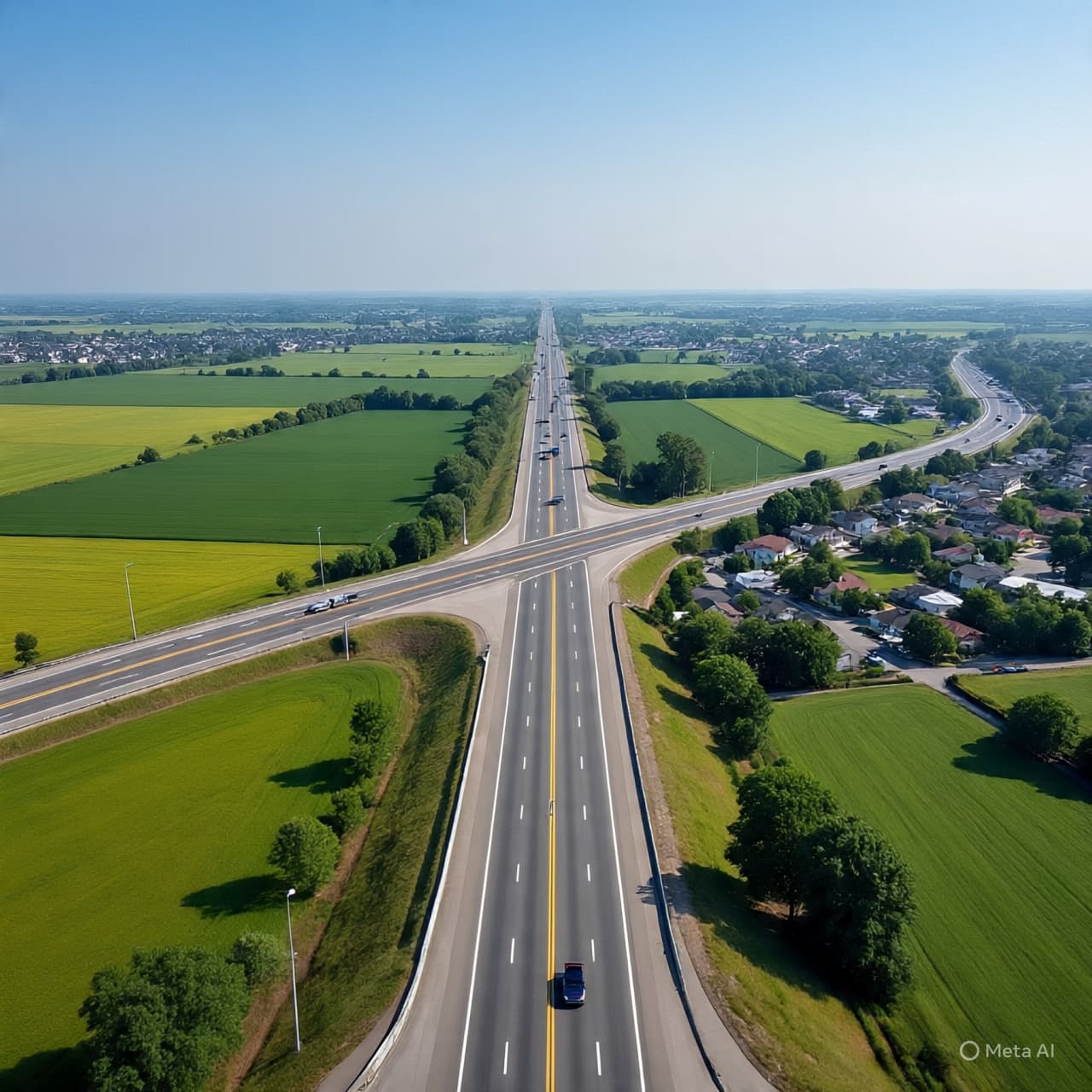
AI Image Disclaimer “Illustrations were produced with AI and serve as conceptual depictions.”
Sources The Indian Express Times of India OneIndia News Business Standard Times of India (project progress)
Published by Banx Network. This article is part of the Banx decentralized media programme, powered by the BXE token on the XRP Ledger.