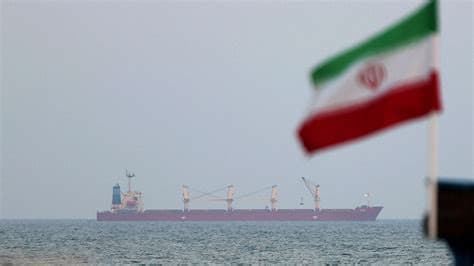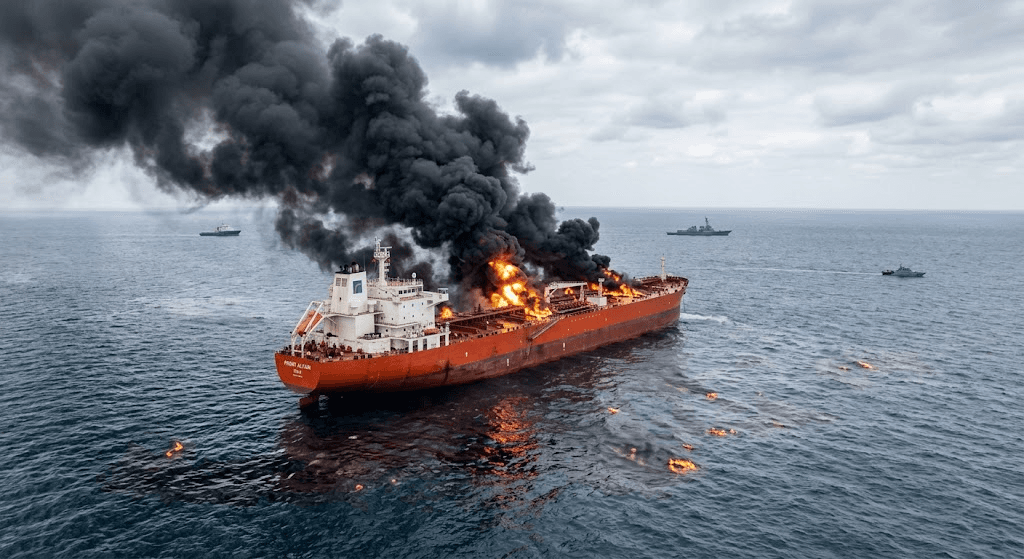
TEHRAN — An oil tanker caught fire in the Gulf of Oman after attempting to navigate through a restricted maritime zone with its tracking systems disabled, Iranian naval authorities stated. The incident occurred east of the strategic Strait of Hormuz, a critical global choke point for world energy transit, prompting fresh security concerns across international shipping lanes.
According to a statement broadcast by Iranian state television, surveillance units from the regular army’s navy identified a non-compliant vessel in distress after it entered designated prohibited waters.
Military officials noted several key details regarding the vessel’s movement. Specifically, the tanker had reportedly switched off its transponder and Automatic Identification System (AIS) to conceal its position before entering the zone. It then attempted to cross an area designated as restricted by Iranian maritime authorities east of the Strait of Hormuz. Following the incident, naval commanders warned that such uncoordinated movements along non-designated routes create severe hazards for commercial traffic in the region.
Iranian authorities did not immediately disclose the vessel's flag, ownership, or exact casualty figures, nor did they state the definitive cause of the fire.
Naval reconnaissance and response units were dispatched to monitor the situation, assess hull integrity, and evaluate potential environmental risks from leaking oil or hazardous cargo. Independent international maritime security monitors have not yet confirmed the exact circumstances leading up to the blaze.
The Gulf of Oman and the nearby Strait of Hormuz host nearly a fifth of global crude oil shipments. Unsanctioned transits and dark-fleet operations—vessels turning off AIS tracking to bypass international restrictions—have repeatedly heightened naval tensions in these narrow waterways.
Regional security analysts caution that rogue vessel movement combined with heavy military oversight increases the likelihood of maritime collisions, fires, and geopolitical friction along primary Middle Eastern energy corridors.
In response to the incident, insurance underwriters and global shipping fleets are bracing for potential increases in war-risk premiums for traffic passing near the Arabian Peninsula. International maritime organizations have reissued advisories urging all merchant vessels to strictly maintain active AIS transmissions and adhere strictly to international routing protocols to prevent further escalations in the region.
Published by Banx Network. This article is part of the Banx decentralized media programme, powered by the BXE token on the XRP Ledger.